

Key Takeaways
If you’re an Austin homeowner who just discovered a leaking water heater or woke up to no hot water, you’re in the right place. Time matters when water is spreading through your home.
-
Lightspeed Restoration of Austin provides water damage restoration in Austin with 24/7 emergency cleanup and coordinates with trusted partner plumbers for urgent water heater repairs and replacements across Austin, TX.
-
If you see active leaking, ceiling staining, or standing water around your water heater, call 512-428-8309 immediately. We respond quickly to stop water damage before it spreads.
-
We can arrive fast anywhere in Austin for 24-hour emergency water removal services, dry affected areas, and help arrange an emergency plumber—or we’ll work seamlessly with your own plumber if you already have one.
-
Fast response prevents costly problems: structural damage to framing, mold growth in walls and insulation, and ruined flooring, cabinets, and personal belongings.
-
A 40-50-gallon water heater tank contains over 330 pounds of water. If the supply line stays open, it can flood your home continuously until someone shuts it off.
24/7 Emergency Water Heater Help in Austin
Picture this: it’s 6 AM on a December morning, and your shower runs ice cold. Or you walk into your garage after work and find two inches of water spreading across the floor. Maybe you notice a dark stain growing on your living room ceiling—right below that attic water heater you forgot was up there.
These scenarios happen to Austin homeowners every week. And they rarely happen during convenient business hours.
Lightspeed Restoration of Austin is on call 24 hours a day, 7 days a week, including nights, weekends, and holidays. We specialize in handling water damage caused by leaking or failed water heaters—whether you have a conventional tank unit, a tankless water heater, or anything in between.
Here’s what makes our service different: we are water damage and cleanup specialists, not plumbing contractors. When you call us, we immediately begin mitigating water damage while simultaneously calling one of our vetted emergency partner plumbers. If you already have a preferred plumber, we coordinate with them instead. Either way, you get help fast.
-
Rapid on-site arrival across Austin—from downtown condos and Mueller townhomes to homes in West Lake Hills, and Cedar Park.
-
Professional water extraction and structural drying equipment
-
Coordination with licensed plumbers for water heater repair or water heater replacement
The moment you notice water dripping from your water heater, sagging drywall, or warm wet spots on flooring near the unit, call 512-428-8309. Don’t wait to see if it stops on its own.
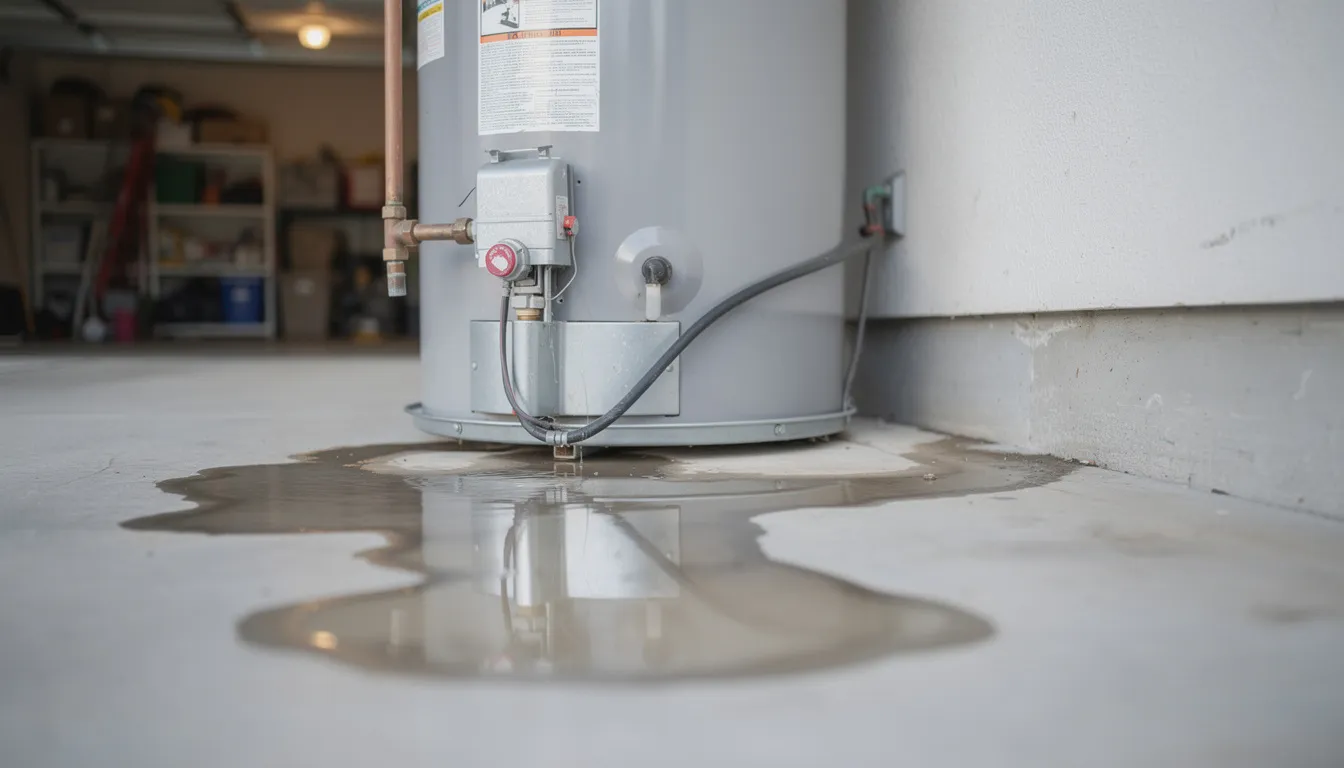
Common Emergency Water Heater Problems That Cause Damage
Not every water heater issue is an emergency. A lukewarm shower is annoying. A malfunctioning water heater that floods your house is a disaster.
Certain failures can quickly cause thousands of dollars in water damage if not addressed promptly. Here are the most common water heater problems we respond to in Austin homes:
Ruptured or Burst Tank
Older units—typically 8-12+ years old—are prone to internal corrosion that weakens the tank walls. When a tank ruptures, it can release its entire 40-50 gallon contents onto your floor in minutes. Worse, if the supply line is still connected and open, fresh water keeps flowing indefinitely.
What you’ll see: A large puddle spreading rapidly, water spraying from the tank body, or a collapsed section of the tank.
Slow but Persistent Leaks
These are the sneaky ones. A small drip from fittings, valves, or the tank seam might not seem urgent, but it soaks walls, cabinets, and subfloors over days or weeks. By the time you notice visible damage, the hidden damage is often extensive.
What you’ll see: Rusty puddles in the drip pan, moisture stains on adjacent drywall, warped cabinet bases, or musty odors near the unit.
Attic or Second-Story Water Heater Leaks
Many Austin homes have water heaters installed in attics or second-floor utility closets. When these units fail, gravity works against you. Water drips through ceilings, soaks insulation, damages light fixtures, and can even cause drywall to collapse under the weight.
What you’ll see: Water stains on the ceiling below, dripping from light fixtures, sagging or bubbling ceiling texture, or water running down walls.
Failed Temperature and Pressure Relief Valve
The pressure relief valve (also called a T&P valve) is a critical safety device. If it fails in the open position, it continuously discharges hot water onto surrounding areas. If it fails closed while the heater overheats, you have a much more dangerous situation.
What you’ll see: Constant water dripping or flowing from the discharge pipe, or in severe cases, hissing sounds and extreme heat near the unit.
Corroded Supply Lines or Flex Connections
The flexible connectors and supply lines above your water heater can corrode, loosen, or simply fail from age. When they go, water sprays under pressure directly into your walls and ceiling.
What you’ll see: Water shooting from connections at the top of the heater, water streaking down the sides of the unit, or sudden flooding with no obvious tank damage.
Even “small” visible leaks can become major emergencies if your water heater sits above living spaces or runs unnoticed overnight. A single night of slow leaking can saturate enough building material to create a mold problem.
If you can do so safely, turn off water and power or gas to the heater, then immediately call 512-428-8309.
Immediate Steps to Take When Your Water Heater Fails
Safety comes first. A plumbing emergency involving your water heater means potential electrical hazards, scalding hot water, and the risk of ceiling collapse from saturated drywall. Before professionals arrive, here’s exactly what to do:
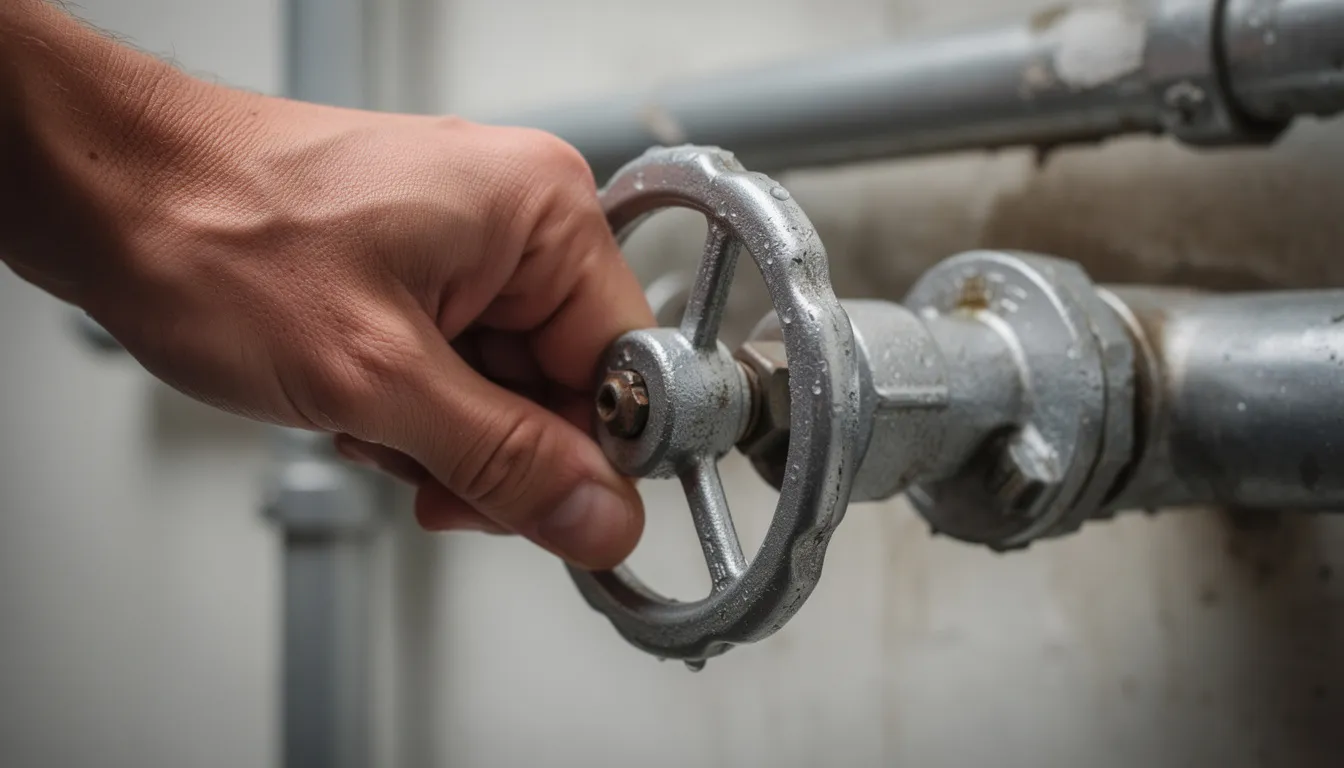
Step 1: Shut Off the Cold-Water Supply Valve
Locate the cold-water inlet valve on top of or near your water heater. Turn it clockwise (to the right) to stop new water from entering the tank. If this valve is stuck or broken, shut off the main water supply to your house instead.
This single step can prevent hundreds of additional gallons from flooding your home.
Step 2: Turn Off Power to the Unit
For an electric water heater: Find the dedicated breaker in your electrical panel and flip it to the off position. Never touch the water heater or its electrical components if you’re standing in water.
For a gas water heater: Locate the gas control dial on the unit and turn it to “Off” or “Pilot.” If you smell gas (a rotten egg odor), leave the house immediately and call your gas company or 911 before doing anything else.
Step 3: Keep People and Pets Away
Saturated ceilings can collapse. Water near electrical outlets creates shock hazards. Hot water can cause burns. Keep everyone away from affected areas until professionals assess the situation.
Step 4: Contain Minor Pooling (If Safe)
If water pooling is limited and you can safely approach, place towels or a shallow pan to temporarily control spread. However, do not attempt DIY demolition of wet drywall or flooring—you could cause more damage or miss hidden moisture.
Step 5: Call Lightspeed Restoration of Austin
Call 512-428-8309 for emergency water damage mitigation. We’ll dispatch a team while providing phone guidance, and we’ll help coordinate a plumber to address the water heater itself.
Same-night or same-day response can dramatically reduce damage to wood framing, cabinets, and flooring. Every hour of delay allows water to spread further into your home’s structure.
Important: Do not attempt to fully drain or relocate your water heater unless you’re experienced. A full 50-gallon tank weighs nearly 500 pounds, the water inside may be scalding hot, and improper handling can violate local codes.
How Lightspeed Restoration of Austin Handles Water Heater Emergencies
We specialize in water damage from failed plumbing systems, including tank and tankless water heaters installed in garages, closets, attics, and utility rooms throughout Austin. Here’s how our emergency response process works:
On-Call Dispatch
When you call 512-428-8309, our team assesses the urgency and provides immediate phone guidance—like how to safely shut off utilities—while dispatching a crew to your property. We treat every water heater leak as a priority because we know how fast further damage can occur.
Plumber Coordination
While we handle the water damage, we help coordinate with a trusted emergency partner plumber who can perform water heater repair or replacement. If you prefer to use your own plumber, we work alongside them seamlessly.
On-Site Inspection
Our technicians use professional moisture meters and, when appropriate, thermal imaging to map the full extent of water spread. Water often travels behind walls, under floors, and into adjacent rooms where you can’t see it. This inspection ensures nothing gets missed.
Water Extraction
Using commercial-grade extraction equipment, we remove standing water from concrete, tile, hardwood, and carpeted areas. Speed matters here—the faster water is removed, the less it penetrates into porous materials.
Cleaning
We apply appropriate antimicrobial treatments to reduce mold risk in wet building materials. In Austin’s warm, humid climate, mold can begin growing within 24-72 hours of a water event—professional attention to sanitation prevents this.
Structural Drying
We set up air movers and dehumidifiers sized for your home, adjusting equipment placement over several days. Our team monitors moisture levels daily to confirm your home is drying properly and completely.
Documentation for Insurance
We document damage with photos, measurements, and drying logs that support insurance claims involving water heater failures. This documentation can make a significant difference in your claim process.
Throughout the job, our team treats your home with respect—protecting unaffected areas, carefully moving contents, and keeping disruption as low as reasonably possible.
Water Heater Types and Why They Fail
Different water heater designs fail in different ways, but all can cause significant water damage if leaks go unaddressed. Understanding your unit helps you recognize warning signs earlier.
Conventional Storage-Tank Water Heaters
These are the most common units in Austin homes—typically 40-50 gallon tanks located in garages, utility closets, or attics. They maintain a reservoir of hot water ready for use.
Typical lifespan: 8-10 years under Austin’s hard-water conditions, potentially longer with regular maintenance like annual flushing and anode rod replacement.
Common failure modes:
-
Internal tank corrosion leading to pinhole leaks or catastrophic rupture
-
Sediment buildup causing overheating, loud popping noises, and premature failure
-
Corroded fittings and connections at the top of the unit
Tankless (On-Demand) Water Heaters
Tankless water heaters heat water as it flows through rather than storing it. They’re often mounted on interior walls, in closets, or on exterior walls.
Typical lifespan: 15-20 years with proper maintenance.
Common failure modes:
-
Heat exchanger leaks
-
Fitting failures where water lines connect
-
Scale buildup from mineral buildup in Austin’s water reducing efficiency and causing component failures
Gas vs. Electric Models
Gas water heaters use burners and require proper venting. Failures can involve gas leaks (a serious safety hazard), venting problems, or pilot light and thermocouple issues.
Electric water heaters use heating elements and thermostats. Common failures include shorted elements, failed thermostats, and electrical connection problems.
See a detailed comparison here.
Why Austin’s Water Accelerates Failures
Austin’s water supply tends toward hard water with high mineral content. This accelerates sediment buildup inside tanks and scale formation in tankless units. Without routine maintenance like annual flushing, these deposits stress components and shorten equipment life.
Installation location matters too. Water heaters in unconditioned attic spaces endure extreme temperature swings that stress tanks, fittings, and connections. Attic installations are especially common in Austin—and especially risky when they fail.
While plumbers repair or replace the actual water heater, Lightspeed Restoration focuses on the resulting water damage—removing moisture before it spreads into framing, insulation, and finished spaces.
When to Repair vs. Replace a Failing Water Heater
The decision to repair or replace is usually made together with a licensed plumber, but understanding the basic guidelines helps you have an informed conversation.
Factors That Favor Replacement
|
Factor |
Why It Matters |
|
Age over 8-10 years |
Units in Austin’s mineral-rich water degrade faster; older units are more likely to fail again soon |
|
Frequent emergency repairs |
Repeated service calls or recurring leaks often mean underlying issues that won’t go away |
|
Tank corrosion or rust-colored water |
Internal tank damage cannot be repaired—replacement is the only option |
|
Risky installation location |
Attic or second-story units may justify upgrading to safer configurations or tankless models |
|
Repair cost approaching 50% of the new unit |
At this point, system replacement offers better long-term value |
Factors That Favor Repair
-
Newer unit (under 5-6 years old) with a single, isolated issue
-
Minor component failures like a bad thermostat, heating element, or easily replaced valve
-
No tank corrosion visible and no history of leaks
Lightspeed Restoration does not sell water heaters or perform water heater installation, so we provide neutral guidance on water damage implications while your plumber addresses the mechanical side. Our priority is protecting your home from further damage, regardless of whether you repair or replace.
If your water heater is actively leaking, call 512-428-8309 first to limit water damage while you schedule plumbing work.
Preventing Future Water Damage from Your Water Heater
Many of the most expensive water heater disasters we see in Austin could have been prevented with simple, routine checks. Here’s what actually helps:
Annual Professional Inspection
Have a licensed plumber inspect your water heater yearly. They’ll check for early signs of corrosion, valve issues, unsafe venting (on gas water heaters), and installation problems. This is especially important for units over 6-7 years old.
Regular Tank Flushing
Flushing tank-style water heaters at least once a year removes sediment buildup. Austin’s hard water makes this particularly important—mineral deposits insulate the water from heating elements, causing the system to work harder and wear out faster.
Proper Drain Pan Installation
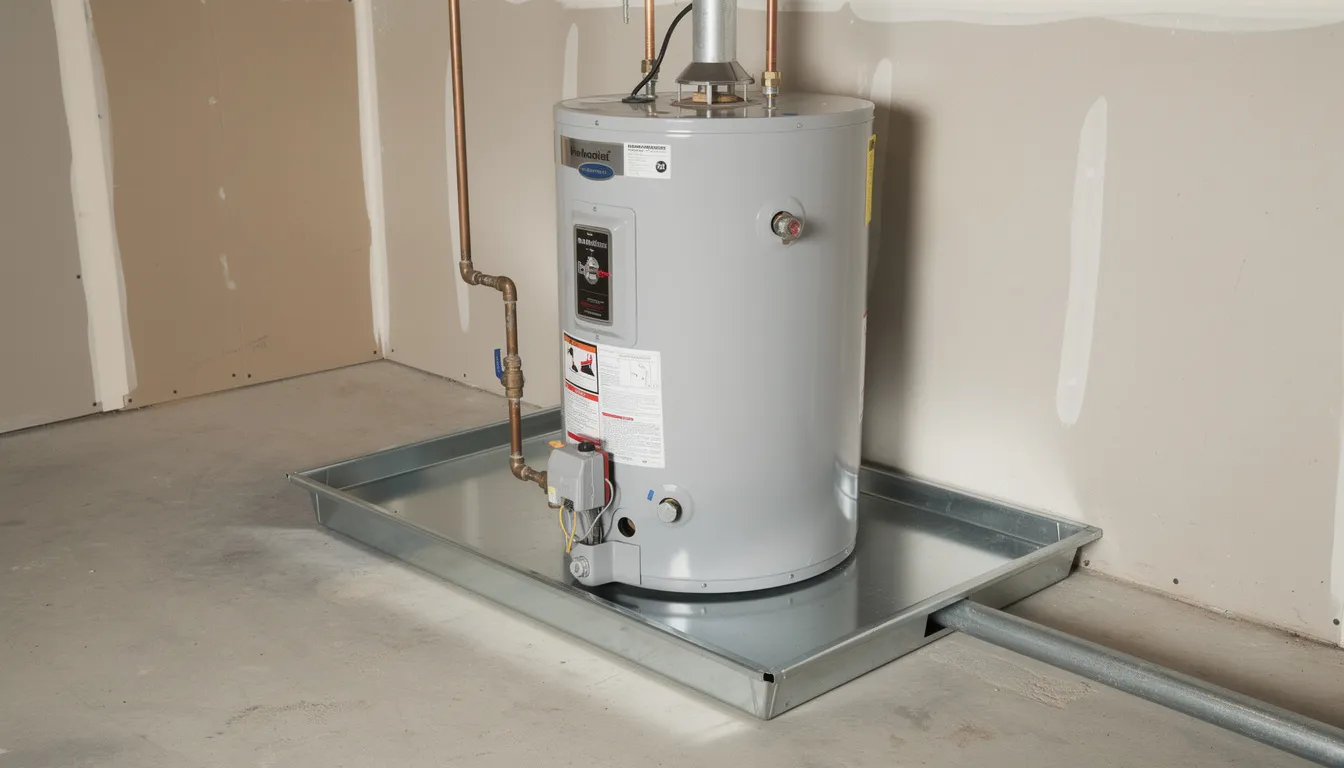
Your water heater should be installed in an appropriately sized drain pan with a functional drain line routed to the exterior or to a floor drain. Many older Austin homes have heaters installed on bare plywood or slab with no pan. When leaks happen, there’s nothing to catch them.
Consider Leak Detection
Automatic shutoff valves and leak detection sensors are particularly helpful for attic or closet installations. These devices can alert you to problems or shut off water before a small leak becomes a flood.
Monthly Visual Inspection
Take 30 seconds once a month to look around your water heater:
-
Any moisture or water pooling in the drain pan?
-
Rust streaks on the tank or fittings?
-
Bulging, warping, or discoloration on the tank body?
-
Unusual sounds like popping, rumbling, or hissing?
These common signs can signal problems before they become emergencies.
If you’ve already experienced one water heater leak, be especially vigilant. Repeat events often cause more severe structural damage because building materials may already be weakened.
Suspect past leaks or hidden moisture? Call 512-428-8309 for a professional moisture assessment.
Why Austin Homeowners Choose Lightspeed Restoration
When your house is flooding at 2 AM, you need a team that knows Austin and understands the urgency. Lightspeed Restoration of Austin has built a reputation for reliable service handling water heater–related water damage across our community.
What Sets Us Apart
-
Specialization in water damage restoration: We focus on structural drying, moisture removal, and mold prevention following plumbing and water heater failures—it’s what we do every day.
-
Rapid emergency response tailored to Austin: From central city bungalows to newer subdivisions in Cedar Park, Circle C, and Mueller, we know the area and respond quickly.
-
Plumber coordination: We work with vetted emergency partner plumbers who understand local building codes and typical Austin installations. Or we collaborate seamlessly with your own plumber—whatever works best for your household.
-
Insurance documentation: We provide detailed photos, moisture readings, and drying logs that help homeowners navigate claims related to sudden water heater leaks.
-
Professional-grade equipment: Our commercial dehumidifiers and air movers are designed for residential and light commercial buildings—not rental-store equipment that takes twice as long.
-
Respect for your home: We protect unaffected areas, move contents carefully, and leave job sites clean when we’re done.
Peace of Mind When It Matters
When expert plumbers handle the water heater, and we handle the water damage, Austin homeowners get a coordinated response that minimizes disruption to their daily routine and maximizes protection for their property.
Check our online reviews and testimonials—you’ll find mentions of quick response to water heater leaks, knowledgeable technicians, professionalism on site, and transparent pricing for the work performed.
If you see water around your heater right now, don’t wait. Call 512-428-8309 for immediate help.
Frequently Asked Questions About Emergency Water Heater Repair & Water Damage
Should I call a plumber or Lightspeed Restoration first if my water heater is leaking?
If water is actively spreading through your home, call Lightspeed Restoration of Austin first at 512-428-8309. We’ll begin controlling the water damage immediately, either by contacting an emergency partner plumber for you or coordinating with your own plumber. This approach ensures both problems get addressed simultaneously rather than waiting for one professional before calling another.
How fast can you get to my home in Austin for a water heater leak?
Response times vary depending on traffic and time of day, but we treat emergency calls in the Austin area as a priority. Severe leaks and ceiling compromises typically receive same-day or same-night response—often within hours. When you call, we’ll give you an estimated arrival time based on your location and current crew availability.
Will my insurance cover water damage from a failed water heater?
Many homeowner policies cover sudden and accidental water damage, such as a burst tank or failed fitting. However, most policies do not cover damage from long-term, neglected leaks or the cost of the new water heater itself. Policy terms vary significantly, so check with your insurer. We provide detailed documentation—photos, moisture reports, and drying logs—to support your claim process, though final coverage decisions rest with your insurance company.
Do you also replace water heaters?
Lightspeed Restoration of Austin focuses exclusively on water removal, structural drying, and cleanup. We do not sell or install water heaters. Instead, we coordinate with trusted emergency partner plumbers for heater repair or replacement, or we work alongside your chosen plumbing company. This allows us to provide neutral, helpful guidance focused solely on protecting your home from water damage.
How long will it take for my home to dry after a water heater leak?
Most water heater–related losses dry in 3-5 days with professional equipment in typical Austin homes. However, timing depends on several factors: how long the leak ran before discovery, which building materials were affected (carpet, hardwood, or drywall), and whether upper floors or attics were involved. We monitor moisture levels daily and keep equipment running until readings confirm the structure is properly dried.
Don’t Let a Water Heater Leak Become a Bigger Problem
A leaking hot water heater might seem like just a plumbing issue, but the water spreading through your home is the real emergency. Every hour of delay allows moisture to penetrate deeper into walls, flooring, and structural framing—setting the stage for mold growth and costly repairs down the road.
Whether you’re dealing with a burst water tank at midnight, a slow leak you just discovered, or water dripping through your ceiling from an attic unit, Lightspeed Restoration of Austin is ready to help. We handle the water damage and connect you with expert services for the water heater itself.
If water is spreading from your water heater right now, stop reading and call 512-428-8309. We’re available 24/7 across Austin, TX, and surrounding communities, including Cedar Park, West Lake Hills, and beyond.
Fast action protects your home. We’re ready when you need us.