

Water damage moves fast in Austin homes, from a burst pipe in a winter freeze to flood water after a summer storm. Lightspeed Restoration of Austin provides start-to-finish restoration services as a local restoration company and general contractor for water damage repairs in Austin, TX only.
Emergency Water Damage Help in Austin (Call 512-428-8309)
If you have active water damage in Austin right now, call 512-428-8309 for 24/7 emergency services. You can contact us before or after calling your insurance company; we help document the water damage situation, guide the claims process, and respond immediately to limit further damage from burst pipes, water heater failures, second-story bathroom overflows, roof leaks, or storm flooding.
In the first 1–3 hours, our team can:
-
Stop the water source if it is safe and accessible.
-
Begin water extraction for standing water and excess water.
-
Protect furniture, electronics, documents, and other property.
-
Assess hazards such as electrical risks, sagging ceilings, contaminated water, and structural damage.
-
Stabilize the structure before cleanup, demolition, drying, and repair begin.
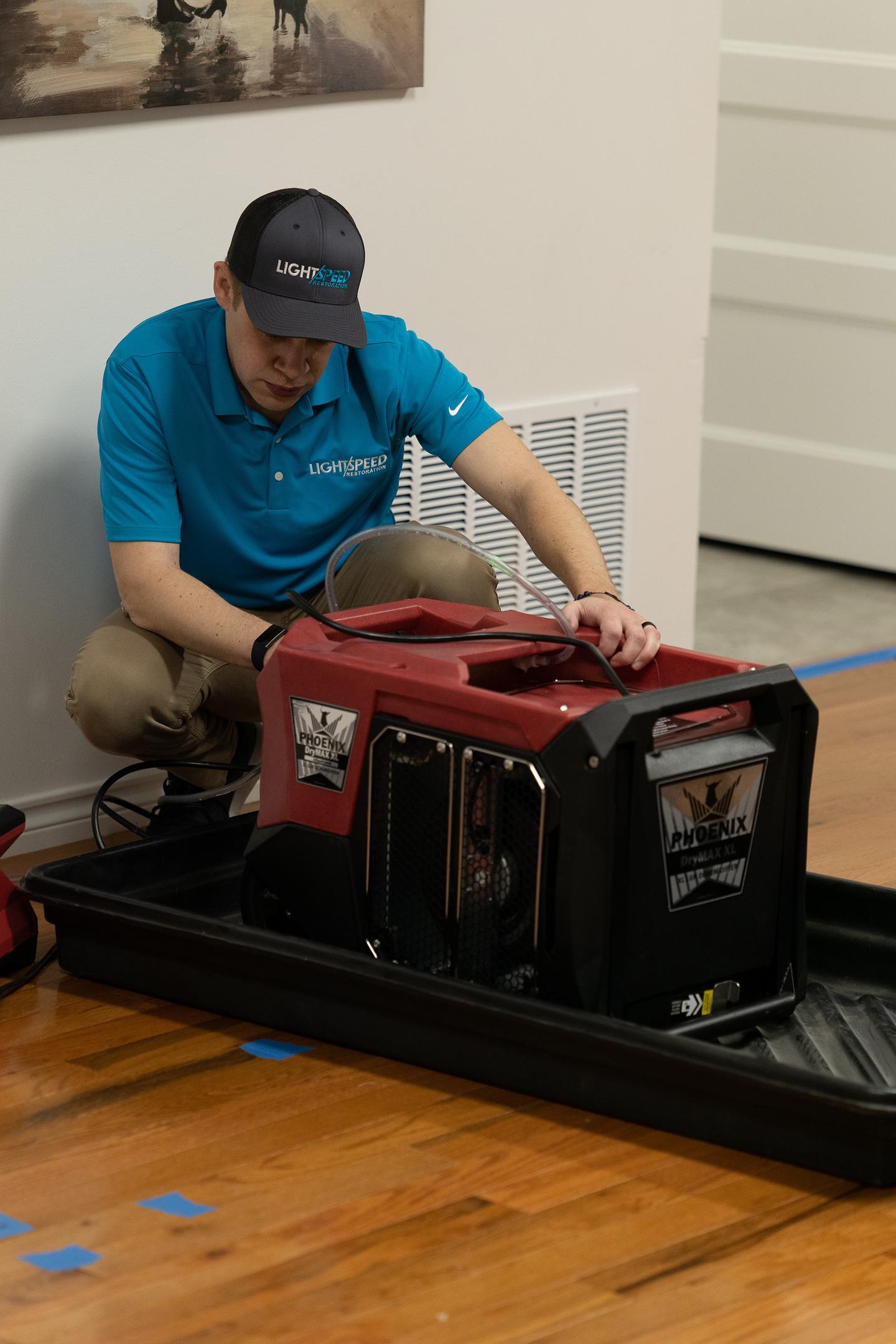
General Contractor vs. Water Mitigation Company: What’s the Difference?
A water mitigation company focuses on immediate removal of water and drying out affected areas to prevent further damage. Many water mitigation companies do not perform reconstruction work themselves and may refer homeowners to another contractor after mitigation is complete.
Homeowners who need help with extraction, structural drying, cleanup, and related recovery work can learn more about our water damage restoration services in Austin.
A general contractor for water damage, like Lightspeed Restoration of Austin, handles mitigation plus construction, remodeling, demolition, debris removal, repair, and reconstruction.
A general contractor for water damage, like Lightspeed Restoration of Austin, handles mitigation plus construction, remodeling, demolition, debris removal, repair, and reconstruction. The choice between hiring a water mitigation company and a general contractor often depends on the extent of the damage and whether immediate drying and mitigation are necessary before reconstruction can begin.
Here’s a simple Saturday-night Austin kitchen leak example:
|
If you hire dry-out only |
If you hire a GC restoration company |
|
They extract water and dry materials. |
We handle extraction, drying, demolition, and build-back. |
|
You may need a second contractor for drywall, flooring, cabinets, and paint. |
One project manager coordinates trades and timelines. |
|
Insurance scope can get split between vendors. |
Documentation is cleaner for your insurance claim. |
Mitigation follows industry standards such as ANSI/IICRC S500, while reconstruction must also meet City of Austin and Travis County code requirements.
Our Water Damage Restoration Process as Your General Contractor
The water damage restoration process typically begins with a thorough inspection and assessment of the water damage to determine its severity and the necessary steps for restoration. From there, Lightspeed Restoration of Austin documents every stage with photos, moisture readings, written notes, and estimates aligned with insurance and industry standards.
Our process includes:
-
Inspection, safety review, and water category assessment.
-
Water removal and extraction.
-
Demolition and debris removal when materials cannot be saved.
-
Structural dry-out with monitoring.
-
Antimicrobial treatment during drying.
-
Contents protection and restoration coordination.
-
Reconstruction, finishes, and final walk-through.
We coordinate plumbing, electrical, HVAC, drywall, flooring, cabinetry, and painting under one project manager. Many small residential losses take 3–7 days for dry-out and 2–4 weeks for full repairs, depending on materials, permits, and insurance approvals.
Inspection, Safety, and Water Damage Assessment
We start with an Austin site visit in neighborhoods such as Mueller, Circle C, South Lamar, Tarrytown, and other Austin service-area communities. We do not service Round Rock or Pflugerville outside Austin.
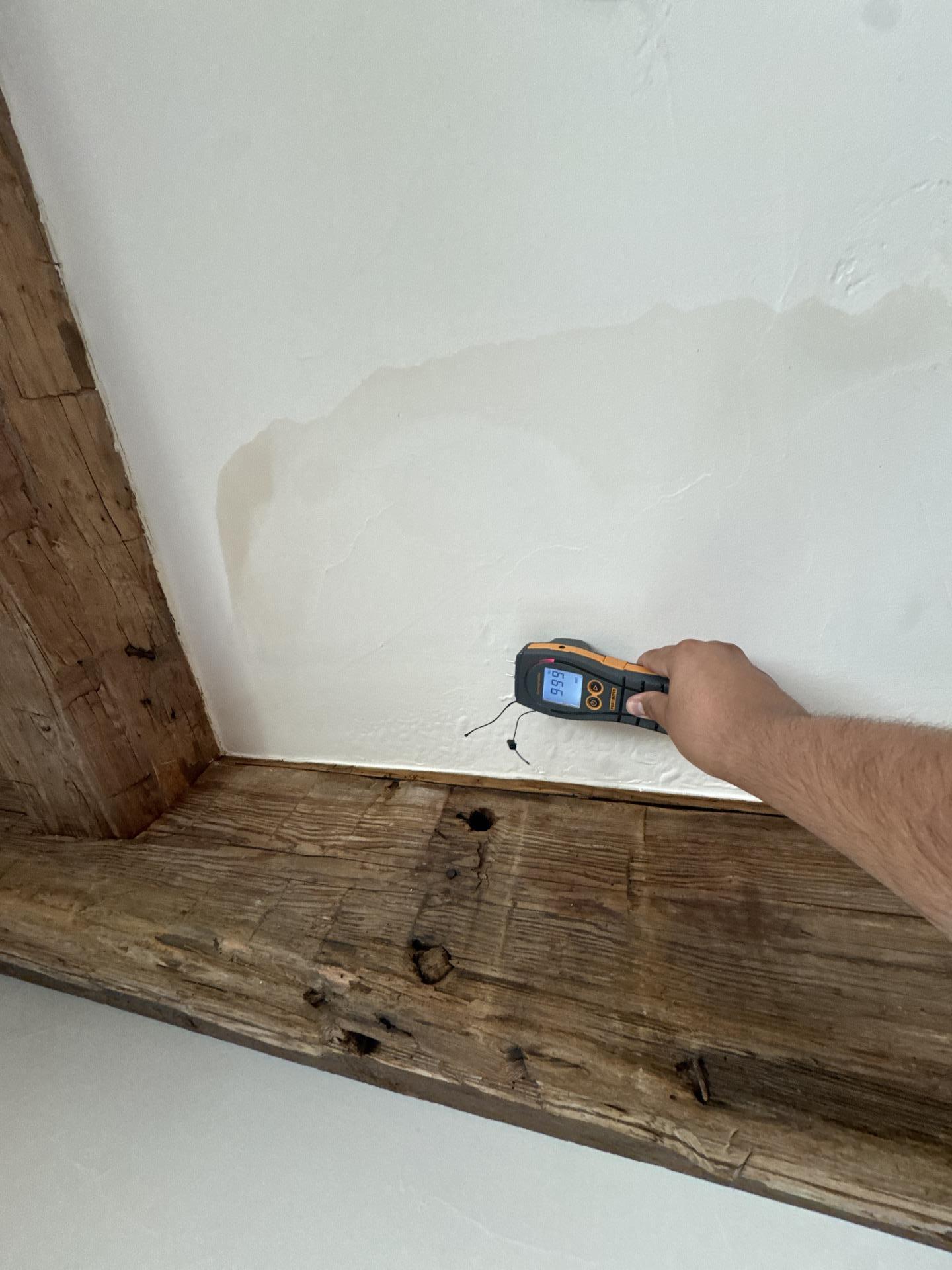
During inspection, we assess electrical hazards, ceiling collapse risk, buckled flooring, contaminated flood water, attic leaks, basement moisture where present, and crawl space conditions in pier-and-beam homes. Visible water stains or discoloration on walls, ceilings, or floors are common signs of water damage, often appearing yellowish, brown, or dark and spreading over time.
We also look for peeling, bubbling, or warped paint and wallpaper, which can indicate excess moisture behind surfaces. Warped flooring, swelling wood, or sagging ceilings are critical signs of water damage that require immediate investigation. A persistent musty odor, especially in basements or crawl spaces, can indicate hidden water damage and is often associated with mold growth.
Using moisture meters, thermal imaging, and physical inspection, we identify wet drywall, insulation, baseboards, subfloor, framing, cabinets, and hidden interior cavities. We categorize the water as clean, gray, or black to determine cleaning and demolition requirements.
Water Removal and Extraction
Water removal is a critical first step in the restoration process, where standing water is extracted using powerful pumps and extraction units to prevent further damage and reduce drying time. Immediate water extraction also reduces structural damage and mold growth risk, especially because water damage can lead to toxic mold growth within 24 to 48 hours if not addressed.
We use truck-mounted and portable extraction equipment on hard surface areas, carpet, and padding. If carpet and pad are saturated for more than 72 hours or affected by flood water, they are usually removed before drying.
We also check closets, cabinets, toe-kicks, under floating floors, and other affected areas where moisture can hide. In a crawl space or basement, water must often be pumped gradually to reduce hydrostatic pressure and avoid creating new structural issues.
Demolition and Debris Removal
After water removal, the restoration process may involve the removal of damaged materials, such as drywall and carpeting, to expedite drying and prevent mold growth. As a general contractor, we remove only what is necessary: wet drywall, insulation, baseboards, laminate flooring, swollen trim, or contaminated materials.
In heavily affected rooms, we may use flood cuts 2–4 feet up the walls to expose framing and improve airflow. Safe debris removal includes bagging, hauling, and disposal according to local Austin and Travis County rules.
If moisture readings show that structural materials are unaffected, demolition can be reduced or skipped to save time and cost. Removed materials are photographed and inventoried for the insurance claims process.
Drying, Dehumidification, and Mold Prevention
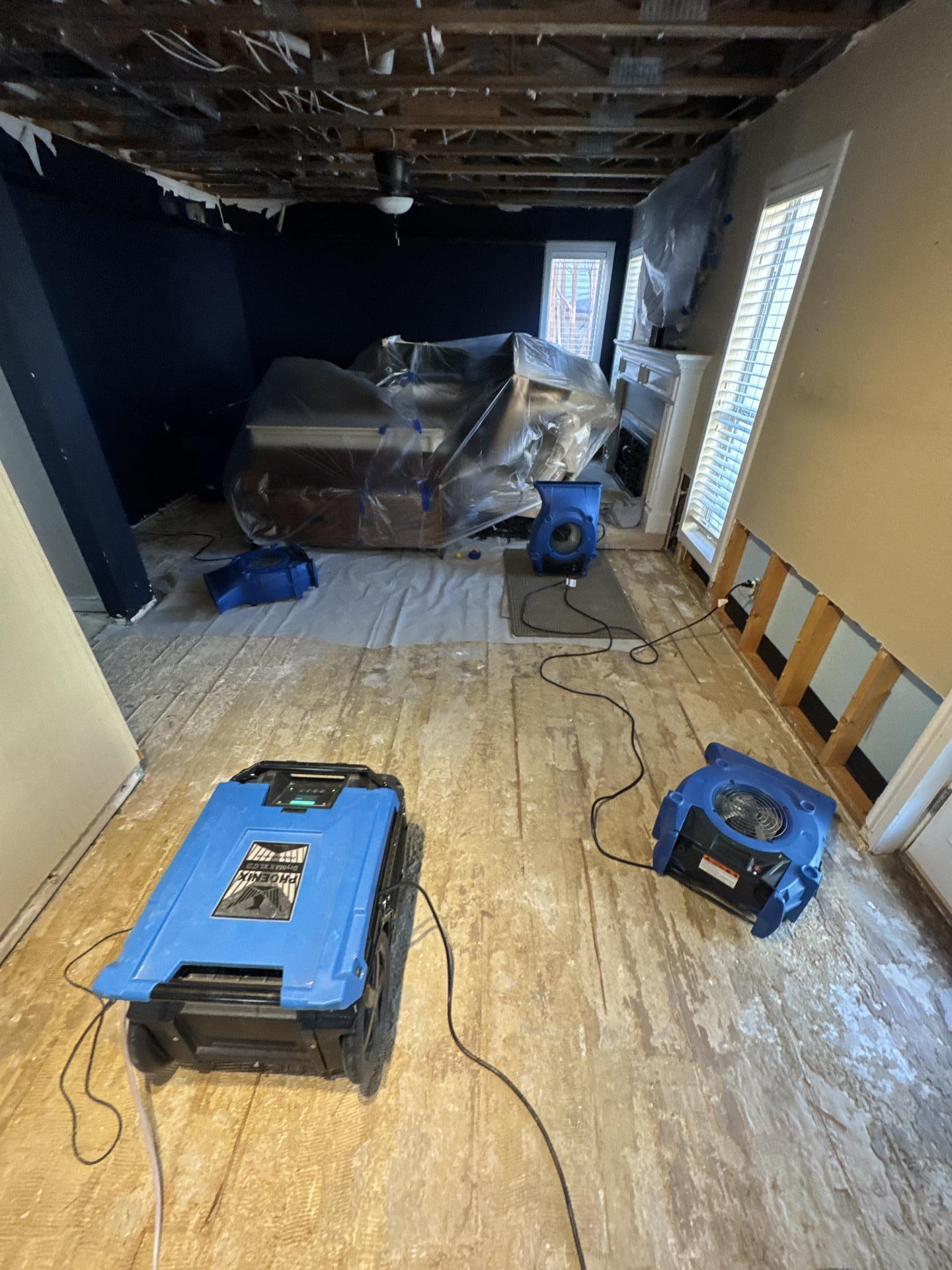
The drying phase of the restoration process uses specialized equipment, such as air movers and dehumidifiers, to remove moisture from materials and return them to their normal moisture levels. High-velocity air movers and commercial-grade dehumidifiers are used to dry out affected areas, including framing, subfloors, remaining drywall, and cabinetry openings.
Monitoring the drying process is essential, with specialists visiting the property regularly to ensure materials are drying properly and to make adjustments to equipment as needed. In Austin’s humid spring and summer months, this monitoring matters even more.
Antimicrobial treatments should be applied during the drying phase to prevent mold and bacteria growth, especially after gray water, black water, or long moisture exposure. We follow industry standards for acceptable moisture levels before reconstruction begins.
Contents Protection and Restoration
From the first visit, we protect belongings by moving furniture off wet flooring, placing items on blocks, and covering contents with plastic when needed. We separate salvageable and non-salvageable items, photograph losses, and document them for the insurance company.
When appropriate, we can coordinate a contents pack-out so textiles, electronics, keepsakes, and records can be cleaned and stored off-site by specialized vendors. Sensitive paper records and photographs may need special restoration services.
Reconstruction and Build-Back
This is where having a general contractor for water damage is critical. The rebuilding phase follows once the structure is certified dry, including insulation, drywall, and flooring replacements.
Typical reconstruction includes framing repair, insulation, drywall, texture, paint, trim, flooring, cabinets, countertops, and final finish matching. If structural, electrical, or plumbing changes are needed, we coordinate required City of Austin permits through the appropriate process; Austin permitting information is available through Austin Development Services.
Our goal is restoring your home to pre loss condition or better. We finish with a walk-through, punch list, and customer sign-off.
Handling Insurance and the Water Damage Claims Process
Dealing with an insurance company after water damage can be stressful. A detailed estimate documenting damage is crucial to align with homeowners insurance requirements for claims.
We assist with Xactimate or similar estimates, moisture logs, photos, itemized invoices, and adjuster communication when authorized. Sudden events such as a burst supply line are often handled differently than long-term unrepaired leaks, so homeowners should always confirm coverage with their policy.
We also help answer scope questions involving code upgrades, including local adoption of modern residential code requirements. Texas insurance deadlines are addressed in state law, including Texas Insurance Code Chapter 542, but early documentation still makes the claim smoother.
Working with Your Insurance Company in Austin
A typical claim moves from emergency call to mitigation, adjuster inspection, estimate review, approval, reconstruction, and closeout. Most policies require prompt mitigation to limit further damage, mold growth, and structural deterioration.
Keep a simple loss journal with dates, calls, receipts, photos, and notes. We help organize much of this documentation. Also remember: the homeowner chooses the contractor. You are not required to use a preferred vendor suggested by the insurance company.
Common Causes of Water Damage We See in Austin Homes
Austin has older cottages, slab-on-grade homes, pier-and-beam houses, and newer construction, so water damage can occur in many ways. The most common causes we see include plumbing failures, appliance leaks, roof leaks, AC condensate problems, sewer backups, and localized flood intrusion.
Leaking pipes and plumbing failures, such as cracked or broken pipes and clogged drains, are common causes of water damage. Appliance malfunctions, such as leaks from washing machines, dishwashers, and water heaters, can occur due to worn-out hoses or broken seals, leading to water damage.
Plumbing and Appliance Failures
Burst supply lines, failed angle stops, clogged drains, water heater failures in garages or attics, and washing machine hose ruptures can release large volumes of water quickly. Shut off the main valve if safe, then call emergency services immediately.
After repairs, we may recommend braided steel hoses, drip pans, better shutoff access, or yearly plumbing inspections for older central Austin homes built before 1980.
Roof Leaks, Storm Damage, and Flood Water
Roof leaks due to damaged or missing shingles, clogged gutters, or poor drainage can allow water to seep into a home’s attic and walls, leading to water damage. Wind-driven rain, hailstorms, hurricane remnants, and heavy rain can lift roofing materials and send moisture through the interior.
Flooding and storm damage from heavy rainfall, hurricanes, or melting snow can cause sudden flooding, resulting in extensive damage to a home’s foundation and interior. Poor drainage and foundation issues, including improper landscaping and blocked gutters, can cause water to pool around or seep into a home, resulting in water damage.
As a general contractor, we can coordinate temporary roof tarps, interior dry-out, roofing repair, and reconstruction planning.
AC, Condensation, and High Humidity Issues
Austin’s long cooling season can lead to clogged AC condensate drains, wet ceiling drywall, and hidden moisture in closets or near air handlers. Unexplained increases in humidity or condensation on windows, pipes, or walls may signal excessive moisture, which can lead to mold and structural deterioration.
Watch for staining around vents, soft drywall, musty smells, and recurring moisture on a surface. During reconstruction, we can improve access panels, drain line routing, insulation, and ventilation to help fix the source.
Why Choose Lightspeed Restoration of Austin as Your General Contractor for Water Damage?
Lightspeed Restoration of Austin is local to Austin, TX, and built for both emergency mitigation and full reconstruction. That means fewer handoffs, faster planning, better documentation, and one team focused on your recovery.
Proper licensing is essential for general contractors involved in water damage repairs. Certification from the Institute of Inspection Cleaning and Restoration Certification (IICRC) is important for contractors handling water damage. General contractors should carry both General Liability and Workers’ Compensation insurance, and homeowners should verify credentials before work begins.
We understand Austin building types, including pier-and-beam crawl spaces, slab foundations, older plaster, modern drywall, tight urban lots, and high-humidity drying challenges. We also know that water, fire, and storm losses can be dangerous and disruptive, so our crews prioritize security, site protection, and clear communication. We are not a security service, but we help secure damaged openings and protect the work area.
Local, Code-Compliant, Start-to-Finish Service
We are familiar with Austin permitting, inspections, and licensed trade coordination for structural, electrical, plumbing, HVAC, and construction repairs. We use industry standards for water damage restoration, structural drying, mold prevention, and final restoration.
For example, a 3-bedroom home near South Lamar with a 2025 kitchen leak may need extraction, cabinet removal, drying, drywall replacement, flooring, painting, and final finish matching-all under one project plan. That is the value of creating one coordinated recovery path instead of juggling multiple companies.
What to Do Right Now if You Have Water Damage in Austin
Safety comes first. Before we arrive:
-
Shut off the water supply if possible.
-
Turn off power to affected areas only if safe.
-
Avoid sagging floors, bulging ceilings, and contaminated flood water.
-
Keep children and pets away from affected areas.
-
Do not use a household vacuum on flood water.
-
Do not lift heavy wet materials alone.
-
Move light valuables, electronics, and documents to a dry area if safe.
-
Take photos and visit our website later for next steps, but call first if water is active.
If your home in Austin has water damage, call Lightspeed Restoration of Austin at 512-428-8309 today for 24/7 emergency water damage restoration and general contracting assistance.