

By the time water shows up on a basement floor, the conditions that allowed it inside have usually been developing outside the structure for quite some time. Saturated soil begins pressing against foundation walls that were never intended to resist sustained hydrostatic pressure. As that pressure builds, water searches for the smallest path inward—through hairline cracks, expansion joints, or porous concrete that slowly absorbs and transmits moisture.
Basement water intrusion usually develops from several contributing conditions rather than a single failure. It typically reflects a combination of drainage limitations, soil behavior, and foundation stress that develops gradually. Understanding that relationship is essential because effective waterproofing focuses less on reacting to leaks and more on controlling the environmental forces acting on the structure.
Across many residential and commercial inspections performed by restoration teams, technicians at Lightspeed Restoration encounter basements where the visible moisture problem is only the final stage of a much longer structural process. Long before water becomes visible inside the building, surrounding soil conditions, drainage design, and seasonal groundwater movement have already begun influencing the foundation.
Basement Waterproofing Problems Develop
Concrete foundations appear solid, but they interact constantly with the soil that surrounds them. When soil becomes saturated after rainfall or seasonal thaw, groundwater begins pressing against the foundation walls and floor slab. This pressure—hydrostatic pressure—forces moisture toward the structure, gradually exploiting weaknesses that may not have been noticeable when the building was first constructed.
Several structural conditions commonly contribute to basement moisture problems:
- Improper grading around the foundation
Soil that slopes toward the structure allows water to collect along foundation walls instead of directing it away. - Inefficient roof drainage systems
Gutters and downspouts that discharge water too close to the building increase soil saturation directly around the foundation. - Foundation settlement and minor structural shifts
Small movements in the structure can create cracks where water begins migrating through the foundation. - Aging or obstructed perimeter drains
Older drainage systems can clog or collapse, preventing groundwater from being redirected away from the foundation. - Unsealed wall penetrations and expansion joints
Utility lines and structural joints often become overlooked entry points where water pressure can push moisture into the basement.
These conditions do not usually create immediate flooding. Instead, they allow slow moisture migration that affects insulation, drywall, and flooring systems before the problem becomes obvious. During restoration assessments across multiple property types, teams at Lightspeed Restoration regularly trace interior basement damage back to small drainage or grading problems that had quietly increased hydrostatic pressure for years.
Practical Waterproofing Measures That Protect Foundations
Basement waterproofing works best when it focuses on controlling water before it reaches the foundation wall. Once moisture penetrates the structure, mitigation becomes more complex because it involves both water removal and structural drying.
Preventive strategies typically focus on improving drainage behavior around the building.
Maintain effective roof drainage
Gutters and downspouts serve as the first layer of basement protection. When debris accumulates or downspouts terminate too close to the structure, water begins saturating the soil directly adjacent to the foundation.
Correct exterior grading
The ground surrounding the building should slope away from the foundation to direct rainwater outward. Even subtle grading improvements can significantly reduce soil saturation along basement walls.
Seal foundation cracks and penetrations
Hairline cracks and expansion joints can allow moisture to migrate through concrete. Professional-grade sealants designed to withstand hydrostatic pressure help limit water movement through these areas.
Maintain or install perimeter drainage systems
French drains and footing drains redirect groundwater away from the structure before pressure builds against the foundation. These systems play a critical role in long-term waterproofing performance.
Manage interior humidity conditions
Basements naturally retain cooler air, which can lead to condensation when humidity levels rise. Dehumidification helps prevent secondary moisture problems even when exterior waterproofing systems are functioning properly.
Basement environments also influence other building systems. Persistent moisture can affect air quality, contribute to mold growth, and reduce insulation performance if moisture reaches wall cavities or floor assemblies. Because of these interactions, waterproofing efforts frequently overlap with broader moisture management strategies used during restoration and building maintenance.
During structural moisture investigations nationwide, restoration teams encounter a consistent pattern: water entry usually begins outside the basement rather than inside it. Exterior drainage limitations, roof runoff patterns, and soil saturation cycles gradually place continuous pressure on the foundation. Observations like these help guide mitigation strategies used by companies such as Lightspeed Restoration, where identifying the environmental source is just as important as addressing the interior moisture damage.
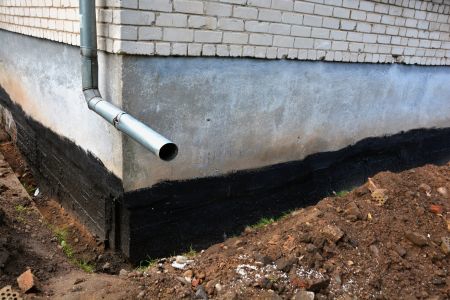
Basements exist below grade, surrounded by soil that naturally holds water. When drainage systems, grading, and foundation sealing work together, water moves away from the structure as intended. When those systems fall out of balance, the basement becomes the location where structural pressure finally reveals itself.