

The most expensive hurricane repairs are not always connected to a hurricane.
That sounds contradictory until you look at what restoration crews encounter year after year. A property owner spends time gathering emergency supplies, charging backup batteries, and monitoring forecasts. Meanwhile, a gutter system that has been struggling for two years remains clogged. A drainage issue near the foundation continues redirecting water toward the structure. A roof repair from several seasons ago quietly begins deteriorating.
Then a tropical system arrives.
Not necessarily a direct hit. Not even hurricane-force winds.
Just days of rain.
The reality is that hurricane season places prolonged stress on every component responsible for managing water around a property. Structures that perform well are not necessarily the newest homes or the most expensive homes. They are the properties where water already has somewhere to go.
Forget the Storm Category and Study the Water Path
Weather coverage focuses heavily on wind speed. Restoration professionals spend far more time looking at water movement.
Before hurricane season reaches its peak, take a walk around the property during a heavy rain event. Watch where water collects. Observe where it leaves the roof. Pay attention to whether it moves away from the structure or back toward it.
A surprising number of water damage projects begin with drainage patterns that were visible long before severe weather arrived.
Questions worth asking include:
- Does water pool near exterior walls?
- Do downspouts discharge far enough from the foundation?
- Are there low spots developing near patios or walkways?
- Does runoff move toward the home from neighboring lots?
Lightspeed Restoration teams routinely find that prolonged rainfall exposes drainage deficiencies much faster than wind ever exposes roofing problems.
The Checklist Most Homeowners Skip
Everyone remembers flashlights.
Few people inspect flashing.
Roof transitions, vent penetrations, skylights, and chimney connections deserve attention before storm season intensifies. These are areas where small failures become large intrusion points once rain is driven sideways for extended periods.
Tree maintenance belongs on the checklist as well.
The concern is not necessarily the tree itself. It is the branch that hangs over the roofline. The limb that appears healthy but has been carrying hidden stress for years. The section that only becomes a problem after sustained wind begins working on it.
Lightspeed Restoration regularly encounters storm damage situations where the structural opening was created by debris, not the weather directly.
What Hurricane Preparation Looks Like After the Forecast
One of the most overlooked preparations involves documentation.
Take photographs of:
- Roof conditions
- Exterior elevations
- Windows and doors
- Detached structures
- Valuable contents
Store insurance information somewhere accessible.
Know where utility shutoffs are located.
These steps require very little time and become extremely valuable if recovery efforts are needed later.
The Goal Isn't Perfection
No checklist can eliminate hurricane risk.
The objective is much simpler.
Reduce the number of weaknesses that weather can exploit.
Hurricane season is ultimately a stress test. Wind tests attachments. Rain tests drainage. Time tests maintenance decisions. Lightspeed Restoration has seen properties endure significant weather with minimal damage because critical systems were functioning exactly as intended. We have also seen relatively moderate storms expose years of deferred maintenance in a matter of hours.
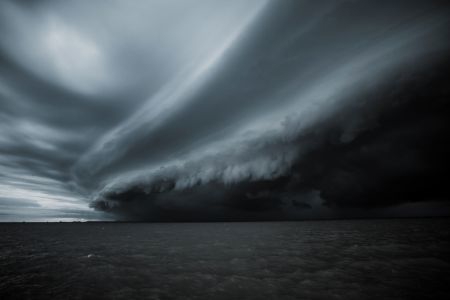
Preparation is less about the storm itself and more about understanding how your property responds when every water-management system is asked to perform at the same time.