

Moisture inside a home does not disappear simply because the visible water is gone. After a leak, storm intrusion, or humidity buildup, water can remain trapped inside drywall, wood framing, flooring, and insulation. When that moisture lingers, the indoor environment begins shifting in ways that affect air quality, building materials, and overall structural stability.
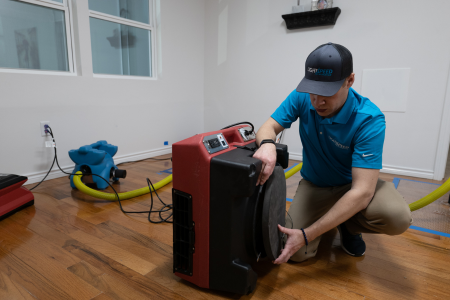
Restoring balance requires controlling how moisture moves through the air inside the home. Dehumidifiers and fans are commonly used together because they influence two different parts of the drying process. Fans move air across damp materials, while dehumidifiers remove excess moisture from the air itself.
Homes experiencing moisture problems frequently show signs that airflow or humidity levels have been out of balance for extended periods. During moisture inspections performed by technicians working with Lightspeed Restoration, elevated humidity and limited air circulation are two of the most common conditions identified when investigating water damage in residential spaces.
How Air Movement and Humidity Affect Drying Inside a Home
Drying building materials involves more than removing standing water. Materials such as drywall, hardwood flooring, baseboards, and subfloors absorb moisture internally. That trapped moisture must evaporate into the surrounding air before the material can return to stable conditions.
Fans help accelerate this process by increasing airflow across damp surfaces. Moving air encourages evaporation by carrying moisture away from the material surface. As evaporation continues, additional moisture inside the material begins migrating outward.
Air movement alone cannot resolve the problem if humidity inside the home remains high. When moisture evaporates from building materials, it enters the surrounding air as water vapor. If that humid air stays trapped indoors, evaporation slows and drying becomes much less effective.
Dehumidifiers solve this problem by extracting moisture from the air. As humidity levels drop, evaporation continues and damp materials release trapped moisture more efficiently.
Several conditions inside homes influence how well this drying process works:
- Air circulation inside enclosed rooms
Fans should direct airflow across damp surfaces rather than toward open hallways or unaffected areas. - Humidity levels within the living space
Dehumidifiers must operate long enough to continuously remove moisture released during drying. - Temperature conditions
Slightly warmer indoor temperatures encourage evaporation, while cooler air slows the process. - Closed interior spaces
Bathrooms, laundry rooms, basements, and crawlspaces tend to retain moisture longer because airflow is limited.
Field experience gathered during residential drying projects shows that equipment placement plays an important role in moisture control. Technicians at Lightspeed Restoration frequently evaluate airflow direction, humidity readings, and surface moisture levels to ensure that drying conditions remain balanced throughout the home.
When Homes Benefit from Moisture Control Equipment
Dehumidifiers and fans are often used after plumbing leaks, appliance failures, roof leaks, or storm-related water intrusion. They are also helpful in areas of the home where moisture naturally accumulates.
Basements and crawlspaces represent some of the most common environments where humidity control becomes necessary. These spaces sit below ground level and often experience limited airflow, which allows moisture to remain trapped for longer periods.
Laundry rooms and bathrooms can also contribute to elevated humidity levels when ventilation is insufficient. Over time, excess humidity inside these spaces may begin affecting surrounding materials such as drywall, trim, and flooring.
Residential inspections frequently reveal that moisture problems develop gradually rather than all at once. During structural moisture investigations conducted by Lightspeed Restoration, technicians regularly identify situations where lingering humidity allowed moisture conditions to persist long after the original water source was removed.
Moisture control inside a home depends on maintaining the right balance between airflow and humidity levels. When fans circulate air across damp materials and dehumidifiers remove excess moisture from the environment, building materials release trapped water and the indoor environment stabilizes.