

Key Takeaways
-
Lightspeed Restoration of Austin provides true 24/7 emergency water damage cleanup across Austin, TX, with fast on-site response when you call 512-428-8309.
-
Immediate actions (shutting off water, staying safe around electricity, calling a professional) within the first 1–2 hours can dramatically reduce damage and mold risk.
-
The core cleanup process includes emergency assessment, water extraction, cleaning and sanitation, drying and dehumidification, and full restoration of affected areas.
-
We handle all types of water emergencies in Austin—burst pipes, appliance leaks, roof leaks, storm and flash flood damage, and sewage backup—for homes and businesses.
-
Lightspeed Restoration of Austin helps coordinate with insurance carriers and offers local expertise tailored to Austin’s climate, building types, and frequent storm events.
24/7 Emergency Water Damage Cleanup in Austin, TX
When a pipe bursts in your 78731 home at 2 a.m. or flash flooding overwhelms your 78741 apartment complex during a spring thunderstorm, emergency water damage cleanup becomes your immediate priority. These situations don’t wait for business hours, and the damage doesn’t pause while you figure out what to do next.
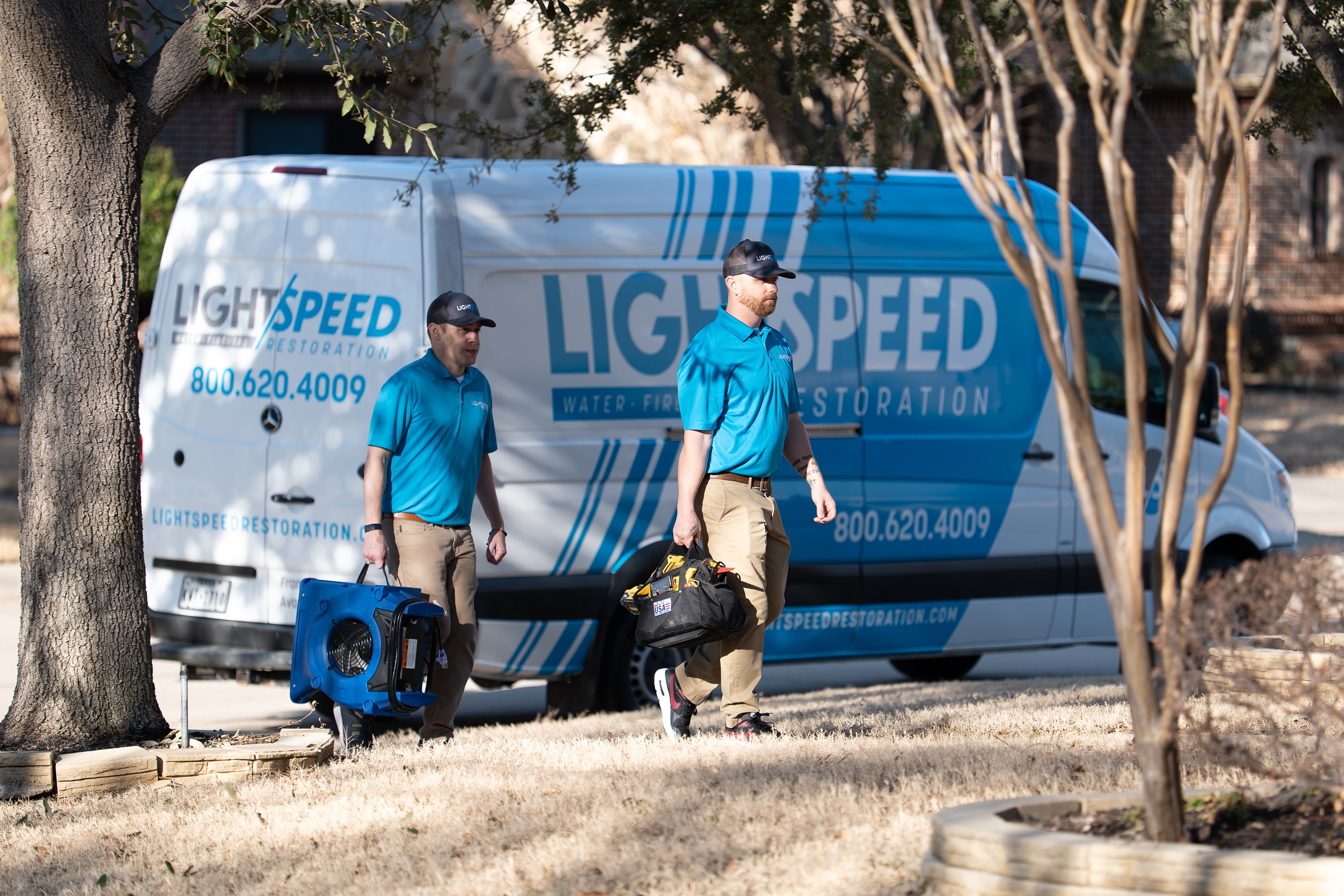
Lightspeed Restoration of Austin offers 24/7/365 emergency response, including nights, weekends, and holidays, with rapid dispatch for the greater Austin area. Our certified restoration specialists are ready whenever water damage strikes your home or business.
Call Lightspeed Restoration of Austin at 512-428-8309 as soon as you notice water damage. Every minute counts when you’re dealing with flooding or standing water—quick action can significantly reduce costs and prevent mold growth that often begins within 24-48 hours.
In typical Austin traffic conditions, our emergency crews often arrive within 60-90 minutes, depending on your location and current weather. During major storm events, we prioritize based on severity and safety concerns.
Our emergency water extraction teams come equipped with:
-
Truck-mounted and portable water extractors
-
Professional moisture meters and thermal imaging cameras
-
Industrial grade dehumidifiers and high-velocity air movers
-
EPA-registered sanitizing agents and antimicrobial treatments
-
Air scrubbers with HEPA filtration
This means work begins immediately upon arrival—no waiting for equipment or return trips.
Common Causes of Emergency Water Damage in Austin
Austin’s unique conditions create specific water damage risks that Central Texas property owners should understand. Aging plumbing in older central neighborhoods, intense seasonal thunderstorms, and occasional hard freezes all contribute to water emergencies that require rapid response from experienced professionals.
Residential Causes
Austin homeowners commonly experience water damage from:
-
Burst supply lines under kitchen and bathroom sinks
-
Overflowing toilets that flood bathrooms and adjacent rooms
-
Washing machine hose failures in laundry rooms and closets
-
Water heater leaks in garages, utility closets, and attics
-
Slab leaks in single-story homes built on Austin’s limestone bedrock
-
Dishwasher and refrigerator line failures that can run unnoticed for hours
Commercial Causes
For commercial clients across Austin, we frequently respond to:
-
Sprinkler line breaks in downtown Austin offices
-
Roof drain failures in retail centers and shopping plazas
-
HVAC condensate line clogs in tech campuses around the Domain and Cedar Park
-
Bathroom plumbing failures in restaurants and medical clinics
-
Fire suppression system malfunctions in Round Rock warehouses
Weather-Related Events
Austin, Texas, experiences weather patterns that create significant water damage risks:
|
Season |
Risk Type |
Common Impact |
|
Spring |
Heavy thunderstorms, flash flooding |
Ground-floor flooding near Shoal Creek, Onion Creek, and Wells Branch |
|
Summer |
Severe storms, roof damage |
Attic water intrusion, ceiling damage |
|
Fall |
Late-season storms |
Foundation drainage issues |
|
Winter |
Freeze events (like February 2021) |
Burst pipes, water heater failures |
Understanding Water Categories
Not all water damage requires the same approach. The restoration process depends on the water source:
-
Clean water (Category 1): From broken supply lines, rainwater, or faucets. Poses the lowest health risk but still demands swift removal.
-
Gray water (Category 2): From appliances like washing machines or dishwashers. Contains contaminants requiring sanitization.
-
Black water (Category 3): From sewage backup, toilet overflows with feces, or floodwater. Introduces pathogens and requires specialized hazardous waste protocols with proper protective gear.
Sewage backup and flood damage cleanup require advanced techniques and certified technicians trained in handling contaminated materials safely.
What To Do Immediately When You Discover Water Damage
Finding water where it shouldn’t be is alarming, but taking the right steps in the first few minutes can minimize damage and protect your property. Professional help is available 24/7 at 512-428-8309—call us while you take these initial safety measures.
Immediate Safety Steps
-
Shut off the main water supply if the source is a plumbing failure
-
Most Austin homes have shutoff valves near the meter at the street or where the main line enters the house
-
For condos and apartments, check utility closets or contact building management
-
-
Avoid electrical hazards
-
Do not enter rooms with standing water if outlets, appliances, or electrical panels are submerged
-
If safe to access, turn off power at the breaker box
-
Never touch electrical equipment while standing in water
-
-
Move valuables to dry areas if you can do so safely
-
Prioritize documents, electronics, and irreplaceable items
-
Lift furniture off wet carpet using aluminum foil or plastic blocks
-
What NOT to Do
-
Do not use household vacuums on standing water—they’re not designed for water removal and create shock hazards
-
Do not enter rooms with sagging ceilings—water-logged drywall can collapse without warning
-
Do not attempt sewage cleanup without proper personal protective equipment
-
Do not delay calling for professional help hoping the water will “dry on its own”
Document for Insurance
Before cleanup begins, take photos and videos of:
-
Visible water levels on walls and baseboards
-
Ceiling stains and drips
-
Damaged flooring and carpet
-
Soaked contents, furniture, and personal items
-
The apparent source of water intrusion
This documentation supports your insurance claim and helps adjusters understand the scope of damage.
Once you’ve completed immediate safety steps, contact Lightspeed Restoration of Austin at 512-428-8309. Our trusted water damage restoration professionals will begin the emergency water removal process and guide you through next steps.
Our Emergency Water Damage Cleanup Process
When you call Lightspeed Restoration of Austin, you’re getting a clear, systematic approach to damage cleanup. Here’s exactly what happens from the moment we arrive until your affected areas are dry, clean, and restored.
Step 1: Initial Inspection and Moisture Mapping
Professional water damage restoration in Austin begins with a thorough assessment using professional equipment:
-
Moisture meters detect hidden water saturation in drywall, wood framing, and flooring
-
Thermal imaging cameras identify temperature differentials that reveal trapped water behind walls and under floors
-
Visual inspection of all potentially affected areas, including adjacent rooms, closets, and crawlspaces
This moisture mapping creates a detailed scope of work that guides the entire water damage restoration process and provides documentation for insurance purposes.
Step 2: Emergency Water Extraction
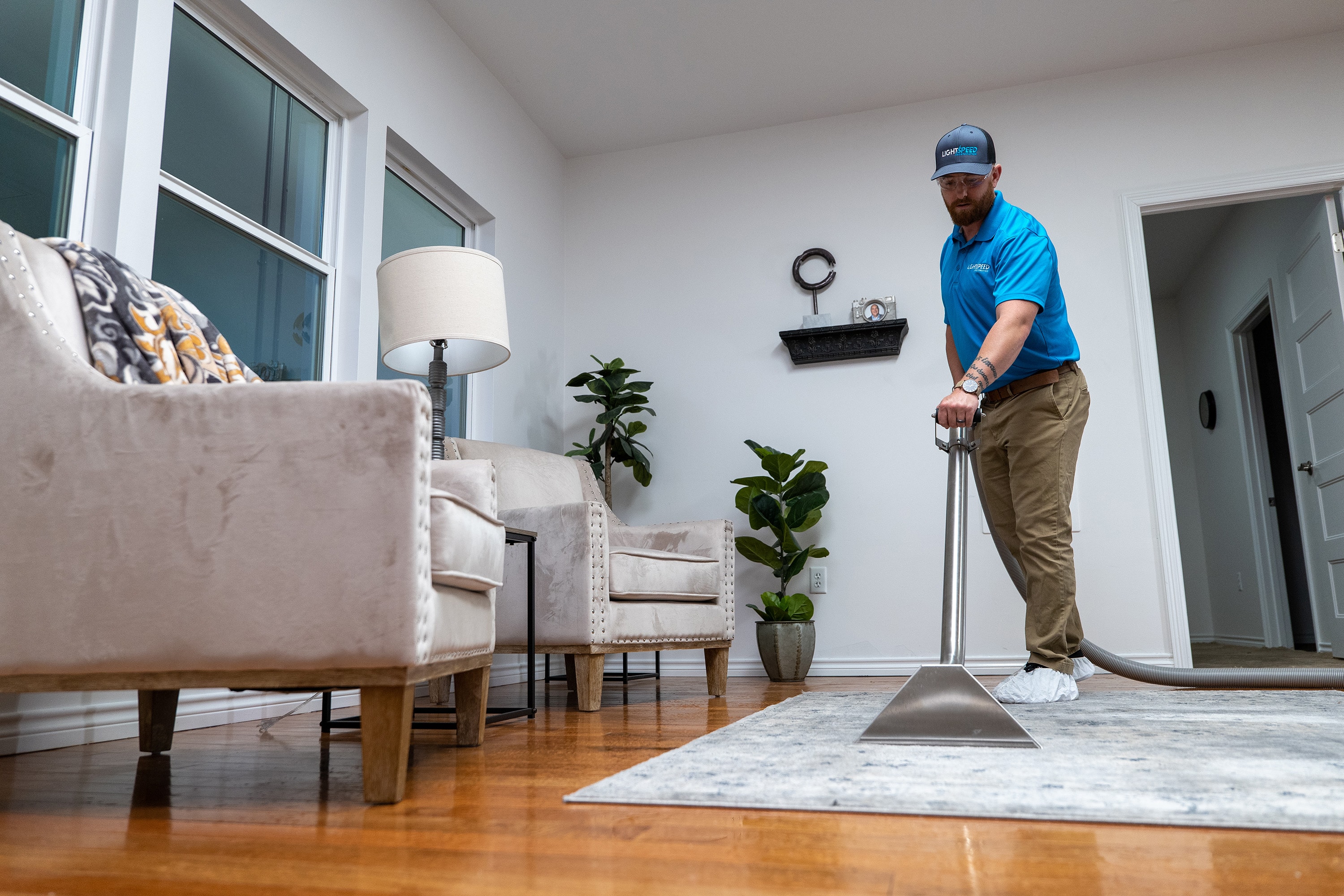
Rapid water extraction is critical to minimize damage and prevent mold. Our equipment removes standing water quickly and efficiently:
|
Equipment Type |
Application |
Capacity |
|
Truck-mounted extractors |
Large volume removal from flooded spaces |
100-200 gallons per minute |
|
Portable extractors |
Upstairs rooms, tight spaces, multi-story properties |
20-50 gallons per minute |
|
Weighted extraction tools |
Carpet and pad water removal |
Deep saturation extraction |
|
Hard surface tools |
Tile, engineered wood, and concrete |
Surface and subsurface water |
Step 3: Controlled Demolition (When Necessary)
Some materials cannot be saved and must be removed to prevent mold growth behind walls or under floors:
-
Water-logged carpet padding that holds moisture like a sponge
-
Baseboards and trim that trap water against wall cavities
-
Sections of drywall saturated above the salvageable threshold (typically cut 12-24 inches above the visible water line)
-
Wet insulation that cannot be adequately dried
We carefully remove only what’s necessary, protecting unaffected areas with containment barriers.
Step 4: Cleaning and Antimicrobial Application
For gray water and black water incidents, comprehensive water damage restoration includes:
-
Application of EPA-registered disinfectants to all hard surfaces
-
Antimicrobial treatments in bathrooms, kitchens, and contaminated areas
-
Removal of unsalvageable porous materials that absorbed contaminated water
-
Sanitization of salvageable contents
Step 5: Communication and Documentation
Throughout the water damage services process, our technicians will:
-
Explain each step and answer your questions
-
Provide estimated timelines for drying and restoration
-
Document moisture readings daily to show progress
-
Capture photos and logs that support your insurance claim
Drying and Dehumidification in Austin’s Climate
Austin’s humid subtropical climate makes thorough structural drying essential after any water damage emergency. Without proper moisture removal, Austin homeowners face significant risks of mold damage, warped hardwood floors common in Hill Country homes, and long-term structural damage to other structural components.
Professional Drying Equipment
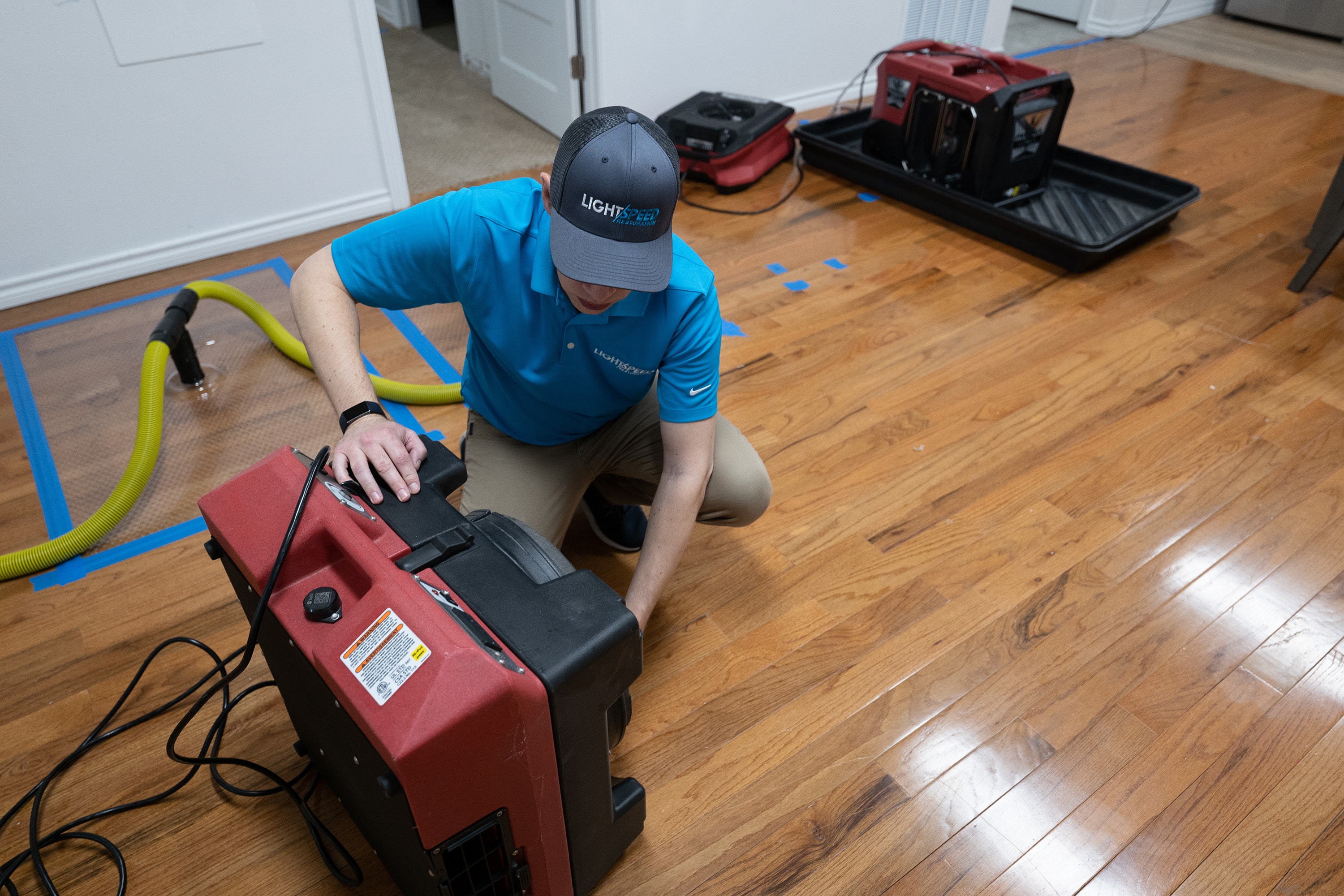
Lightspeed Restoration of Austin uses commercial-grade equipment that far outperforms household fans or dehumidifiers:
-
Low-grain refrigerant dehumidifiers processing up to 140 pints of moisture daily
-
High-velocity air movers creating turbulent airflow at 500-1000 cubic feet per minute
-
Air scrubbers with HEPA filtration to address indoor air quality concerns
-
Injectidry systems for drying wall cavities and under cabinets without full demolition
Typical Drying Setup in Austin Homes
For a standard water loss in an Austin home, you might see:
-
Air movers positioned at 45-degree angles along wet walls every 10-14 linear feet
-
Dehumidifiers placed centrally in hallways or large rooms to process air from multiple areas
-
Containment barriers (plastic sheeting) to focus drying energy on affected rooms
-
Furniture moved to create clear airflow paths
Daily Monitoring Visits
Our certified technicians return daily to:
-
Check moisture levels in drywall, trim, framing, and flooring
-
Adjust equipment placement based on drying progress
-
Document readings in written or digital logs
-
Ensure materials reach target moisture content (under 15% for wood, under 60% relative humidity for air)
Drying Timeframes
Complete structural drying typically takes 3-5 days, but varies based on:
|
Factor |
Impact on Drying Time |
|
Material type |
Laminate dries faster than hardwood; concrete takes the longest |
|
Water volume |
More water means longer extraction and drying |
|
Outdoor humidity |
Austin’s humid seasons extend drying times |
|
Building construction |
Pier-and-beam homes dry differently than slab foundations |
Equipment must run continuously—turning off dehumidifiers overnight significantly extends drying time and increases mold risk.
Mold Prevention and Indoor Air Quality After Water Damage
Austin’s warm, humid climate creates ideal conditions for mold growth. When temperatures hover between 70-90°F and humidity stays high, mold spores can activate and begin colonizing wet materials within 24-48 hours of water exposure. This makes rapid response from water restoration services absolutely critical.
How Professional Drying Prevents Mold
Prompt emergency water extraction and controlled drying from Lightspeed Restoration of Austin significantly reduce mold risk by:
-
Removing standing water before it saturates porous materials
-
Lowering the moisture content in building materials below the 15-20% threshold, where mold thrives
-
Reducing ambient humidity to prevent condensation on cool surfaces
-
Accelerating evaporation through professional airflow management
High-Risk Situations Requiring Extra Caution
Some water damage scenarios present elevated mold concerns:
-
Slow leaks behind showers that may have been dripping for weeks before discovery
-
AC closet leaks in interior spaces with limited ventilation
-
Repeated minor overflows from toilets or appliances that weren’t fully dried
-
Hidden water intrusion in wall cavities or under flooring
-
Delayed discovery of water damage while away from the property
If you notice musty odors or visible mold spots, mold remediation may already be necessary.
Mold Removal Services
When mold is present, our teams can provide:
-
Professional mold inspection to assess extent of contamination
-
Mold remediation services are consistent with Texas regulations and IICRC industry standards
-
Containment to prevent spore spread during removal
-
Post-remediation verification testing
Restoring Indoor Air Quality
After water damage cleanup, we address indoor air quality through:
-
HEPA air scrubbers that capture particles down to 0.3 microns
-
Removal of water-damaged porous materials that harbor bacteria and mold
-
Thorough cleaning and antimicrobial treatment of salvageable surfaces
-
Odor neutralization using ozone generators or hydroxyl radical technology for persistent smells
Residential vs. Commercial Emergency Water Damage Cleanup
Lightspeed Restoration of Austin serves both Austin homeowners and commercial clients, tailoring our emergency water damage cleanup approach to each environment’s unique needs.
Residential Water Damage Services
Austin’s diverse housing stock—single-family homes in Circle C and Hudson Bend, downtown condos, townhomes in Mueller, bungalows in East Austin—each present different water damage challenges:
-
Single-story slab homes: Require moisture detection in concrete and potential slab leak investigation
-
Two-story homes: Risk water migrating between floors through electrical and plumbing penetrations
-
Older homes (pre-1980): Often have aging galvanized pipes prone to bursting, especially in hard-freeze events
-
Condos and apartments: May involve coordination with HOAs, property management, and neighboring units
For families, we understand the stress of displacement and work efficiently to restore your property to pre loss condition as quickly as possible.
Commercial Water Damage Services
Business owners face additional pressures when water damage strikes:
|
Business Type |
Key Concerns |
Our Approach |
|
Offices |
Employee safety, equipment protection, and minimal downtime |
After-hours work, phased restoration |
|
Restaurants |
Health code compliance, food safety, and reopening timeline |
Priority sanitization, documentation for inspectors |
|
Medical clinics |
Patient safety, HIPAA-compliant document handling |
Specialized content restoration, air quality focus |
|
Retail stores |
Inventory protection, customer access, and revenue loss |
Safe access routes, rapid drying for floor coverings |
For businesses, we can:
-
Schedule phased work around your operating hours
-
Set up safe access routes for staff and customers
-
Coordinate after-hours drying and cleaning to minimize disruption
-
Provide documentation for landlords, insurance, and regulatory compliance
Property managers, landlords, and business owners: Save our number—512-428-8309—in your emergency plans now. When an unfortunate event like water damage emergencies occurs, you’ll be ready with a trusted local resource.
Why Austin Property Owners Choose Lightspeed Restoration
When water damage requires immediate action, Austin residents and businesses rely on Lightspeed Restoration for comprehensive water damage restoration that combines local expertise with professional execution.
Local Austin Expertise
We know Austin’s neighborhoods, from 78701 downtown to 78759 in the northwest and everywhere in between:
-
Familiarity with building styles common in Central Texas
-
Understanding of how Austin’s weather patterns—heavy rain, flash flooding, rare freezes—affect specific areas
-
Knowledge of local building codes and permit requirements for restoration work
-
Relationships with local suppliers for rapid material procurement
Training and Credentials
Our water damage restoration professionals maintain:
-
IICRC certification in water damage restoration and applied structural drying
-
Ongoing training on current industry standards and advanced techniques
-
Experience with advanced equipment, including thermal imaging, psychrometric monitoring, and specialized drying systems
-
Knowledge of EPA guidelines for antimicrobial application and contaminated water handling
Customer-Focused Service
We prioritize your experience throughout the restoration process:
-
Clear communication at every step
-
Photo documentation and moisture logs you can review
-
Assistance with insurance paperwork and adjuster coordination
-
Respect for your schedule, privacy, and property
Availability and Reliability
When water damage strikes, count on:
-
True 24/7 emergency service—nights, weekends, and holidays
-
Rapid mobilization with fully equipped crews
-
Commitment to restoring your property to pre damage condition
Whether you’re dealing with flood damage, burst pipes, or sewage backup, our goal is getting your home or business back to normal as quickly and safely as possible.
Call Lightspeed Restoration of Austin at 512-428-8309 for immediate emergency water damage cleanup anywhere in the Austin, TX area. We’re locally owned and ready to help satisfied customers across the region.
How We Work With Insurance During Emergencies
Dealing with insurance during a water emergency adds stress to an already difficult situation. Lightspeed Restoration of Austin helps streamline the claims process so you can focus on your family or business.
Professional Documentation
We provide insurance-ready documentation, including:
-
Detailed photographs of all affected areas before, during, and after restoration
-
Moisture readings with dated logs showing starting conditions and drying progress
-
Itemized estimates breaking down extraction, drying, cleaning, and reconstruction costs
-
Daily drying logs documenting equipment placement, readings, and technician observations
-
Scope of loss reports outlining all affected materials and areas
Working With Adjusters
While coverage decisions are solely up to your insurance carrier, we can:
-
Communicate directly with adjusters about the water damage repair process
-
Provide technical information about why specific procedures are necessary
-
Answer questions about equipment, timelines, and industry standards
-
Supply additional documentation or photos as requested
Tips for Smooth Claims
To help your claim proceed efficiently:
-
Contact your insurance company promptly—most policies require timely notification
-
Save your policy number and adjuster contact information, so our team can access it
-
Please don’t dispose of damaged materials until the adjuster has documented them (or approved)
-
Keep receipts for any emergency purchases, like temporary housing or water mitigation supplies
Our primary goal during emergencies is to minimize damage quickly and safely through professional water mitigation, then help you navigate the water damage restoration process step by step.
How to Reduce Your Risk of Future Water Damage in Austin
While not every emergency can be prevented, Austin homeowners and business owners can significantly reduce risk with regular maintenance and smart preparation. Taking proactive steps now helps you avoid costly repairs later.
Seasonal Inspections
Build these checks into your home maintenance routine:
Every 6 months:
-
Inspect supply lines to washing machines and dishwashers for bulging, cracking, or corrosion
-
Check water heater pans and connections (especially units older than 8-10 years)
-
Look for signs of slow leaks under sinks: water stains, warped cabinet floors, musty odors
-
Test sump pumps if your property has one
Before storm seasons (spring and fall):
-
Clean gutters and downspouts to prevent roof overflow
-
Inspect roof flashing around vents, chimneys, and skylights
-
Verify that yard drainage directs water away from the foundation
Before winter freezes:
-
Protect exposed pipes in garages, crawlspaces, and exterior walls
-
Know how to shut off your main water supply quickly
-
Disconnect garden hoses and cover outdoor spigots
Smart Prevention Investments
Consider these upgrades to prevent future damage:
|
Prevention Measure |
Location |
Benefit |
|
Water leak detectors |
Under sinks, near water heaters, laundry rooms |
Early warning of leaks before major damage |
|
Automatic shutoff valves |
Main water line or high-risk appliances |
Stops water flow when leak is detected |
|
Braided stainless steel hoses |
Washing machine, dishwasher, ice maker |
More durable than rubber hoses |
|
Pressure-reducing valve |
Main water line |
Reduces stress on pipes and fittings |
Be Prepared for Emergencies
Even with prevention measures, emergencies happen. Prepare by:
-
Saving Lightspeed Restoration of Austin’s emergency number—512-428-8309—in your phone now
-
Posting our contact information in rental units or commercial suites
-
Knowing your main water shutoff location and keeping a valve key accessible
-
Keeping important documents in waterproof containers or digital backups
FAQ: Emergency Water Damage Cleanup in Austin, TX
How fast do I need professional help after a water leak in Austin?
The 24-48 hour window is critical. Mold spores can begin colonizing wet materials within this timeframe, especially in Austin’s warm, humid climate where conditions are ideal for microbial growth. Calling 512-428-8309 immediately after discovering water damage gives you the best chance to prevent mold, minimize structural damage, and reduce overall restoration costs. Even small leaks can cause significant hidden damage if left untreated.
Can I handle emergency water cleanup myself?
For very minor incidents—a small spill or a leak caught within minutes—basic cleanup may be sufficient. However, professional water damage restoration services become necessary when:
-
Water has been standing for more than an hour
-
Water has spread to multiple rooms or levels
-
The source is gray water (appliances) or black water (sewage, flooding)
-
You cannot see where all the water has traveled
-
Carpet, drywall, or insulation is saturated
Homeowners using fans alone achieve only 20-30% of the evaporation efficiency that professional equipment provides. This often leads to hidden moisture, future damage, and mold issues requiring expensive remediation.
Is it safe to stay in my property during emergency water damage cleanup?
Safety depends on several factors. You may need to temporarily relocate if:
-
Electrical systems are compromised or near standing water
-
Black water contamination creates health hazards
-
Structural concerns exist (sagging ceilings, damaged flooring)
-
Running equipment creates excessive noise or humidity in living spaces
-
You or family members have respiratory sensitivities
Our team will assess safety conditions and help you make an informed decision. In many cases, you can remain in unaffected areas of the property while we work.
How long does emergency water damage cleanup and drying usually take in Austin?
Most residential water damage incidents require 3-5 days for complete drying, though this varies significantly based on:
-
Volume of water involved
-
Types of affected materials (concrete takes longer than carpet)
-
Current outdoor humidity levels
-
Building construction and airflow characteristics
A minor leak caught quickly might dry in 2-3 days. Major flooding or water that reached wall cavities, subfloors, or concrete slabs may require a week or more. Construction services for repairs and reconstruction extend the timeline beyond the drying phase.
Is emergency water damage cleanup covered by insurance?
Most homeowners and commercial property insurance policies cover sudden, accidental water damage from sources like burst pipes, appliance failures, and storm damage. Coverage typically includes water mitigation (extraction and drying) and restoration to restore your property to its previous condition.
However, policies generally exclude:
-
Gradual leaks or maintenance-related failures
-
Flood damage from rising water (requires separate flood insurance)
-
Mold that develops due to delayed response or neglected maintenance
Contact your insurance carrier promptly after any water loss. We provide documentation to support your claim, though final coverage decisions rest with your insurer.
When water damage strikes your Austin home or business, every minute counts. Don’t wait for the damage to spread or mold to take hold.
Call Lightspeed Restoration of Austin at 512-428-8309 now for immediate emergency water damage cleanup. Our certified technicians are standing by 24/7 to remove standing water, dry your property, and restore your peace of mind.
Save our number today—because emergencies don’t wait for convenient timing.