

Key Takeaways
-
Emergency water mitigation in Austin, TX must begin within the first 24 hours to prevent mold growth and structural damage—if you’re dealing with water in your property right now, call 512-428-8309 immediately.
-
Lightspeed Restoration of Austin provides 24/7 emergency response for homes and businesses throughout Austin, including neighborhoods like South Congress, Mueller, Circle C Ranch, Tarrytown, West Lake Hills, and downtown high-rises.
-
Our IICRC certified technicians use commercial-grade water extraction, structural drying, and moisture monitoring equipment to stop further damage and stabilize your property before full restoration begins.
-
Fast mitigation significantly reduces repair costs, shortens downtime, and creates smoother insurance claim documentation for Austin property owners facing unexpected water emergencies.
-
Whether it’s 2 AM on a holiday or the middle of a workday, our team is ready to respond—call now at 512-428-8309 for immediate on-site emergency water mitigation in Austin, TX.
- For complete drying and long-term protection, our water damage mitigation services in Austin continue after the initial emergency response to fully stabilize your property.
What Is Emergency Water Mitigation?
When water invades your Austin home or business, the clock starts ticking immediately. Emergency water mitigation is the critical first response that stops water damage from spreading and prevents secondary problems like mold and structural deterioration before full repairs can begin.
Understanding what mitigation actually involves—and how it differs from restoration—helps property owners make faster, smarter decisions when disaster strikes.
-
Mitigation vs. Restoration: Emergency water mitigation focuses on urgent stabilization during the first 24–72 hours. This includes extracting standing water, initiating the drying process, and protecting structures from further damage. Restoration comes afterward and involves repairs, rebuilding, and returning your property to its pre-loss condition.
If water is actively flowing or standing in your property, immediate emergency water removal in Austin should begin right away. After the initial response, our water damage mitigation services in Austin ensure proper drying, moisture control, and long-term protection of your property.
-
Common Austin Scenarios: In Austin, emergency mitigation typically follows burst pipes during winter cold snaps, appliance failures in kitchens and laundry rooms, roof leaks after severe thunderstorms, and plumbing backups in both older and newer homes. Properties in austin zip codes like 78701, 78704, 78731, 78745, 78746, 78748, and 78759 regularly require these services.
-
What Mitigation Protects: The process specifically targets preventing mold colonization, stopping structural weakening in walls and floors, and preserving finishes like hardwood flooring, drywall, and custom cabinetry that are expensive to replace in Austin properties.
-
The Bottom Line: Mitigation is about damage control. The faster water removal happens, the less damage occurs, and the simpler (and less costly) the eventual restoration process becomes.
Why Fast Emergency Water Mitigation Matters in Austin’s Climate
Austin’s warm, often humid conditions—especially from March through October—create an environment where water damage escalates rapidly. What might be a manageable situation in a dry climate becomes a race against time in the Greater Austin Area.
Here’s what happens when water sits untreated in an Austin property:
|
Timeframe |
What’s Happening? |
|
0–24 hours |
Moisture begins penetrating subfloors and wall cavities; bacteria starts multiplying in standing water |
|
24–48 hours |
Mold spores can begin colonizing damp materials; musty odors may develop |
|
48–72 hours |
Structural materials like wood framing can warp or swell; drywall begins to deteriorate |
|
72+ hours |
Significant structural damage likely; extensive mold remediation may be required |
|
Multi-family complexes |
Medical clinics and healthcare facilities |
Austin property owners face specific challenges that make rapid response essential:
-
Summer Thunderstorms: Intense rainfall can overwhelm drainage systems and drive water through compromised roofs or windows in minutes.
-
Winter Freeze Events: The February 2021 freeze demonstrated how quickly burst pipes can devastate homes when temperatures drop unexpectedly in central texas.
-
AC Condensate Line Failures: In a city where air conditioning runs nearly year-round, clogged or cracked condensate lines create slow leaks that suddenly become major water events.
-
Memorial Day Weekend Storms: Late spring severe weather regularly causes flooding and roof damage across the tx area.
Quick mitigation helps preserve hardwood flooring, engineered flooring, built-in cabinets, and drywall that are expensive to replace. When you act fast, you protect not just your property but also your budget.
If you see standing water, sagging ceilings, or wet flooring in your Austin home or business, call 512-428-8309 immediately—even at night or on holidays.
24/7 Emergency Response in Austin, TX
Water emergencies don’t wait for business hours, and neither do we. Lightspeed Restoration of Austin is available 24 hours a day, 7 days a week, including weekends and holidays, for emergency water mitigation inside the Austin, TX city area.
When you call, our team aims for a rapid on-site response—typically within about 1-2 hours in central Austin traffic conditions, depending on your location and weather. We prioritize active water leaks and safety concerns to minimize damage.
Austin Areas We Commonly Serve:
|
Area |
ZIP Codes |
|
Downtown Austin |
78701, 78702, 78703, 78704 |
|
South Austin |
78704, 78745, 78748 |
|
North Austin |
78758, 78759 |
|
East Austin |
78702, 78723 |
|
West Austin |
78746, 78735 |
|
Master-Planned Communities |
Circle C Ranch, Mueller |
We focus on Austin, TX, rather than spreading ourselves too thin across the broader region. This allows us to keep response times fast and our crews familiar with local building types, codes, and the unique challenges of Austin properties.
Call now at 512-428-8309 for an immediate emergency water mitigation dispatch in Austin.
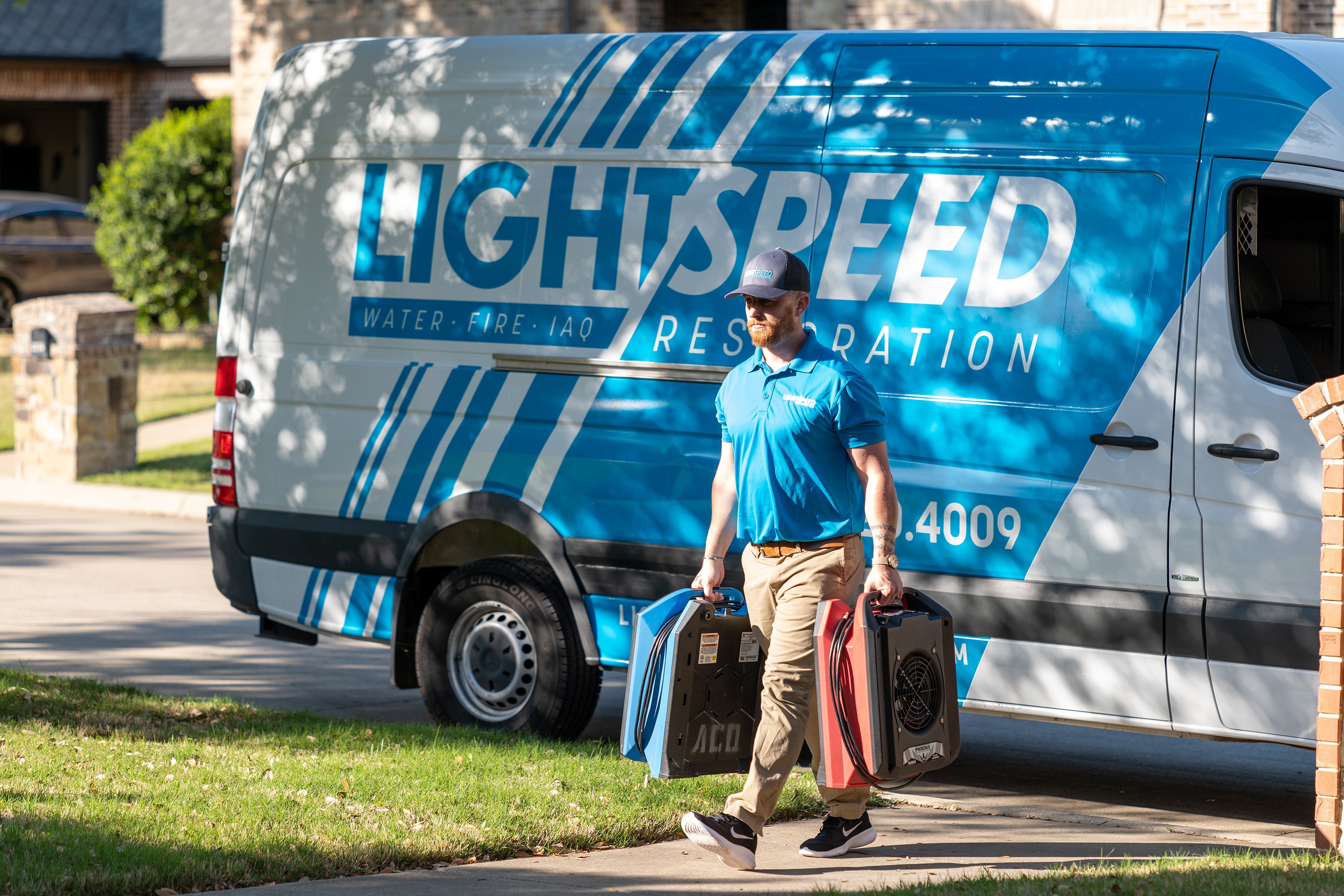
Common Emergency Water Situations We Mitigate in Austin
Austin properties face a diverse mix of plumbing, appliance, and weather-related water emergencies. Each situation is different, but they all share one thing in common: the need for fast, professional mitigation to prevent further damage.
Residential Scenarios
-
Burst supply lines in older Central Austin bungalows and historic homes with aging plumbing
-
Leaking water heaters in garages—a common issue in Austin, TX homes,s where heaters often go unnoticed until failure
-
Overflowing toilets or tubs in condos and apartments, sometimes affecting multiple units
-
Dishwasher or refrigerator line leaks in modern kitchens, often causing damage to cabinets and floors before detection
-
Washing machine hose failures in laundry rooms, which can release hundreds of gallons before discovery
Commercial Situations
-
Office building sprinkler discharges downtown, flooding multiple floors and affecting business operations
-
Roof leaks in retail spaces after heavy thunderstorms roll through the tx area
-
Restaurant kitchen line breaks along busy corridors like South Lamar or Burnet Road
-
Medical and dental office flooding requiring specialized contamination protocols
-
Warehouse and storage facility water intrusions affecting inventory and equipment
Storm-Related Scenarios
-
Wind-driven rain through damaged roofs after severe weather
-
Clogged gutters causing interior leaks and ceiling damage
-
Localized street flooding backing into ground-level units in low-lying parts of Austin
-
Flash flood water entering through doors, windows, or foundation cracks
Each situation requires a tailored mitigation plan. Some focus on contaminated water cleanup (Category 2 or 3 water from sewage or flooding), while others prioritize saving finishes and contents. Our IICRC-certified technicians assess each emergency and develop the appropriate response strategy.
Our Emergency Water Mitigation Process
Lightspeed Restoration of Austin adheres to industry-standard IICRC guidelines for emergency water mitigation, tailored to Austin’s climate and the city's common building styles. Here’s precisely what happens when you call us.
Step 1: Initial Phone Assessment
When you call 512-428-8309, we gather critical details about your situation:
-
Location and nature of the leak or flooding
-
Whether you’ve been able to stop the water source
-
Any safety concerns (electrical hazards, structural issues, contamination)
-
Approximate affected areas and property type
This information helps us dispatch the right team with appropriate equipment.
Step 2: Rapid Dispatch
Our team departs from our Austin base immediately. For active emergencies, we prioritize getting boots on the ground as quickly as possible—typically 60–90 minutes depending on traffic and location.
Step 3: On-Site Inspection
Upon arrival, our technicians conduct a comprehensive assessment using:
-
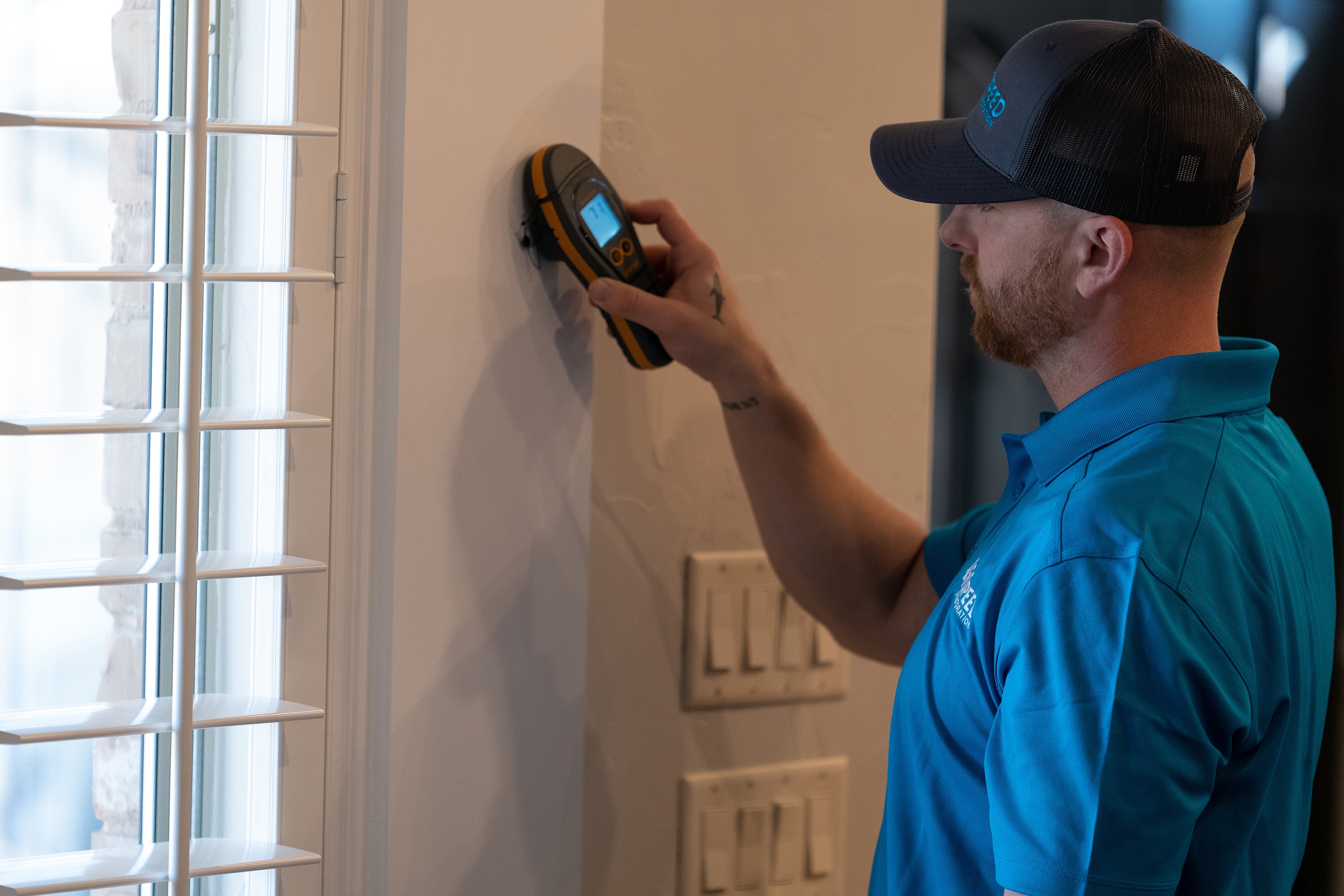
Professional moisture meters to measure saturation levels in materials
-
Infrared cameras to detect hidden moisture in walls, ceilings, cabinets, and subfloors
-
Visual inspection to identify the water source and categorize contamination level
This inspection often reveals moisture in areas that appear dry to the naked eye. In Austin’s pier-and-beam homes, for example, water can migrate into crawl spaces. In slab-on-grade construction common in newer suburbs, moisture can travel under flooring without visible signs.
Step 4: Water Extraction
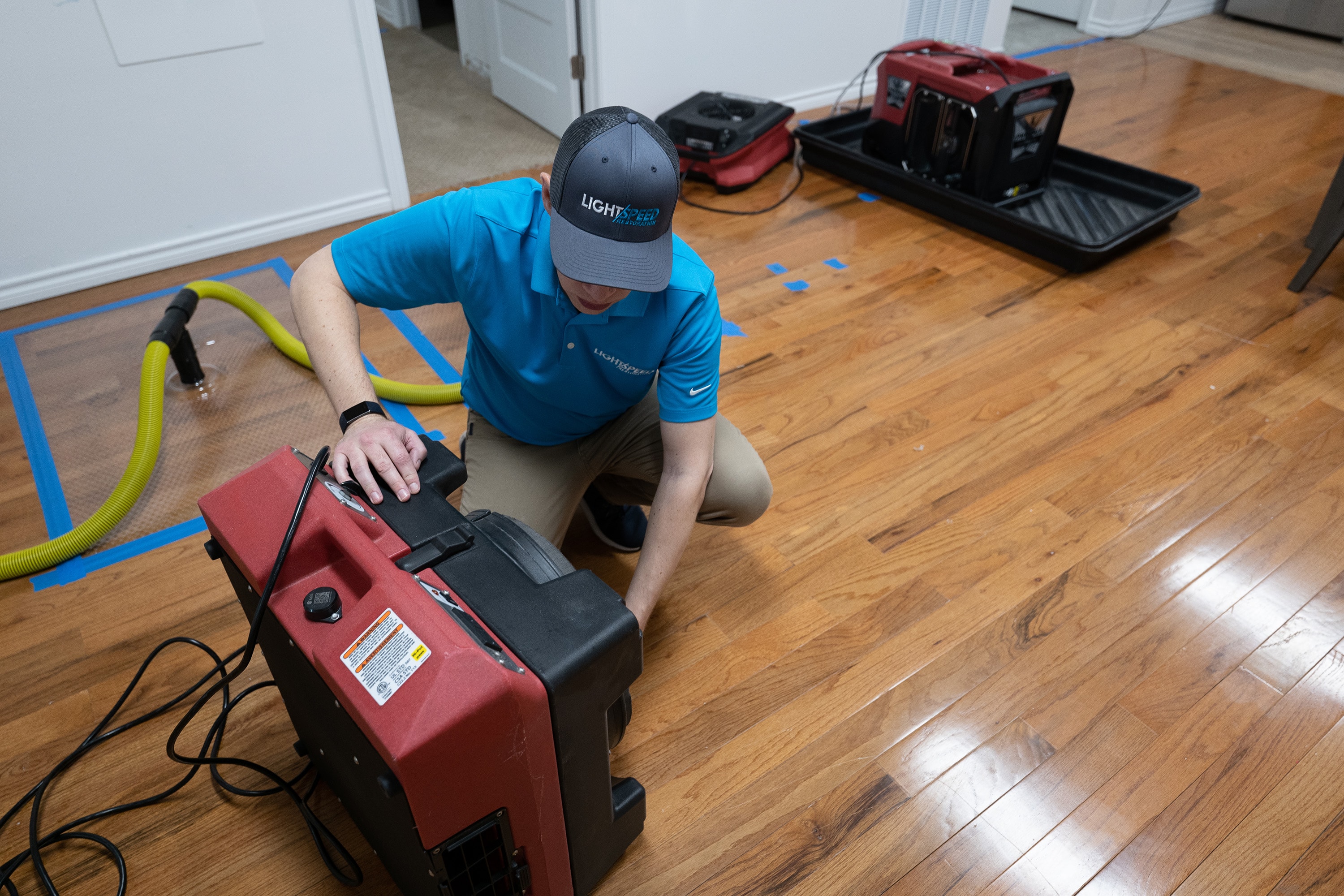
This is where speed makes all the difference. Removing liquid water is approximately 500 times more efficient than relying on air movement and dehumidifiers alone. Our water extraction process includes:
-
Truck-mounted extraction units for high-volume water removal
-
Portable extractors for hard-to-reach areas
-
Specialized tools for pulling water from carpets, tile, concrete slabs, and hardwood
-
Careful attention to baseboards and wall cavities where water often hides
Step 5: Controlled Demolition (When Necessary)
Some materials cannot be effectively dried and must be removed to prevent mold and trapped moisture:
-
Saturated carpet pad (carpet itself can often be saved if dried quickly)
-
Sections of drywall that have absorbed significant moisture
-
Buckled laminate or damaged flooring materials
-
Insulation in wall cavities that has become waterlogged
Our team performs careful, targeted removal—only what’s necessary to protect your property.
Step 6: Sanitation and Documentation
After water extraction and any necessary demo:
-
Sanitation of affected surfaces with appropriate antimicrobial solutions
-
Odor control treatments as needed
-
Comprehensive documentation: photos, moisture logs, and detailed notes
-
Clear records that can be submitted to insurance carriers
Step 7: Structural Drying
After extraction, demo, and cleaning, we deploy commercial drying equipment:
-
High-velocity air movers positioned strategically to maximize airflow across affected areas
-
Low-grain refrigerant dehumidifiers are designed to handle Austin’s ambient humidity levels
-
Daily moisture readings to track drying progress and adjust equipment placement
The drying phase applies the four scientific principles of structural drying: excess water removal, evaporation through air movement, dehumidification, and temperature control. These work together to remove moisture from framing, drywall, flooring, and other materials.
This emergency mitigation process stabilizes your property. For full structural drying and long-term moisture control, our water damage mitigation services in Austin continue the process after the initial response.
Special Considerations for Mold and Air Quality
Austin’s extended warm seasons and constant indoor AC usage create conditions where mold can spread quickly after water incidents. When moisture lingers, mold spores—which are always present in the air—find ideal conditions to colonize building materials.
How Mitigation Addresses Mold Risk
Our emergency water extraction and structural drying process is specifically designed to prevent mold growth:
-
Rapid moisture removal before mold has time to establish (ideally within 24–48 hours)
-
Removal of porous materials that stayed wet too long and cannot be adequately dried
-
Targeted application of antimicrobial solutions on affected surfaces
-
Continuous monitoring to ensure materials reach safe moisture levels
When Mold Is Already Present
If significant visible mold is already present, or if water has sat untreated for several days, the situation may shift from simple mitigation to full mold remediation following Texas and IICRC guidelines. This involves additional containment, air filtration, and specialized removal procedures.
Indoor Air Quality Concerns
Water damage affects more than just structures. Property owners often notice:
-
Musty odors that persist even after visible water is removed
-
Increased humidity levels throughout the property
-
Potential allergens affecting families with asthma or allergies
These concerns are especially important in Austin households with children, elderly residents, or anyone with respiratory sensitivities. Lightspeed Restoration of Austin can coordinate or provide air quality improvements such as HEPA air filtration during mitigation.
Residential vs. Commercial Emergency Water Mitigation in Austin
Lightspeed Restoration of Austin handles both residential homes and commercial properties, but the mitigation approach differs based on occupancy, usage, and operational requirements.
Residential Properties
For Austin homeowners, our priorities include:
-
Protecting personal belongings, family photos, and irreplaceable items
-
Preventing mold in bedrooms, living areas, and closets where families spend the most time
-
Minimizing disruption so your family can return home quickly
-
Preserving hardwood floors, custom cabinetry, and other high-value finishes
We understand that dealing with water damage in your Austin home is stressful. Our team treats your property with respect and keeps you informed throughout the whole process. Neighborhoods we regularly serve include Tarrytown, Windsor Park, Oak Hill, and communities throughout the Greater Austin Area.
Commercial Properties
For business owners and property managers, we focus on:
-
Keeping key operational areas functional when possible
-
Working around business hours to minimize revenue disruption
-
Coordinating with property managers, tenants, and building engineers
-
Meeting safety and compliance standards for offices, retail spaces, medical facilities, and educational buildings
Commercial water damage often requires creative problem-solving. We can phase work, use containment barriers, and prioritize critical areas so that part of your business can continue operating during mitigation.
Special Challenges We Handle
|
Property Type |
Common Challenge |
Our Approach |
|
Downtown Condo Towers |
Multi-story water migration |
Coordinate with building management; address affected units systematically |
|
Large Open-Plan Offices |
Sectional containment needs |
Deploy containment barriers; focus on workable zones |
|
High-Traffic Retail Floors |
Slip hazard control |
Use safety barriers; schedule work during off-hours |
|
Restaurants |
Health code concerns |
Prioritize kitchen and food prep areas; document for inspectors |
Working With Insurance During Emergency Mitigation
Many emergency water mitigation jobs in Austin involve homeowners or commercial property insurance claims. Understanding how mitigation and insurance work together helps property owners navigate this process with less stress.
How We Support Your Claim
Lightspeed Restoration of Austin documents every loss thoroughly:
-
Before-and-after photos of all affected areas
-
Moisture readings at initial inspection and throughout drying
-
Detailed drying logs showing equipment placement and progress
-
Itemized estimates that align with common insurance reporting standards
While we do not adjust claims or make coverage decisions (that’s between you and your carrier), we can communicate directly with assigned adjusters or property managers to explain the scope of mitigation work performed.
Act First, Then Call Insurance
Here’s a critical point many property owners overlook: call for mitigation first at 512-428-8309, then contact your insurance provider.
Insurance policies typically require property owners to take reasonable steps to prevent further damage. Waiting for claim approval before starting mitigation can:
-
Allow damage to worsen significantly
-
Increase total repair costs
-
Complicate your insurance claim
-
Potentially give insurers grounds to dispute coverage
What’s Typically Covered
|
Usually Covered |
Often Limited Coverage |
|
Sudden pipe bursts |
Long-term, gradual leaks |
|
Appliance failures (water heater, dishwasher) |
Maintenance-related problems |
|
Storm damage |
Flood damage (requires separate policy) |
|
Accidental overflows |
Neglected repairs |
We cover the difference between flood damage vs. water damage in a separate post.
Always check your specific policy for details, but don’t wait to start mitigation. Call 512-428-8309 now to protect your property—then call your insurance company.
Why Choose Lightspeed Restoration of Austin for Emergency Water Mitigation
When water damage strikes, you need a team that knows Austin, responds fast, and has the expertise to protect your property. Lightspeed Restoration of Austin is a locally owned emergency water mitigation provider dedicated exclusively to serving Austin, TX.
Our Credentials
-
IICRC Certified Technicians: Our team is trained in water damage mitigation, structural drying, and related disciplines, with ongoing education in current industry standards
-
Advanced Equipment: Commercial extractors, low-grain refrigerant dehumidifiers, high-velocity air movers, and professional moisture detection tools
-
Data-Driven Approach: We don’t guess—we measure moisture levels and track progress to ensure complete drying
Local Expertise That Matters
Austin has diverse building types, and each responds differently to water damage:
|
Building Type |
Where Common |
Water Damage Behavior |
|
Pier-and-beam homes |
Older Central Austin neighborhoods |
Water migrates to crawl spaces; floor systems are vulnerable |
|
Slab-on-grade homes |
Suburbs, newer construction |
Moisture travels under flooring; detection requires specialized tools |
|
High-rise condos |
Downtown, Domain |
Multi-floor migration; coordination with building management essential |
|
Historic properties |
Hyde Park, Travis Heights |
Unique materials require careful drying approaches |
Our crews understand these differences because we work in Austin every day. We’re not a national franchise sending unfamiliar technicians—we’re your neighbors, and we know this city.
What You Can Expect
-
Clear Communication: We explain every step in plain language
-
Daily Updates: During active drying, we keep you informed on progress
-
Respectful Treatment: We treat your home or business with care
-
Transparent Process: No surprises, no hidden steps
Austin property owners: call now at 512-428-8309 for prompt, local emergency water mitigation service.
How Austin Homeowners Can Limit Damage Before We Arrive
Safety First: If there are electrical hazards, ceiling collapse risks, or contamination from sewage, evacuate the area immediately and wait for professionals. Your safety is more important than any property.
For clean-water events where it’s safe to act, here are steps you can take while waiting for our team:
Safe Steps to Take
-
Shut off the main water supply to stop additional flooding. In most Austin houses, the shutoff valve is located near the water meter at the front of the property or where the main line enters the home.
-
Turn off electricity to affected areas if you can do so safely without standing in water. Locate your breaker panel and flip breakers for impacted rooms.
-
Move dry valuables to a safe area away from the water. Prioritize irreplaceable items like photos, documents, and electronics.
-
Take photos and short videos of the affected areas before moving anything. This documentation helps with your insurance claim.
What to Avoid
-
Don’t use household fans instead of professional drying equipment—they’re not powerful enough and can spread contamination
-
Don’t attempt to remove glued-down flooring without knowing what’s underneath and where utilities are located
-
Don’t cut out drywall unless you understand where electrical wiring and plumbing run
-
Don’t enter rooms with sagging ceilings—water-logged drywall can collapse suddenly
These are temporary measures only. Full mitigation requires professional advanced equipment and expertise to remove water, dry structures, and prevent mold.
Call 512-428-8309 as soon as water damage is discovered—then take these safe steps while you wait.
Emergency Water Mitigation vs. Full Restoration
Many Austin property owners are unsure where mitigation ends and full restoration begins. Understanding this distinction helps you know what to expect and why proper early action matters so much.
Emergency Mitigation (First 24–72 Hours)
The immediate steps our team takes to stabilize your property:
-
Stopping or containing the water source
-
Extracting all standing water
-
Beginning structural drying of walls, floors, and materials
-
Sanitizing affected surfaces
-
Removing unsalvageable materials that could harbor mold or trapped moisture
-
Documenting the loss for insurance purposes
The goal of mitigation is to remove water, dry the structure, and prevent further damage. It’s about stopping the emergency.
Full Restoration (After Stabilization)
The follow-up work that returns your property to its pre damage condition:
-
Repairing or replacing drywall
-
Installing new flooring where needed
-
Rebuilding cabinets and trim
-
Repainting walls and ceilings
-
Final finishing touches
Lightspeed Restoration of Austin can coordinate or provide both phases as part of a complete water damage restoration process in Austin. However, the key insight is this: proper early mitigation makes later restoration faster, less invasive, and often significantly less expensive.
When mitigation happens quickly—within hours rather than days—high-value materials like hardwood flooring or custom cabinetry can often be dried and saved rather than replaced. The restoration process becomes about cosmetic repairs rather than major reconstruction.
That’s why every minute counts. Fast response means less damage, lower costs, and a quicker path to having your property fully restored.
Call Now for Emergency Water Mitigation in Austin, TX
When water invades your Austin home or business, the damage gets worse with every passing hour. Mold can begin forming within 24–48 hours. Structural materials can warp within days. What starts as a contained problem can become a months-long restoration project if mitigation is delayed.
Lightspeed Restoration of Austin offers 24/7 emergency response exclusively within Austin, TX. Our IICRC-certified technicians arrive with professional mitigation equipment ready to extract water, begin drying, and protect your property from future damage.
If You See Any of These Signs, Call Now:
-
Standing water on floors
-
Wet walls or ceilings
-
Water dripping from above
-
Musty odors after a leak
-
Bubbling paint or warped flooring
Call 512-428-8309 immediately. We answer emergency calls around the clock—nights, weekends, and holidays.
Save Our Number
Add “Emergency Water – Lightspeed Austin” to your phone contacts now. When an emergency happens, you’ll be able to reach us quickly without searching. Our local Austin emergency water mitigation team is available 24/7 to respond quickly.
Our team will guide you step-by-step—from the first emergency call through drying, documentation, and transition into any needed water damage restoration services. We’re here to restore your property and help you get back to normal as quickly as possible.
Call 512-428-8309 now. We’re ready to help.
Frequently Asked Questions About Emergency Water Mitigation in Austin, TX
How fast can you get to my property in Austin?
Our typical arrival time is about 1-2 hours depending on your location within Austin and current traffic conditions. We prioritize active water leaks and safety concerns. If you’re dealing with water actively flowing or significant flooding, let us know when you call 512-428-8309 and we’ll dispatch our nearest available team immediately.
Do I need to wait for my insurance company before calling you?
No—and in fact, you shouldn’t wait. Most insurance policies require property owners to take reasonable steps to prevent further damage, which means starting mitigation promptly. Call us first to stop the damage, then contact your insurance company. Delaying mitigation while waiting for claim approval can worsen damage and complicate your insurance claim.
Can you help if water has been sitting for several days?
Yes, we can still mitigate, though the job may involve more extensive work. When water sits for multiple days, we typically see more materials requiring removal, increased mold concerns, and longer drying times. If you’ve discovered water damage that’s been present for a while, call 512-428-8309 for an assessment—the sooner we start, the more we can salvage.
Do you only serve Austin, TX?
Lightspeed Restoration of Austin focuses on the Austin area and select nearby neighborhoods, such as West Lake and Cedar Park. This focused service area allows us to respond rapidly, maintain fast response times, and keep our crews deeply familiar with local building types and conditions. For properties outside Austin proper, we can often recommend trusted partners.
What should I do if this happens at night or on a holiday?
Call 512-428-8309 at any hour. Our emergency service operates 24/7, including nights, weekends, and holidays. An emergency team member will answer or return your call promptly to gather information and begin the dispatch process. Water emergencies don’t follow business hours, and neither do we.
Will my hardwood floors need to be replaced?
Not necessarily. When emergency water extraction and structural drying begin quickly—ideally within the first 24 hours—hardwood flooring can often be dried in place and saved. The key factors are how long the water sat, how much moisture penetrated the subfloor, and whether the wood has begun cupping or buckling. Our moisture monitoring helps us determine what can be saved and what needs replacement.