

When a flood hits Austin, minutes matter. This guide explains flood damage remediation, the restoration process, insurance steps, and when to call Lightspeed Restoration of Austin at 512-428-8309 for emergency services.
Immediate Steps After Flood Damage in Austin (First 24 Hours)
Central Texas sits in Flash Flood Alley, where one storm cell over Barton Creek, Onion Creek, or a low-water crossing can send water into a home fast. If disaster strikes, call Lightspeed Restoration of Austin at 512-428-8309 right away for flood damage restoration services.
The immediate goal of flood remediation is to stabilize the environment, prevent injuries, and document the loss. Quick action in the first day after flooding can prevent major structural damage and stop mold from growing. Mold can start growing within 24 to 48 hours in wet conditions, making it crucial to act quickly after flooding to prevent its development.
-
Stay out of standing water, especially near electrical outlets or downed power lines.
-
Check for gas odors; leave immediately if you smell gas.
-
Wear PPE: N95 masks, heavy-duty gloves, and rubber boots.
-
Shut off electricity and water only if you can safely reach the panel and valves.
-
Move personal belongings, family heirlooms, photos, electronics, and documents to a dry space.
-
Photograph flood damage in all affected areas before moving anything.
-
To protect furniture legs, place aluminum foil under them; aluminum foil can reduce staining while crews arrive.
Call 512-428-8309 for 24/7 emergency flood damage restoration services in Austin, TX, including South Austin. If you are near Round Rock or Cedar Park, call to confirm Austin-only dispatch guidance.
Staying Safe: Hidden Hazards and Health Risks After a Flood
Austin floodwater can contain bacteria, chemicals, and sewage from overwhelmed storm drains, creating serious health risks. Flood damage often involves contaminated water, which can carry harmful bacteria and chemicals, whereas water damage from internal sources is typically less hazardous.
Watch for:
-
Gray water and black water: Flood damage remediation requires handling contaminated floodwater classified as “black water” according to safety protocols.
-
Energized outlets under water, damaged electrical systems, and unsafe extension cords.
-
Weakened floor decking, sagging ceilings, buckled hardwoods, and shifting foundations.
-
Mold spores that can trigger respiratory issues, especially for kids, seniors, and people with asthma or allergies.
-
Bacteria, pests, and mold: neglecting water damage repair can lead to long-term health risks from mold, bacteria, and pests, emphasizing the importance of prompt action.
Do not touch floodwater with bare skin, do not use household vacuums, and do not mix bleach and ammonia. Flood restoration professionals use respirators, gloves, goggles, HEPA filtration, and containment to reduce airborne contaminants.
Stopping the Water and Documenting Flood Damage for Insurance
Stopping the water source and documenting property damage early can reduce financial losses and support the insurance claims process.
Austin scenarios include flash flooding through patio doors, roof leaks after hail, slab leaks into living rooms, sewage backups, a burst pipe, broken household appliances, clogged drains and gutters, and old or faulty water heaters. Natural disasters such as heavy rain, storms, and flooding can lead to significant water damage in homes.
Steps to take:
-
If safe, limit surface water with sandbags at doors, tarps over roof leaks, or the main water shutoff after a burst pipe.
-
Documenting water damage is crucial for insurance claims, and homeowners should take photos and videos of every damaged room before moving anything to provide proof of damage for claims processing.
-
Document water levels with measuring tape or rulers to show how high water reached on walls and furniture, which can expedite insurance settlements.
-
Create a detailed list of damaged items with approximate value, including furniture, electronics, and personal belongings.
-
Save receipts for emergency expenses, including temporary housing.
Lightspeed Restoration of Austin can assist with on-site documentation, moisture readings, and estimates for the claims process.
Professional Flood Damage Restoration Process in Austin
Lightspeed Restoration of Austin follows a structured flood damage restoration process tailored to slab-on-grade homes, pier-and-beam houses, and modern townhomes. Flood damage restoration goes beyond water damage cleanup; it aims to return the property as close as possible to pre loss condition.
The water damage restoration process typically involves five key steps: inspection and assessment, water removal, drying and dehumidification, flood damage cleanup, and repair and reconstruction.
-
Inspection and moisture mapping
-
Water extraction and initial stabilization
-
Structural drying and dehumidification
-
Cleaning, disinfection, and odor control
-
Flood damage repair, minor repairs, and reconstruction
-
Final verification before rebuild
Many Austin homes need 3–5 days of active drying after major damage, though the timeline depends on the extent, water source, and materials involved. Call 512-428-8309 to schedule an assessment.
Inspection, Moisture Mapping, and Safety Assessment
During the inspection phase, specialists identify the water source, contamination category, and damage class to determine the appropriate restoration approach.
Technicians inspect living areas, garages, cabinets, crawl spaces, wet areas, and hidden cavities. Moisture meters are used to monitor drying progress and ensure that materials reach normal moisture levels before rebuilding. Infrared cameras help find water intrusion behind drywall, under tile, and around newer cabinetry.
Safety checks include structural damage, gas hazards, electrical systems, and saturated building materials. Licensed professionals should inspect the home’s infrastructure including HVAC, plumbing, and electrical systems before repairs begin.
Water Extraction and Initial Stabilization
Water removal is a critical step in the restoration process, where standing water is extracted using industrial vacuums and pumps to prevent further damage and reduce drying time.
Crews use industrial pumps, truck-mounted extractors, and wet vacuums designed for restoration services. Removing water usually starts in the lowest areas to prevent migration into dry building materials. Saturated materials must be removed immediately to prevent them from acting as breeding grounds for mold and bacteria.
Carpet padding, wet insulation, and low drywall often come out after contaminated floodwater. Contents may be moved, blocked, or protected to safeguard salvageable items while crews remove standing water and excess water.
Drying, Dehumidification, and Mold Prevention
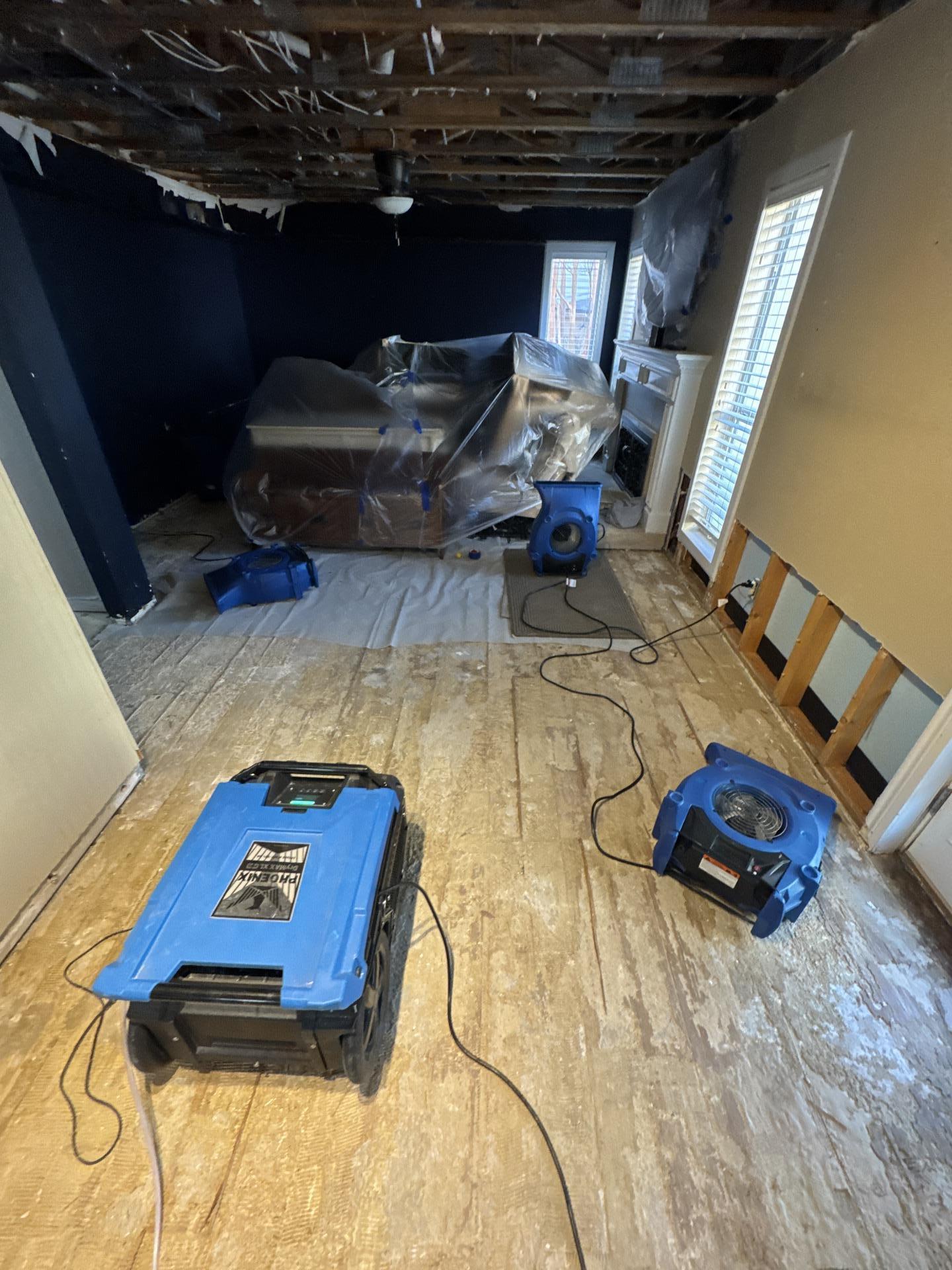
After water removal, drying and dehumidification are performed using heavy-duty fans and commercial-grade dehumidifiers to ensure all affected areas return to normal moisture levels.
Air circulation is important; heavy-duty air movers should be placed throughout the home to help with drying. Commercial-grade dehumidifiers should be used to manage humidity levels and draw moisture out of the structure. In Austin summer humidity, closed spaces with high humidity need dehumidifiers to reduce moisture in the air, which is vital for preventing mold growth after flooding.
To prevent mold growth, it is essential to remove wet materials such as carpets, insulation, and drywall that cannot dry quickly within 48 hours after flooding. Antimicrobial treatments are necessary to prevent mold growth on structural components after flooding. Daily meter checks help stop hidden mold, warped floors, and costly repairs.
Cleaning, Disinfection, and Odor Control
Sanitization involves cleaning all hard surfaces with a detergent and disinfecting them to remove contaminants from floodwaters. Cleaning and sanitizing all surfaces is essential, especially if the water damage is categorized as hazardous, requiring the use of antimicrobial solutions and protective equipment.
Porous materials like mattresses, upholstered furniture, and carpet pad exposed to Category 3 water are usually discarded. HEPA vacuums, air scrubbers, and deodorization help remove residues, allergens, and musty odors.
Repairs and Returning Your Austin Home to Pre-Loss Condition
Repairs may include replacing drywall to the flood line, installing insulation, reinstalling flooring, and matching trim, baseboards, or doors. Licensed trade partners may handle HVAC, plumbing, and electrical repairs.
Lightspeed Restoration of Austin coordinates flood restoration so homeowners can return to safe, functional spaces as quickly as feasible.
What Can Be Saved vs. What Must Be Replaced After Flood Damage
Not all flood damage is equal. Decisions depend on contamination, time wet, and material type.
Often salvageable with fast response:
-
Solid-wood furniture
-
Tile floors
-
Metal fixtures
-
Non-porous surfaces
-
Some documents, photos, and electronics with specialized care
Often replaced after contaminated floodwater:
-
Carpet and pad
-
Laminate flooring
-
Insulation
-
Low drywall
-
Swollen engineered wood
Lightspeed Restoration of Austin advises item by item based on industry standards and real drying potential.
Handling Personal Belongings and Sentimental Items
Separate irreplaceable items first: photo albums, legal papers, keepsakes, and family heirlooms. Some personal property can be dried and cleaned on-site; other items may need pack-out for specialized treatment.
Cataloging and labeling boxes also supports the insurance claims process and helps families stay organized during a stressful water emergency.
Flood Damage, Insurance Claims, and What’s Usually Covered
Water damage refers to damage caused by water intruding from internal sources like leaking pipes, while flood damage is caused by water entering from external sources such as heavy rainfall or storm surges. Homeowners insurance typically covers sudden and accidental water damage, but flood damage usually requires a separate flood insurance policy due to its classification as a natural disaster.
Most homeowners insurance policies do not cover flood damage from rising surface water. Separate flood insurance is usually needed; the Texas Department of Insurance explains this distinction. Homeowners insurance policies may cover a burst pipe or sudden appliance leak, but not creek overflow.
For a 2,000 sq ft Austin home, restoration costs can range from several thousand dollars for limited water mitigation to tens of thousands after severe damage. The typical cost depends on depth, contamination, demolition, and rebuild needs. Water damage affects around 14,000 individuals in the US per year, highlighting the widespread impact of this issue.
Call your insurance company within 24–48 hours, ask what is covered, and keep photos, videos, lists, estimates, and receipts. Lightspeed Restoration of Austin can provide drying logs and moisture readings.
Insurance Checklist for Faster Approvals
-
Gather homeowners and flood insurance documents.
-
Photograph all affected areas before cleanup, including garages and mechanical rooms.
-
Keep a written log of every call with the insurance company.
-
Save receipts for hotels, supplies, and emergency services.
-
Get written estimates from licensed flood restoration professionals.
DIY vs. Hiring Flood Restoration Professionals in Austin
Even a small amount of clean water from a known source may be manageable if the area is small, PPE is available, and drying starts immediately. You may open windows only when outdoor humidity is lower and conditions are safe.
Call professionals for widespread flood damage, sewage backups, creek flooding, water that sat more than 24–48 hours, or uncertainty about contamination. Flood restoration professionals bring specialized equipment, training, and experience with Austin construction and climate.
Before starting DIY water damage restoration that could complicate insurance claims, call 512-428-8309 for a quick opinion.
When DIY Cleanup Isn’t Safe or Cost-Effective
DIY is not safe with sewage odors, visible mold growth, warped ceilings, blown-out baseboards, multiple rooms affected, or unknown black water exposure.
Incomplete drying traps moisture in wall cavities and subfloors, leading to hidden mold and higher repair bills months later. Improper demolition can expose families to additional health risks.
Why Austin Homeowners Trust Lightspeed Restoration for Flood Recovery
Lightspeed Restoration of Austin is a local, Austin-only provider focused on rapid response to Central Texas flooding events. We handle assessment, water extraction, structural drying, cleaning, repair coordination, and documentation.
Our team understands flooding from intense thunderstorms, Colorado River concerns, Onion Creek events, slab leaks, roof leaks, and urban drainage backups. Projects are documented thoroughly for insurance claims and future resale records.
Service Areas and How to Get Help Now
Lightspeed Restoration of Austin serves Austin, including Downtown Austin, South Austin, and North Austin. If you are in Round Rock, Pflugerville, Cedar Park, Leander, or nearby suburbs, call to confirm Austin-only availability and guidance.
To get help:
-
Call 512-428-8309.
-
Describe the flood event.
-
Schedule an immediate on-site inspection.
-
Begin mitigation, remediation, and restoration.
If you are sheltering elsewhere, phone consultations are available before re-entering a flooded property. For fast flood damage remediation in Austin, call Lightspeed Restoration of Austin now at 512-428-8309.