

Key Takeaways
Fast action in the first 24–48 hours after a flood in Austin can limit structural damage, mold growth, and health risks. The flood restoration process is designed to remove water, control excess moisture, clean contamination, and return your property to pre loss condition.
-
The water damage restoration process includes initial assessment, safety checks, water removal, drying process, cleaning, sanitizing, minor repairs, and final repairs.
-
Lightspeed Restoration of Austin uses industrial pumps, powerful pumps, submersible pumps, air movers, drying equipment, moisture meters, and specialized tools to dry affected areas.
-
Untreated water damage can create mold spores, bacteria, odors, structural instability, and costly repairs in drywall, insulation, flooring, and structural components.
-
If disaster strikes, call Lightspeed Restoration of Austin at 512-428-8309 for 24/7 emergency restoration services.
Why Timely Flood Restoration Matters in Austin
Central Texas storms and flash flooding near Barton Creek, Onion Creek, and older drainage areas can push water into homes quickly. According to the City of Austin, more than 7,000 buildings and 400 road segments are prone to flooding under 100-year flood conditions.
Mold can begin to grow within 24-48 hours after water exposure, leading to respiratory issues, allergic reactions, and other health problems. High humidity levels after water damage can create an environment conducive to mold growth, which can exacerbate asthma and other respiratory conditions.
Water left in place weakens studs, subfloors, joists, and other structural components. Professional flood damage cleanup helps remove standing water, reduce the risk of additional damage, and minimize the need for extensive demolition and repairs. In Austin’s humid climate, not all water damage stays in one room; moisture from a flooded basement, hallway, or bedroom can migrate behind baseboards and into adjacent spaces.
Initial Assessment and Safety Checks
The restoration process starts with a thorough initial assessment, detailed inspection, and visual inspection of all affected areas. A technician checks signs of water damage such as standing water, buckled floors, swollen trim, musty odors, and discoloration that may not be immediately visible.
Key safety checks include:
-
Turning off power to flooded rooms, inspecting outlets and the breaker panel, and avoiding water near live wiring.
-
Wearing PPE gear, including rubber boots, gloves, and N95 masks when dealing with water damage.
-
Categorizing the water source for cleanup and insurance claims.
Water is classified into three categories based on contamination: Clean (Category 1), Grey (Category 2), and Black (Category 3). Clean water damage originates from safe sources such as broken pipes or rain, making it the least harmful type of water damage, but it can still lead to issues if not addressed quickly. Gray water damage comes from sources like washing machines or toilets and may contain some contaminants, requiring careful cleanup to prevent health risks. Black water is the most severe type of water damage, originating from sewage backups or floods, and contains harmful contaminants that can pose serious health risks.
Documentation of water damage should include both photos and videos for insurance claims. Lightspeed Restoration of Austin also evaluates which building materials, cabinets, flooring, and personal belongings can be saved and where replacing materials is safer to prevent mold growth.
Water Removal: Extracting Standing Floodwater
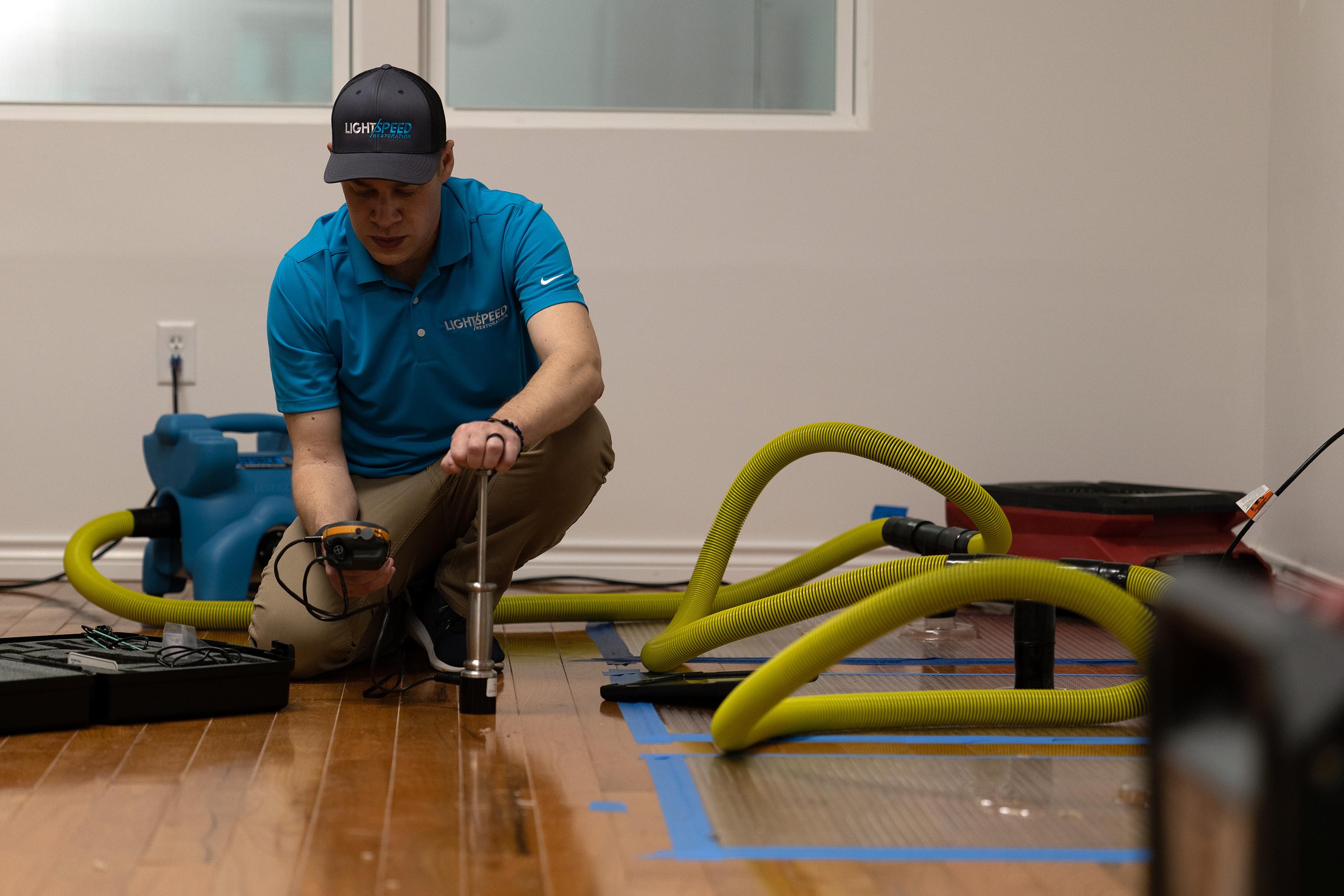
Removing standing water is the first hands-on step to prevent water damage from getting worse. Water removal is a critical step in the restoration process, where industrial pumps and high-capacity wet vacuums are used to quickly extract standing water to prevent further damage and mold growth.
For deep water, technicians use submersible pumps to remove standing water from rooms, garages, and basements after Austin storms or a burst pipe. Then high-capacity wet vacuums and carpet extractors support water extraction from carpet, padding, and hard flooring.
The restoration team also checks hidden areas:
-
Under stairs
-
Inside wall cavities
-
Under cabinets
-
Crawlspaces
-
Closets and low flooring transitions
A thorough extraction lowers odor risk, protects personal items, and reduces later water damage repair costs.
Drying and Dehumidification Process
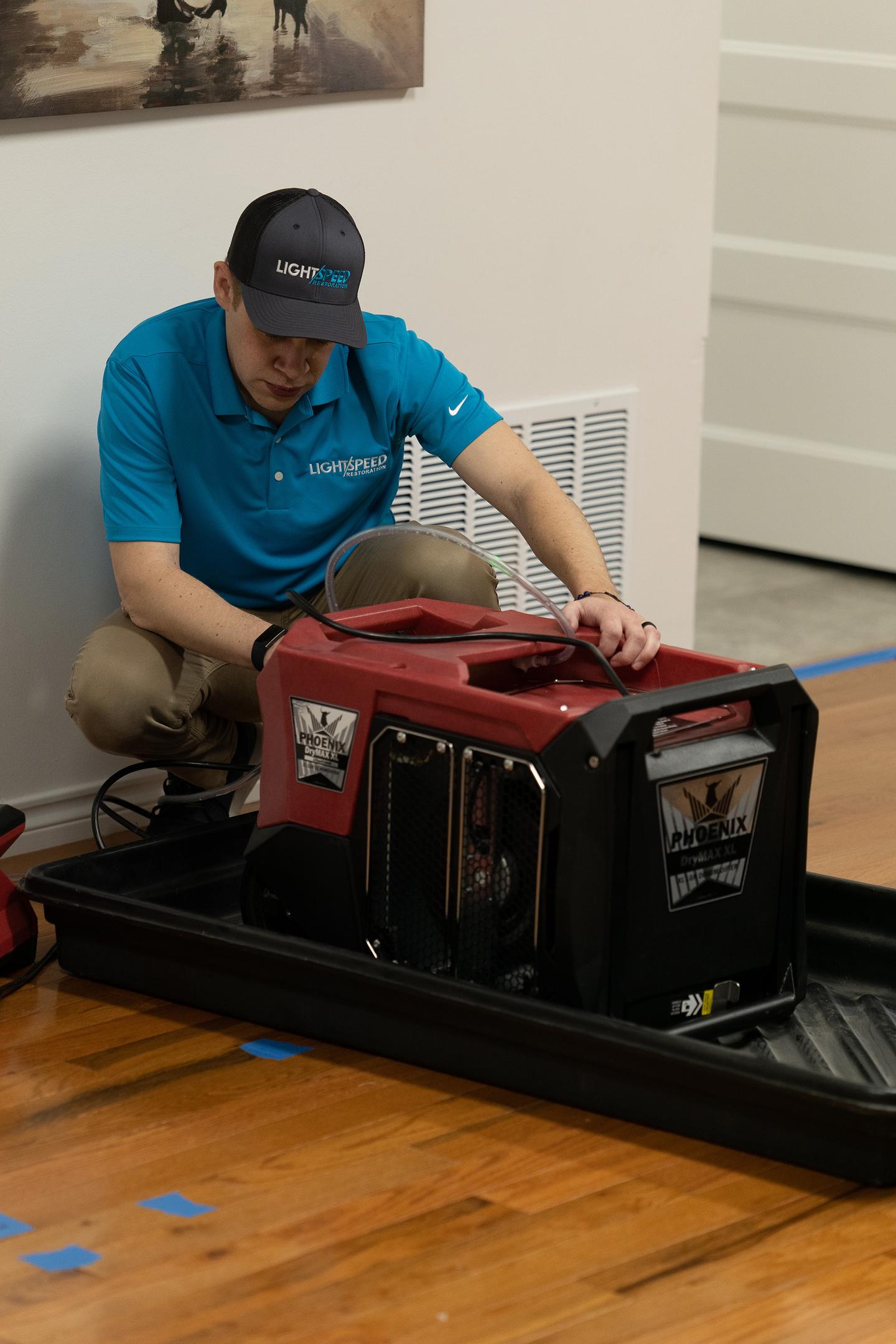
After water removal, the drying and dehumidification phase uses industrial dehumidifiers and fans to eliminate residual moisture, which is essential to prevent mold growth and structural damage. Air movers are employed to enhance airflow and facilitate the evaporation of moisture within the property.
Commercial dehumidifiers capture moisture from the air and help control humidity levels. Monitoring humidity levels can help ensure that the indoor humidity is below 60% during drying. Moisture monitoring is essential during the drying process to ensure proper conditions for rebuilding.
During the evaluation and inspection phase, professionals assess the extent of the damage using moisture meters and infrared cameras to identify all affected areas, including those not immediately visible. Drying timelines vary depending on the water category, the size of the affected area, and the materials involved. For minor clean water incidents affecting a small area, drying can typically be completed in 24 to 72 hours, while moderate cases may require 3 to 7 days of continuous drying.
Cleaning, Sanitizing, and Mold Prevention
Once moisture levels are under control, water damage cleanup continues with cleaning and disinfection. Structural elements should be cleaned with EPA-registered disinfectants to ensure safety and sanitation.
Hard surfaces such as tile, concrete, and sealed wood are cleaned with specialized cleaning agents. Antimicrobial treatments may be applied to salvageable porous items to reduce mold growth risk.
Removing saturated porous materials, such as drywall and insulation, is vital to prevent mold growth. Soaked carpet padding, warped baseboards, sewage-exposed drywall, and badly damaged insulation are usually discarded. Air scrubbers with HEPA filtration may be used to capture airborne particles and mold spores.
Repairs and Reconstruction After Flood Damage
Once the property is dry, clean, and cleared of unsalvageable materials, final restoration work begins. The final stage of the water damage restoration process involves making repairs and restoring the property to its original condition, which may include replacing drywall, flooring, and repainting walls.
Common repair tasks include:
-
Installing new drywall, insulation, trim, and new flooring
-
Replacing baseboards and damaged cabinets
-
Repainting walls and ceilings
-
Completing structural repairs if framing, subfloors, or load-bearing areas show structural issues
Severe damage may require deeper structural repairs when prolonged saturation causes rot, movement, or structural instability. Lightspeed Restoration of Austin aims to return your property to pre loss condition or better. We can also help organize drying logs, photos, invoices, and notes for your insurance provider.
Health Risks and Mold Growth After a Flood
Floods are not just a property problem. Exposure to black water, which comes from sewage or floodwaters, poses serious health risks due to the presence of harmful bacteria and pathogens.
Black water from storm runoff or sewage backups can carry bacteria, viruses, chemicals, and debris. This requires stricter water damage restoration services than a clean leak from water heaters or a broken supply line.
Watch for musty odors, visible spots on walls or ceilings, damp carpet, and new allergy-like symptoms. If mold growth is discovered, professional water damage restoration services can include targeted remediation to protect indoor air quality.
Preventing Future Water Damage in Austin Homes
After final repairs, prevention matters. Regular maintenance, such as checking for leaks, ensuring proper drainage, and installing moisture detection systems, can help prevent future water damage.
A well-maintained drainage system is your first line of defense against water damage; clean gutters and downspouts at least twice a year to prevent blockages that cause water to overflow near the foundation. Installing backflow valves on sewer lines is a low-cost, effective retrofit that helps prevent sewage and floodwaters from entering the home during heavy rain or flooding events.
Also inspect supply lines to washing machines, water heaters, refrigerators, and AC condensate drains. Routine inspections of crawlspaces, attics, windows, and doors help catch water intrusion early and avoid future problems.
Why Choose Lightspeed Restoration of Austin for Flood Restoration
Lightspeed Restoration of Austin is a local, Austin-only provider specializing in flood cleanup and professional water damage services. We respond 24/7 across Austin, including South Austin, Mueller, Circle C, and nearby communities.
Our restoration specialists use truck-mounted extraction units, high-capacity dehumidifiers, air movers, moisture meters, thermal imaging cameras, and drying equipment. We follow clear key steps from initial inspection through final repairs, keeping you informed throughout the restoration process.
If you see standing water, damp walls, odors, or signs of water, act quickly. Call 512-428-8309 for a water damage emergency in Austin.

FAQ: Flood Restoration Process in Austin, TX
How long does the flood restoration process usually take?
The timeline for water damage restoration can vary significantly based on the extent of the damage, the type of water involved, and the size of the affected area. Small clean-water jobs may take 2–3 days for drying plus minor repairs. Moderate flooding can take 3–7 days of drying and 1–2 weeks of repairs. Severe water damage involving black water or structural demolition can extend the total restoration timeline to several weeks or even months, depending on the extent of the repairs needed.
Can I stay in my home during flood restoration?
Often, yes, if unaffected rooms are safe. Temporary relocation may be recommended when there is sewage contamination, widespread mold growth, unsafe electrical conditions, blocked bathrooms or kitchens, or structural instability.
Will my homeowner’s insurance cover the flood restoration process?
Many policies cover sudden and accidental water damage from a burst pipe or appliance failure. External flooding from creeks, heavy rain, or storm runoff may require separate flood insurance. Contact your insurance provider quickly, and keep photos, videos, invoices, and drying records.
What should I do before the professionals arrive?
If safe, shut off electricity to flooded rooms and stop the water source. Move small valuables, documents, and personal belongings to a dry area without walking through contaminated water. Then call 512-428-8309 so our restoration team can begin.
How do I know if all moisture has been removed?
Surfaces can look dry while excess moisture remains inside walls, insulation, or subfloors. Restoration specialists use moisture meters, thermal imaging, and humidity readings before removing equipment and approving final repairs.