

Key Takeaways
Fast flood water removal in Austin, TX, is critical within the first 24–48 hours to prevent mold and structural damage. Once water enters your property, the clock starts ticking—and waiting even a day can dramatically increase repair costs and health risks.
-
Floodwater in Austin is usually contaminated with sewage, chemicals from roads and garages, and bacteria, and should always be treated as hazardous regardless of how clear it looks.
-
Shut off electricity and gas if you can do so safely, avoid entering deep or standing water, and call Lightspeed Restoration of Austin at 512-428-8309 for 24/7 emergency help.
-
Professional extraction, structural drying, and moisture monitoring are usually needed to fully dry walls, subfloors, and cavities—not just visible surfaces.
-
Lightspeed Restoration of Austin works with homeowners, renters, and commercial property owners across the Austin metro to remove water, dry structures, and assist with insurance claim documentation.
What To Do First When Flood Water Hits Your Austin Property
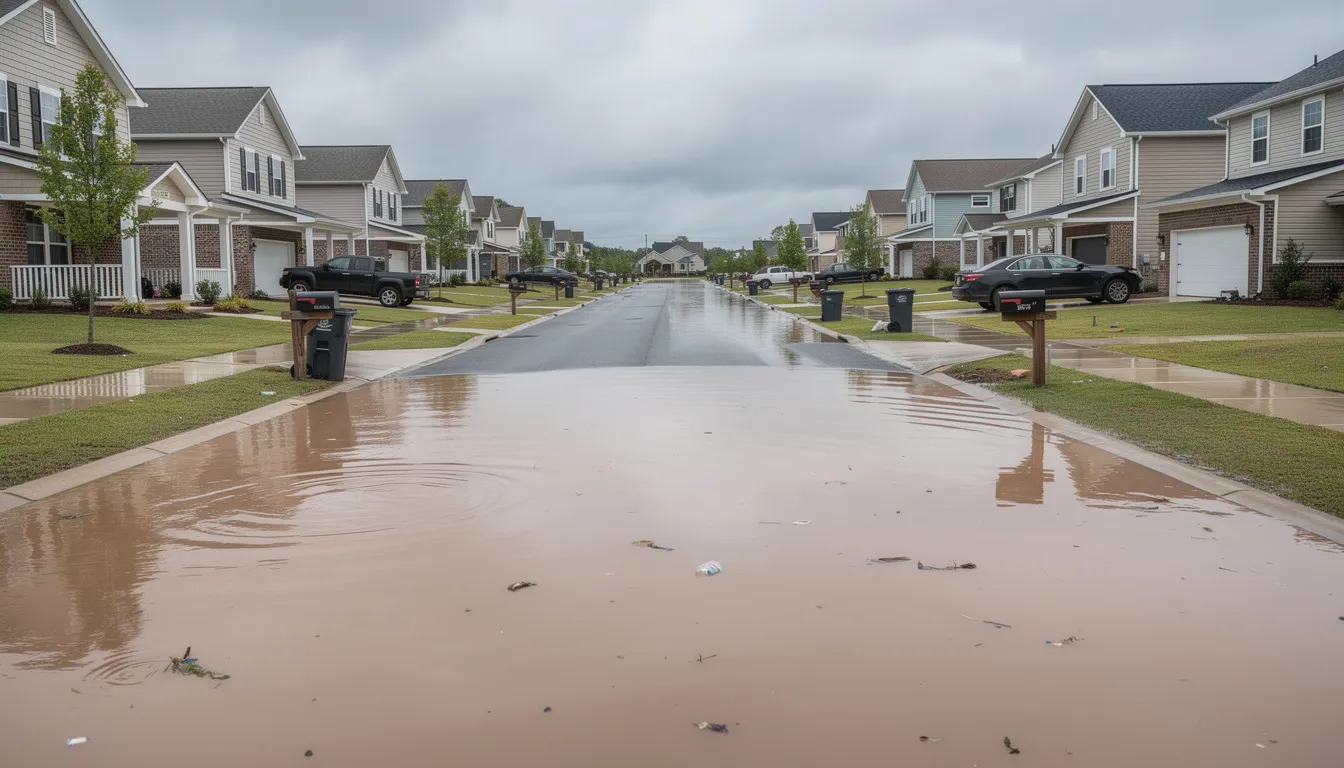
If you’ve lived in Austin long enough, you know how quickly a spring thunderstorm can turn a quiet neighborhood into a disaster zone. Flash flooding along Onion Creek, Shoal Creek, and other low-lying areas has damaged hundreds of flood-damaged homes in recent years. When water starts rising in your house, the decisions you make in the first few hours can mean the difference between a manageable cleanup and a months-long mold remediation nightmare.
-
Stay out of fast-moving water—just six inches can knock an adult off their feet, and two feet can sweep away a vehicle.
-
Only enter your property once water has stopped rising and you’re certain it’s safe to do so. Never enter if the building looks structurally unsafe with collapsed walls, a buckled roof, or a tilting foundation.
-
Switch off the power at the main breaker if you can reach it without stepping in water. If the breaker box is in a flooded area or you’re unsure, stay clear and call Austin Energy or a licensed electrician.
-
Gas leaks are emergency hazards. If you smell gas, leave immediately and call the gas company or 911 before worrying about flood cleanup.
-
Check official alerts from the City of Austin, Travis County, and ATXFloods.com before returning to your neighborhood or beginning any cleanup work.
-
If your home has experienced significant flooding, you may need full flood damage cleanup, drying, and restoration in Austin — not just surface water removal.
-
Contact Lightspeed Restoration of Austin at 512-428-8309 as soon as it is safe to do so for professional flood water removal and drying.
Safety Precautions Before Removing Flood Water
Safety comes before saving belongings, period. This is especially true with contaminated floodwater, which is common after Austin flash floods and creek overflows. Before you touch anything in your flooded property, understand what you’re dealing with and how to protect yourself.
-
All floodwater should be assumed contaminated with sewage, fuel, pesticides, and bacteria—even if it looks clear. This contaminated debris poses serious health risks and guides every safety decision you make.
-
Wear proper protective gear: waterproof boots, heavy work gloves, long pants and sleeves, safety goggles, and at minimum an N95 respirator when there’s visible mold or a musty odor.
-
Keep children, pets, and anyone who is pregnant, elderly, has asthma, or a weakened immune system completely out of the flooded area.
-
Electrical hazards cause roughly 30% of flood-related deaths. Avoid touching outlets, extension cords, power lines, and large appliances that have been underwater. Have a licensed Austin electrician inspect your system before re-energizing.
-
Be aware of other hazards hiding in murky water: broken glass, nails, displaced wildlife, and unstable flooring. Use a stick or pole to probe ahead when wading through any standing water.
-
Stay aware of fire hydrants and storm drains that may be hidden by floodwater, and maintain a safe distance from any downed power lines in your area.
How Professional Flood Water Removal Works
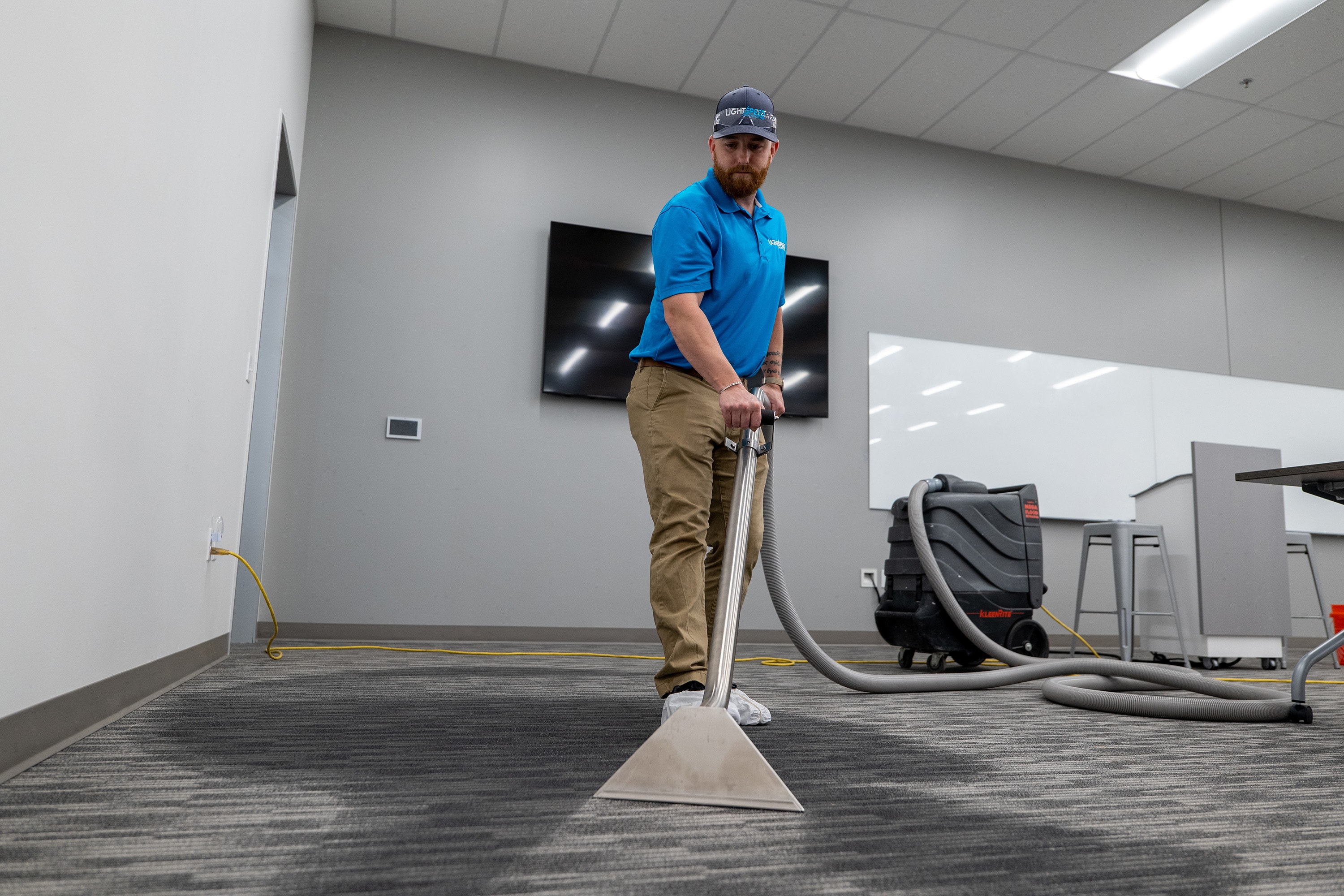
In many cases, flood water removal is just the first stage of complete flood damage restoration. Professional flood water removal goes far beyond running a shop vac across your floors. It’s a systematic process that includes extraction, decontamination, and structural drying—all guided by precise moisture measurements and industry standards like the IICRC S500.
-
Initial assessment: Certified technicians from Lightspeed Restoration of Austin inspect affected rooms, basements, and crawlspaces. They identify water sources (roof leak, creek flood, plumbing failure), use a moisture meter to quantify saturation levels, and map hidden moisture with infrared cameras—revealing wet drywall and insulation behind walls without tearing them open.
-
Water extraction: For several inches of standing water, truck-mounted pumps capable of removing 2,000–10,000 gallons per hour are deployed. Portable extractors handle saturated carpets and pads, while specialty tools work on wood floors and tight spaces like closets and under furniture.
-
Contamination classification: Water coming from creeks, streets, or sewage backups is typically Category 3 (“black water”), requiring more aggressive disinfection protocols than a clean pipe leak would need.
-
Material removal: Non-salvageable porous materials—soaked carpet pad, insulation, and some drywall—are removed to allow hidden framing and subfloors to dry thoroughly. Leaving these in place traps moisture and creates ideal conditions for mold growth.
-
Documentation: Lightspeed Restoration of Austin documents moisture readings, extent of damage, and all work performed for your insurance company, helping streamline your claim process.
Step-by-Step: DIY Flood Water Removal vs. When to Call Professionals
Many Austin homeowners want to know what they can safely handle themselves versus when a professional team is absolutely necessary. The honest answer depends on the scope, source, and duration of the water damage.
What you might handle yourself (minor incidents):
-
Small puddles in 1–2 rooms from a rain-related roof leak
-
Use a wet/dry vacuum to remove surface water from hard surfaces
-
Mop up remaining moisture with towels
-
Begin airing out by opening windows and running fans if it’s not humid outside
Limits of DIY approaches:
Most homeowners don’t have commercial dehumidifiers, high-volume air movers, or moisture meters to ensure that wall cavities, subfloors, and insulation are truly dry. Without this equipment, you’re essentially guessing—and studies show DIY water cleanup has a roughly 40% failure rate, often leaving 20–30% residual moisture in hidden areas.
Call a professional immediately if:
-
Standing water is more than an inch deep
-
Water came from outside sources (creeks, streets, storm drains)
-
You detect a sewage odor or see contaminated debris
-
Multiple rooms or levels are affected
-
Visible mold appears within 24–48 hours
-
Water has been present for more than a day in Austin’s humid climate
Large losses or any situation where floodwater has been sitting require professional extraction, cleaning, and structural drying to avoid long-term mold and odor problems. Call Lightspeed Restoration of Austin at 512-428-8309 for an on-site evaluation—often available within hours of your first call.
Drying, Cleaning, and Disinfecting After Flood Water Removal
Removing visible floodwater is only the first stage. The real protection for your Austin home or business comes from thorough drying and disinfection over the following days. Skip this step, and you’re inviting mold spores to take hold in your walls, flooring, and air.
-
Initial drying actions: Remove wet rugs, damp household items, and non-salvageable materials. Run fans to circulate air—but avoid running air conditioners or fans if sewage is involved until surfaces are cleaned.
-
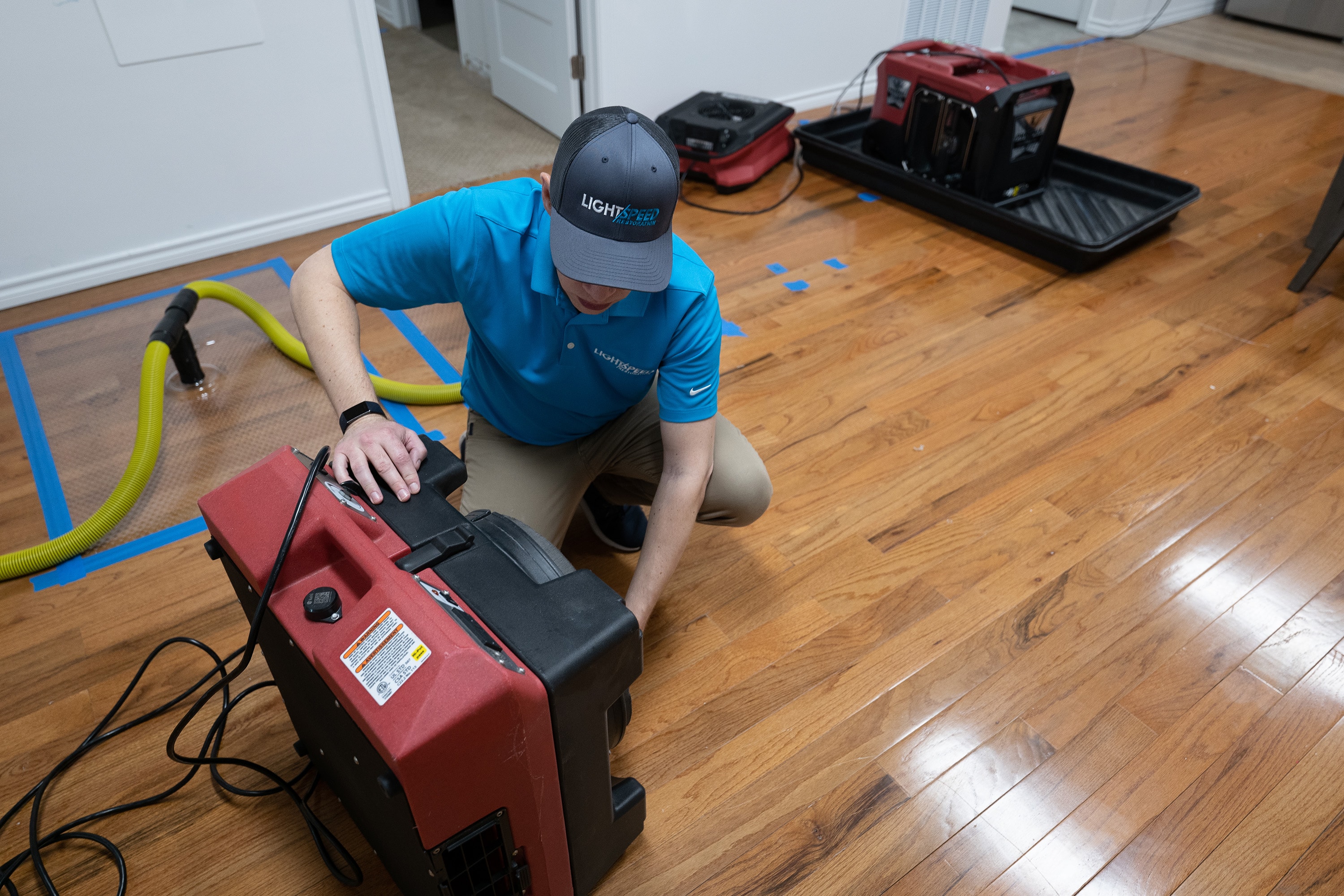
Professional drying setup: Crews position commercial air movers and dehumidifiers to create a controlled drying environment. These systems typically run 24/7 for 3–7 days, depending on the extent of damage. The goal is to reduce relative humidity from flood-level saturation (80–100%) down to under 40%.
-
Cleaning hard surfaces: Wash hard, non-porous surfaces like tile, sealed concrete, and metal with clean water and detergent first. Then apply EPA-registered disinfectants according to label directions. Food contact surfaces require extra attention with appropriate sanitizers.
-
What gets discarded: Porous materials heavily soaked in contaminated floodwater—carpet pads, upholstered furniture, and insulation—usually can’t be reliably sanitized. Construction debris and household garbage from the affected area should be bagged and removed promptly.
-
Monitoring to completion: Use moisture meters to monitor walls, flooring, and framing daily. Don’t close up walls, repaint, or reinstall flooring until readings confirm that the materials are completely dry and within the normal range for Austin’s climate.
-
Final air quality: Once surfaces are dry, consider having the air tested if mold was visible. Professional mold remediation may be needed for extensive growth.
Working With Insurance After Flood Water Damage in Austin
Timing and documentation are crucial when filing water damage claims in Austin. One important distinction: “flood” from outside water (creeks, storm drains, rising groundwater) is typically covered only under separate flood insurance policies through the National Flood Insurance Program (NFIP), not standard homeowners insurance.
|
Type of Water Damage |
Typical Coverage |
|
Burst pipe or appliance leak |
Standard homeowners policy |
|
Rain through the damaged roof |
Standard homeowners policy |
|
Creek, street, or storm drain flooding |
NFIP flood insurance is required |
|
Sewer backup |
May require separate endorsement |
-
Contact your insurance agent or carrier within the first 24 hours. Review whether you have a flood policy versus a standard homeowners policy before assuming coverage.
-
Take clear, dated photos and videos of each room, close-ups of damaged building materials, and affected contents before large-scale cleanup or disposal begins.
-
Keep a simple log of events: date and time water entered, how high it rose (measure inches or feet on walls), when it receded, and any emergency actions you took.
-
Lightspeed Restoration of Austin can provide written estimates, moisture reports, and drying logs that often help adjusters understand the scope and necessity of the work for your water damage restoration claim.
-
Save all receipts related to temporary lodging, emergency repairs, and cleanup supplies. Many policies reimburse reasonable expenses you incur to protect your property and family.
-
Don’t wait for an adjuster to arrive before beginning emergency water removal—most insurers expect you to take reasonable steps to prevent further damage to your property.
Why Choose Lightspeed Restoration of Austin for Flood Water Removal
Lightspeed Restoration of Austin is a local, flood-experienced team serving only the Austin, TX metro area. We’re familiar with flash-flooding patterns, low-water-crossing dangers, and the unique challenges of Austin’s slab-on-grade foundations and expansive clay soils.
-
24/7 emergency response: We typically arrive within a few hours anywhere in Austin, subject to traffic and road closures. When you call 512-428-8309, you reach someone ready to help—day or night.
-
Trained technicians: Our team is trained in water damage restoration, structural drying, and mold prevention following industry best practices and IICRC standards for contaminated water cleanup.
-
Residential and commercial service: We handle everything from single-family homes and condos to offices, storefronts, small warehouses, and medical/dental suites throughout Austin.
-
Local expertise matters: We know Austin’s permitting requirements, understand the common construction methods in Central Texas homes, and have working relationships with regional insurers and adjusters.
-
Insurance documentation support: We provide detailed estimates, photos, moisture readings, and equipment logs to help your flood insurance or homeowners' claim move forward efficiently.
-
Complete flood restoration: From emergency water extraction through final drying verification, we handle the entire drying process so you can get your property back to its original state.
Call 512-428-8309 any time, day or night, for immediate flood water removal, drying, and guidance on next steps. Don’t let flood damage become a disaster—let us help you stay safe and begin the recovery process.
Learn more about our full flood damage services in Austin.
FAQ: Flood Water Removal in Austin, TX
How quickly should flood water be removed from my home?
Water should ideally be extracted within the first 24 hours. Building materials in Austin’s warm, humid climate can begin supporting mold growth within 24–48 hours of exposure. The longer water sits, the more it seeps into drywall, insulation, and subfloors—increasing both repair costs and health risks.
Don’t wait for an adjuster to arrive before beginning emergency water removal. Most insurers expect you to take reasonable steps to prevent further damage, and documentation of conditions before cleanup protects your claim.
Is all floodwater considered sewage or “black water”?
Water coming from streets, creeks, storm drains, or overwhelmed sewers is typically treated as Category 3 (“black”) water because it may contain sewage, fuel, pesticides, and dangerous bacteria. Even rainwater entering through a roof or window can become contaminated once it passes through insulation, ceilings, and other building materials.
Because of this contamination risk, avoid bare-skin contact with floodwater and let professionals handle major extractions. Use a utility knife to cut away soaked materials while wearing protective gear, and treat all flood debris as potentially hazardous.
Can I keep my carpet and furniture after a flood?
Hard-surface items like solid wood furniture, metal, and some plastics can sometimes be cleaned and disinfected, especially if the water was from a clean source. However, wall-to-wall carpet, carpet pads, and most upholstered furniture soaked in outdoor floodwater are usually not salvageable.
Lightspeed Restoration of Austin can help evaluate which household items are realistically savable and document non-salvageable items for insurance purposes. When in doubt, professional help ensures you’re not keeping materials that will harbor mold and odors.
How long does structural drying take after flood water removal?
Most Austin homes dry in 3–7 days with professional equipment, though heavily saturated structures, basements, or large commercial buildings can take longer. Drying continues until moisture meter readings confirm that framing, subfloors, and walls are within normal range for Austin’s climate.
Avoid the temptation to close up walls, install new flooring, or begin repair work until your drying professional confirms moisture levels are acceptable. Rushing this step is one of the most common causes of secondary mold problems.
Do you help with documentation for my insurance claim?
Yes. Lightspeed Restoration of Austin provides detailed estimates, photos of affected areas, moisture readings, equipment logs, and descriptions of all work performed. While we don’t act as a public adjuster or make coverage decisions, thorough documentation often helps adjusters process claims more efficiently. Here is an article with advice on water damage insurance claims.
Call 512-428-8309 to discuss your specific situation and what documentation may be most helpful for your insurer. We work with homeowners and businesses daily to ensure the claims process goes as smoothly as possible.