

Key Takeaways
This guide is for Austin, TX homeowners dealing with a hot water heater that has flooded part of their home. Fast action in the first few hours can limit thousands of dollars in damage and prevent long-term structural problems.
-
If water is actively spreading, call Lightspeed Restoration of Austin 24/7 at 512-428-8309 before reading further.
-
Your first steps are to shut off the water and power to the heater, stay safe around electricity and gas, and stop the leak before worrying about cleanup.
-
Flood-damaged water heaters are usually not safely repairable and often must be replaced, while the surrounding water damage should be professionally dried and restored.
-
Lightspeed Restoration of Austin serves only the Austin, TX area and can arrive quickly to handle water extraction, structural drying, and insurance documentation.
-
Even 40-50 gallons of floodwater can cause hidden damage to your floors, walls, and subfloors within hours. Professional equipment is essential for complete drying.
Emergency Steps When Your Water Heater Floods Your House
Picture this: you wake up at 2 AM in your 2010-era South Austin home to the sound of rushing water. A 50-gallon gas water heater in your garage has burst overnight, and hot water is now spreading across your hallway, soaking the carpet in your bedroom and creeping toward your living room. This scenario plays out in Austin homes more often than most homeowners realize—and what you do in the next 30 minutes matters enormously.
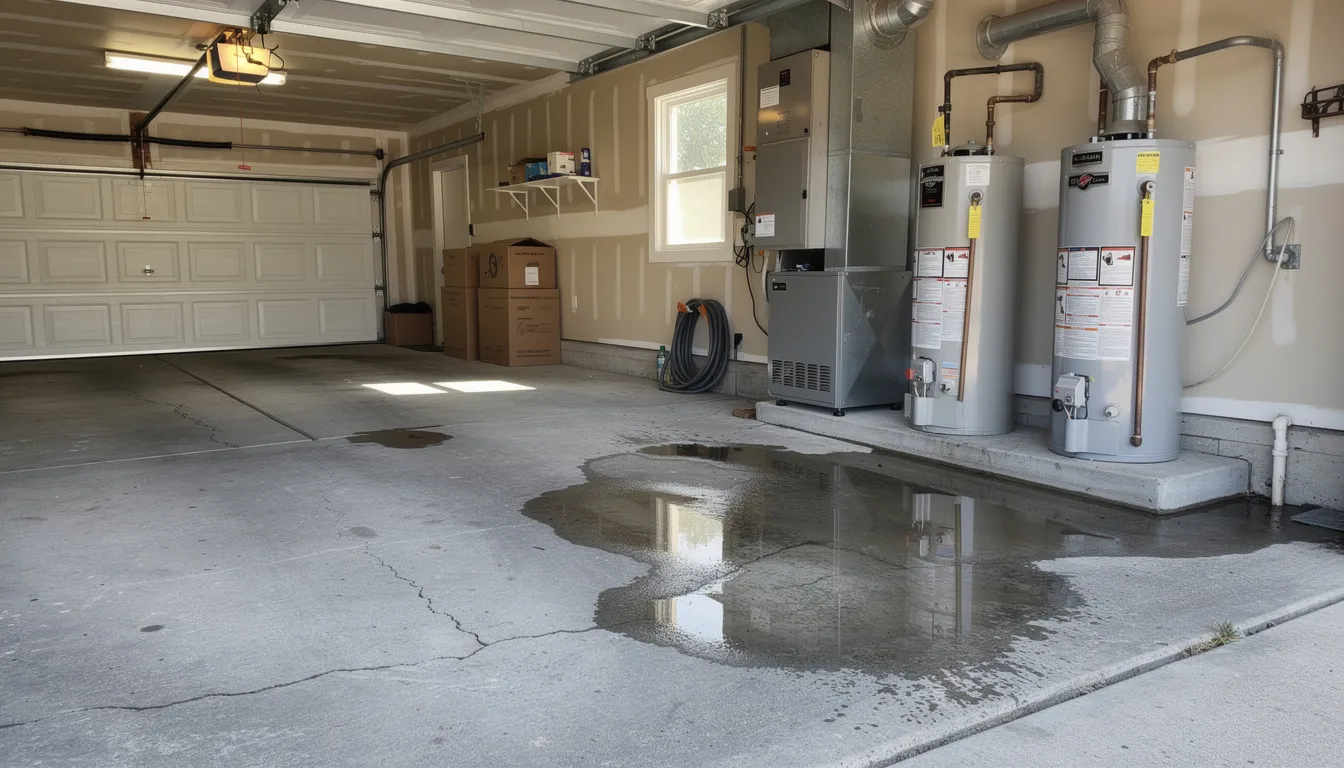
Here’s exactly what to do when a water heater floods your house:
-
Turn off the cold-water shutoff valve located above or beside your water heater. Rotate it clockwise until it stops completely. This cuts the water supply feeding the leak.
-
If that valve fails or won’t turn, locate your home’s main water valve. In most Austin homes, you’ll find it near the curb in a covered box or inside your garage where the line enters the house. Shut it off completely.
-
For an electric water heater, go directly to your electrical panel and switch off the dedicated breaker before touching any water or the unit itself. For gas heaters, locate the gas control knob on the front of the unit and turn it to “OFF.”
-
Do not step into standing water if breaker panels, extension cords, or electrical outlets are wet or submerged. If you see sparks, smell burning, or notice any sign of an electrical problem, leave the area immediately and call 911 and a licensed electrician.
-
If your water heater is submerged in floodwater, it poses an electric shock risk if power is not turned off before handling it.
Many Austin townhomes and condos in neighborhoods like Mueller, Circle C, and North Austin have water heaters installed in interior closets or attics. When these units fail, water travels downward through ceilings and walls, creating a cascade effect that damages multiple rooms and levels. If you notice ceiling sagging or bulging, stay clear of the area—saturated drywall is heavy and poses a significant collapse risk until a professional can inspect it. Standing water can also weaken structural components like drywall, baseboards, and subflooring.
Once water and power are shut off, make two immediate calls: a licensed plumber to address or replace the heater, and Lightspeed Restoration at 512-428-8309 to begin water damage restoration in Austin before further damage sets in. Be ready to describe exactly what happened to the plumber or restoration company so they can respond appropriately.
Electric Water Heater Safety
Electric water heaters are a staple in many Austin homes, quietly providing hot water for showers, laundry, and daily chores. While these units are generally reliable, homeowners should recognize that electric water heaters have safety considerations—especially when dealing with water leaks, standing water, or flood damage.
Electrical Safety First: Water and electricity are a dangerous combination. If you suspect your electric water heater is leaking or has been exposed to flood water, never touch the unit or any nearby outlets until you have shut off the power at your home’s electrical panel. Locate the dedicated breaker for your heater and switch it off completely. This step is critical to prevent electric shock, fire, or further damage to your home’s electrical system.
Proper Installation and Maintenance: A safe electric water heater starts with professional installation. Licensed plumbers and electricians ensure that wiring, grounding, and circuit breakers are correctly sized and in compliance with code. Homeowners should schedule regular inspections to check for signs of corrosion, faulty thermostats, or damaged heating elements. Even a small leak can pose an electrical hazard if water reaches the lower element or internal controls.
Responding to Floods and Leaks: If your electric water heater is flooded, do not attempt to restart or repair the unit yourself. Flood water can compromise insulation, wiring, and safety controls inside the heater, increasing the risk of fire or electric shock. Always have a professional assess the unit before restoring power or deciding whether to repair or replace it.
Common Reasons a Water Heater Floods an Austin Home
Most indoor floods from water heaters come from either slow leaks that go unnoticed for weeks or from sudden failures of aging tanks and valves. Hot water heater malfunctions, such as electrical issues or heating failures, are common causes of flooding. Understanding what went wrong helps you make informed decisions about repair versus replacement—and helps you prevent the same thing from happening again.
Here are the most common causes of water heater floods in Austin homes:
|
Cause |
What Happens |
Warning Signs |
|
Internal tank corrosion |
The steel tank rusts from the inside out, eventually causing a rupture that releases 40-50 gallons at once |
Rust-colored water, visible rust around fittings, and age over 10 years |
|
Failed drain valve or T&P relief valve |
Plastic or corroded valves leak steadily, sometimes for months before homeowners notice |
Small puddles, moisture around the base, valve dripping |
|
Sediment buildup |
Austin’s hard water deposits calcium and magnesium in the tank, leading to overheating and cracking. A buildup of sediment in the water heater can also lead to flooding due to increased pressure. |
Popping or rumbling noises, reduced hot water supply, and inconsistent temperature. |
|
Supply line failures |
Flexible connections or pipe fittings fail, especially on older installations or DIY work |
Visible corrosion on connections, wet spots on walls near supply lines |
|
Malfunctioning thermostat |
A faulty thermostat can cause the water heater to overheat, increasing the risk of flooding. |
Water temperature too high, heater running constantly, overheating warning lights |
In Austin homes built before 2005, original water heaters are often well past their typical 8-12-year life expectancy. Central Texas water contains 15-20 grains per gallon of hardness minerals, which can reduce the lifespan to 7-10 years. If your old water heater came with the house and you don’t know when it was installed, check the serial number on the manufacturer’s label—most brands encode the manufacture date in the first few digits.
Most water heaters are flood-damaged in the lower half, which contains electrical components and insulation.
Tankless units can flood a house, too. If a supply line, internal heat exchanger, or nearby plumbing fails, the same shutoff and safety guidance applies. The absence of a storage tank doesn’t mean there's no risk.
Any visible rust, unusual noise, or small puddles near your heater in the weeks or months before a failure are warning signs that something is wrong. Homeowners who notice these signs tend to avoid catastrophic floods by scheduling inspections before the unit fails completely.
Water Damage Risks When a Water Heater Floods Your House
Even “just” 40-50 gallons might not sound like much, but that volume of water spreads quickly across vinyl, laminate, engineered wood, and down into subfloors. Within hours, hidden damage begins that won’t be visible for weeks.

Flooring Damage
Austin homes feature a wide range of flooring materials, and all of them react badly to water heater floods:
-
Hardwood and engineered wood warp, cup, and buckle as moisture absorbs unevenly
-
Laminate swells at the seams and often cannot be saved once saturated
-
Luxury vinyl plank can separate at the edges and trap water underneath
-
Tile grout loosens, and water wicks under tiles into the subfloor below
Walls and Trim
Baseboards act like wicks, drawing water upward into the drywall. In a typical flood, you’ll see swelling and damage 12-24 inches up the wall, with paint bubbling on interior surfaces. Ceiling damage is common when attic-mounted heaters fail, as water travels through insulation before soaking into drywall.
Structural Concerns
Moisture wicking into wall studs, subfloors, and bottom plates can compromise structural integrity if left wet for extended periods. Wood framing that stays damp begins to weaken, and in severe cases, floor joists and load-bearing components can be affected.
Electrical Hazards
Outlets, power strips, and low-mounted circuits in flooded rooms or garages create a serious risk. Even after visible water has dried, moisture inside electrical boxes can still cause shorts, fire hazards, and equipment damage.
In Austin’s warm, humid climate, mold growth can begin in 24-48 hours behind walls, under flooring, and inside cabinets if the area is not professionally dried. You might not see it for weeks, but by then, remediation costs have multiplied.
High-risk locations in Austin include garage water heaters in North Austin homes that back up into finished laundry rooms, attic heaters in West Austin that drip through insulation and ceiling drywall, and closet heaters in apartments that leak into neighboring units.
A professional mitigation company like Lightspeed Restoration of Austin uses moisture meters and thermal imaging to find water that homeowners cannot see on the surface. What looks dry often isn’t.
Can a Flooded Water Heater Be Repaired, or Do I Need a New One?
Let’s distinguish between two situations that require different responses:
-
“Water heater flooded the house” means the leak originated from the heater itself—tank rupture, valve failure, or internal component failure
-
“Water heater was in a flooded area” means external flood water (from another source) soaked the unit
In both cases, once a heater has leaked significantly or been submerged, manufacturers and safety codes typically recommend replacement rather than repair. This is especially true when:
-
The burner compartment, gas valve, or electronic controls have gotten wet
-
Electrical components, insulation, or the tank jacket have been underwater
-
There is visible corrosion around seams, fittings, or the anode port
-
The lower element on an electric unit has been exposed to sediment or moisture damage
A standard 40-50 gallon replacement in the Austin area typically ranges from several hundred to a few thousand dollars, depending on whether you have a gas or electric unit, the required code upgrades, and the location of the heater (attic installations cost more than garage installations). However, ignoring the structural water damage around a flooded water heater can cost far more—average restoration costs for water heater floods exceed $4,000 nationally. That number increases rapidly when mold is present.
Plumbers generally will not guarantee repairs on a tank that has already flooded a house. Continuing to use a compromised unit creates ongoing risk of new leaks, scalding from thermostat malfunctions, or even fire and electrical hazards from damaged components.
Think of the heater replacement and water damage restoration as two coordinated projects: your plumber handles the new water heater installation, while Lightspeed Restoration of Austin handles extraction, drying, and any necessary demolition and rebuild of damaged materials.
What to Do If You Can’t Afford an Immediate Heater Replacement
A sudden water heater failure hits your budget at the worst possible time. Many Austin households—especially renters, first-time buyers, and fixed-income residents—may not have funds ready for an unexpected equipment replacement plus water damage restoration. That’s a real and valid concern.
Here are practical steps to manage the situation:
Contact your insurance carrier immediately. Call your homeowners or renters insurance company the same day to ask whether water heater failure and resulting flood damage are covered. Most policies in Texas do not cover the heater itself, but they often cover the damage it causes to floors, walls, and contents. Starting a claim early gives you access to coverage that can help offset restoration costs.
Ask about budget-friendly replacement options. Talk to your plumber about lower-cost, code-compliant alternatives. A smaller-capacity tank or a standard-efficiency model costs less than high-end upgrades. If budget is tight, you don’t need the top-tier equipment—you need a safe, working unit.
Explore financing options. Many local plumbing companies and big-box stores serving Austin offer payment plans or financing for water heater installations. This spreads the cost over several months rather than requiring full payment upfront.
Temporary hot water solutions. While waiting for your new heater, consider point-of-use electric heaters for essential fixtures, or arrange to shower at a gym or a relative’s home for a few days. Any temporary setup must comply with safety codes—never attempt to run a partially flooded or damaged unit just to get through the week.
Even if the new heater must wait a few days, the water damage mitigation cannot wait. Every hour of delay allows moisture to travel deeper into building materials. Call Lightspeed Restoration of Austin at 512-428-8309 immediately to begin extraction and drying. Starting the process quickly helps preserve floors and walls and can actually reduce overall project cost.
Keep detailed records throughout: the date of the failure, your plumber’s notes, photos of the old unit’s label and serial number, and all invoices. These documents support insurance claims and may be required if you contact the manufacturer about a defective unit.
Professional Water Damage Restoration After a Water Heater Flood in Austin
DIY cleanup with towels and box fans is rarely enough for a multi-room water heater flood. For urgent situations, our team also provides 24-hour emergency water removal in Austin. When water has soaked into drywall, insulation, or subfloors, household equipment cannot effectively remove moisture from those areas. That hidden moisture is what leads to mold, rot, and long-term structural problems.
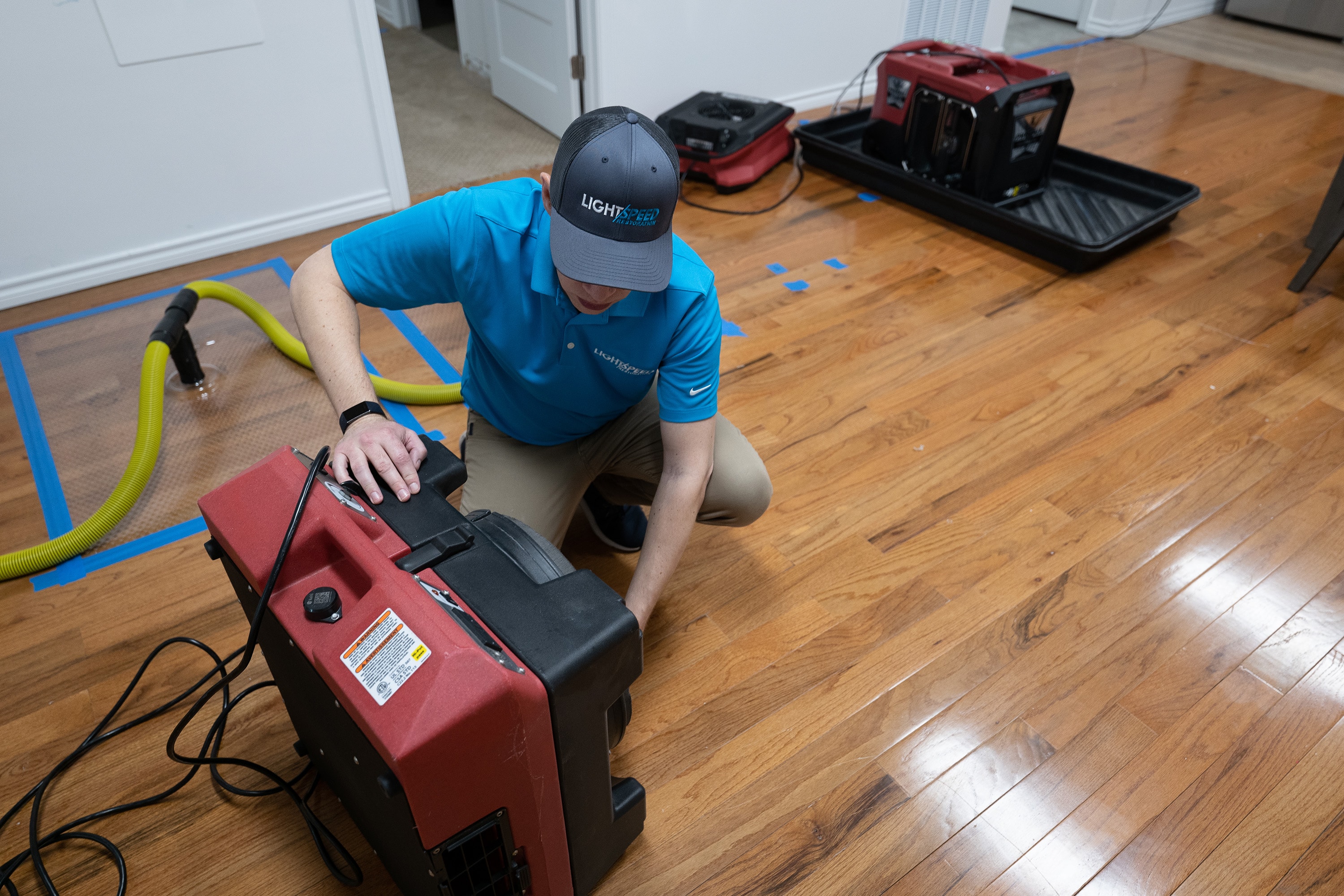
The Lightspeed Restoration of Austin team is equipped with the necessary tools and expertise to handle water damage, inspections, and repairs efficiently.
What a Professional Visit Looks Like
When you call Lightspeed Restoration of Austin at 512-428-8309, here’s what to expect:
-
24/7 response with a technician dispatched anywhere in the Austin metro area—Downtown, Pflugerville, Cedar Park, Kyle, and everywhere in between
-
Initial assessment using moisture meters and infrared cameras to map exactly where water has traveled, including inside walls and under flooring
-
Immediate extraction of standing water using commercial pumps and wet vacuums far more powerful than anything available at hardware stores
The Structural Drying Process
Professional drying involves more than just removing visible water:
|
Phase |
Equipment Used |
Purpose |
|
Air movement |
High-velocity air movers |
Accelerate evaporation from surfaces and materials |
|
Dehumidification |
Industrial dehumidifiers |
Remove moisture from the air before it reabsorbs |
|
Material access |
Flood cuts, baseboard removal |
Allow airflow behind walls and under flooring |
|
Monitoring |
Daily moisture readings |
Confirm materials reach safe dryness levels |
In Austin’s climate, sizing equipment properly matters. The humidity typical of Central Texas requires commercial-grade dehumidifiers capable of handling high moisture loads. Technicians may remove baseboards, cut “flood cuts” in drywall, or lift wet carpet and padding to access wall cavities and subfloors.
Most water heater floods require 3-5 days of continuous drying. Equipment remains in place during daily monitoring visits until moisture readings confirm that building materials have returned to safe levels.
Documentation and Insurance Support
Lightspeed Restoration of Austin provides:
-
Detailed photos of damage to floors, walls, contents, and the failed heater.
-
Moisture logs and drying reports are commonly requested by insurers like State Farm, Allstate, USAA, and other carriers serving Austin.
-
Coordinate with your plumber and adjuster to ensure the heater replacement and repairs are completed in the correct order.
As a local, Austin-only service, Lightspeed understands area construction styles, HOA requirements, and typical plumbing layouts. That local knowledge helps restore homes quickly and correctly.
How to Prevent Your Water Heater from Flooding Your House
While not every failure is preventable, basic maintenance and upgrades can dramatically lower flood risk in Austin homes and condos. A small investment in prevention beats dealing with a catastrophic failure any day.
Maintenance Strategies
-
Schedule annual inspections with a licensed plumber to check anode rods, T&P valves, and signs of corrosion. This becomes critical once your unit is older than 8-10 years.
-
Install or test a drain pan under attic or interior-closet heaters. The pan should have a properly routed drain line to the exterior—not just draining onto a ceiling or nearby floor where it causes the same damage.
-
Add a water heater leak detector with an automatic shutoff valve. These devices detect water and shut off the supply line within seconds, preventing 90% of runaway floods before they cause major damage.
-
Replace the anode rod every 2-3 years. This sacrificial component protects your tank from corrosion, but once it’s depleted, the tank itself begins to rust from the inside.
Austin-Specific Considerations
Central Texas hard water accelerates sediment buildup inside your tank. That sediment layer forces the burner or heating element to work harder, leading to overheating, metal fatigue, and eventual failure. Periodic flushing, according to the manufacturer's instructions, helps both gas and electric water heater models last longer.
Many Austin subdivisions feature attic-mounted water heaters above bedrooms and living spaces. If your home has this configuration, inspect the attic space at least quarterly for damp insulation, water stains, or rust around the unit. These early warning signs give you time to replace the heater before it fails catastrophically.
Proactive Replacement
Consider proactively replacing tanks nearing the end of their rated life rather than waiting for a catastrophic failure. The cost of a planned new water heater installation is far less than the cost of an emergency replacement, plus restoration of damaged flooring, walls, and contents.
Keep Lightspeed Restoration of Austin’s number (512-428-8309) saved in your phone or posted near your breaker panel. That way, any family member knows who to contact if a leak starts while you’re away at night or traveling. Response speed makes a significant difference in limiting damage.
Frequently Asked Questions
How long does it take to dry out my Austin home after a water heater flood?
Most jobs require 3-5 days of continuous professional drying, with air movers and dehumidifiers operating around the clock. Larger floods, multi-story homes, or heavily saturated materials such as carpet padding and subfloors may require 7 days or more. Lightspeed Restoration of Austin monitors moisture levels daily and removes equipment only once safe dryness is confirmed—rushing the process can lead to hidden problems later.
Will my homeowners' insurance cover damage from a broken water heater?
Many standard policies in Texas cover sudden and accidental water damage from a failed water heater, including damage to floors, walls, and contents. However, policies typically do not cover replacement of the heater itself, and they may exclude damage from gradual leaks or lack of maintenance. Call your insurance company right away after a flood, and let Lightspeed Restoration of Austin provide documentation and photos to support your claim.
Is it safe to stay in my house while you’re drying it?
In most cases, yes—you can stay in your home during the drying process, though fans and dehumidifiers can be noisy and may warm certain rooms. If there is severe damage, suspected mold, or unsafe electrical conditions, technicians may recommend temporarily staying elsewhere for safety and comfort. Air conditioning can help offset the warmth from drying equipment, but expect higher energy bills during the process.
What should I move or save first after a water heater flood?
Quickly and safely relocate electronics, important documents, area rugs, and porous furniture, such as upholstered chairs, out of wet rooms. Avoid touching outlets or cords that are in contact with water. Once Lightspeed Restoration of Austin arrives, the team can help determine which items can be dried in place and which may need specialized contents restoration at a separate facility.
Can I just use my own fans instead of hiring a water damage company?
Household fans typically only dry surface moisture and often trap water in walls, cabinets, and subfloors, where it can cause hidden mold growth and long-term structural problems. Professional equipment and daily monitoring are designed to fully dry building materials to safe levels, which is why insurers usually prefer that certified restoration companies like Lightspeed Restoration of Austin handle the mitigation. The cost of professional drying is almost always lower than the cost of addressing mold remediation or structural repairs months later.
What should I do if my water heater floods my basement?
If your water heater floods your basement, act quickly to minimize water damage. The basement is a common location for water heaters, and flooding here can damage appliances and even compromise your home's foundation. Turn off the power and water supply to the heater, avoid contact with standing water, and move valuables to a dry area. Contact a professional restoration company to assess the situation. Proper installation and flood-prevention strategies in the basement, such as sump pumps and raised platforms, are essential for reducing future risks.
How does the anode rod protect my water heater tank from rust?
The anode rod attracts corrosive elements in the water, sacrificing itself to prevent rust inside the tank. This means the rest of the tank is protected from rust as long as the anode rod is intact and functioning. Regular inspection and replacement of the anode rod can significantly extend your water heater's lifespan.