

Key Takeaways
-
With professional drying equipment, most wet drywall in Austin, TX, dries in approximately 24–72 hours; DIY setups using household fans often take 3–7 days or more.
-
Mold can begin to form within 24–48 hours if wet drywall and framing are not properly dried and dehumidified.
-
Drying time depends on how long the drywall has been wet, saturation depth, water type (clean vs. contaminated), and Austin’s humidity levels.
-
Ceilings, insulated walls, and walls behind cabinets almost always dry more slowly and are more likely to need partial demolition or replacement.
-
For 24/7 professional dry out and moisture inspection in Austin, contact Lightspeed Restoration of Austin at 512-428-8309.
How Long Does It Take Drywall to Dry in Austin, TX?
When drywall gets wet from a leak or flood, the drying time depends heavily on your equipment and approach. With professional-grade air movers and emergency water removal services in Austin, most homes see drywall dry within 24–72 hours. Without professional help, relying only on household fans and open windows, you’re looking at a week or longer—and that’s assuming Austin’s humidity cooperates.
Different scenarios produce different timelines. A small, clean-water leak detected within hours typically dries in 24–48 hours with proper equipment. A moderate leak that has soaked the base of several walls usually takes 2–4 days of active drying. Major flooding or a long-term hidden leak can require 3–7 days or more of professional intervention, and some sections may need to be replaced entirely rather than dried.
Austin’s warm but frequently humid climate complicates natural drying. High outdoor humidity—common during spring and summer—slows evaporation and can actually introduce more moisture if you simply open windows. What feels dry to the touch may not be fully dry inside the gypsum core or within wall cavities. That hidden moisture is where mold spores thrive.
If you’ve had a leak lasting more than a few hours, schedule a professional moisture check with Lightspeed Restoration of Austin to know precisely what you’re dealing with.
Understanding Water Damage in Drywall
Drywall drying is just one part of the broader water damage restoration process in Austin. Drywall is a sandwich: a gypsum core pressed between two layers of paper facing. Both porous gypsum and paper are excellent at absorbing and retaining water. When the base of a wall becomes wet, water wicks upward through capillary action, often rising several feet above the visible wet surface. It also spreads sideways, affecting areas that look perfectly fine from the outside.
Prolonged moisture weakens drywall in predictable ways:
-
Soft, crumbly, or spongy areas where the gypsum core has begun to dissolve
-
Warping, bulging, or sagging as the material loses structural integrity
-
Stains and discoloration from minerals in the water or early mold growth
The health risks are equally serious. Mold growth after water damage can start within 24–48 hours on damp drywall in warm conditions. Once established, mold produces musty odors and releases spores that can trigger respiratory issues for occupants. This is especially concerning in Austin’s climate, where warm temperatures accelerate biological growth.
Beyond the drywall itself, water doesn’t respect boundaries. Wood framing, insulation, baseboards, and flooring adjacent to wet drywall may also be saturated, and these materials affect the total drying time.
Factors That Affect How Long Drywall Takes to Dry
No two water damage situations are identical. The following factors determine whether your drying process takes two days or two weeks.
Water Source and Category
|
Category |
Description |
Typical Approach |
|
Category 1 |
Clean water from supply lines, AC condensate |
Often dryable within a few days with proper equipment |
|
Category 2 |
Grey water from dishwashers, washing machines, and toilet overflow with urine |
May require partial demolition; shorter window for drying |
|
Category 3 |
Sewage, river flooding, stormwater backup |
Always requires removal and replacement |
Contaminated water changes everything. While clean water allows for efficient drying and salvage, sewage or floodwater introduces bacteria and pathogens that make drying impractical or unsafe.
Duration of Exposure
How long the water remains in contact with the drywall is critical. Water detected and addressed within a few hours is far easier to manage than a hidden leak that has been soaking materials for days or weeks. Prolonged exposure results in deeper saturation of the gypsum core, framing, and insulation, significantly extending drying time.
Extent and Depth of Saturation
Light surface dampness on a single wall section behaves very differently from drywall that is soaked from floor to ceiling, especially when the insulation and wood framing are also saturated. The more mass that needs to dry, the longer the drying process takes.
Environmental Conditions
-
Temperature: Warmer air supports faster evaporation, but only if humidity is controlled
-
Humidity: Austin’s relative humidity can climb above 70% after storms, stalling evaporation
-
Airflow: Closed, poorly ventilated rooms trap moisture; professional setups create controlled airflow patterns
Research from the drywall industry shows that raising humidity from 50% to 90% at 55°F can increase drying time by up to 4x. In extreme conditions—cold and very humid—drying can stretch to nearly two weeks for a compound under tape.
Wall Construction
-
Insulated vs. uninsulated walls: Insulation traps moisture and dramatically slows drying; as a result, the partial demo is required to remove the insulation if it is wet.
-
Surface materials: Paint allows some vapor transmission, but vinyl wallpaper, tile, and textured coatings can trap moisture inside.
-
Location: Ceilings and walls behind cabinets are harder to access and ventilate.
Equipment Used
|
Equipment Type |
Drying Capacity |
Best Use Case |
|
Box fans |
Minimal |
Surface evaporation only |
|
Small home dehumidifier |
30–50 pints/day |
Humidity control in a single small room |
|
Commercial air movers |
High CFM airflow |
Accelerating evaporation across large wet surfaces |
|
LGR dehumidifiers |
100+ pints/day |
Aggressive moisture removal for structural drying |
|
Wall drying systems |
Cavity-targeted |
Drying behind baseboards and inside wall cavities |
The difference between household tools and professional equipment isn’t subtle—it’s the difference between days and weeks.
Can Wet Drywall Dry on Its Own, or Do You Need Help?
Drywall will eventually dry on its own in some cases, but “let it air dry” is often too slow and too risky in Austin’s humid climate. The approach might work for a minor splash that barely dampened the surface, but anything beyond that creates problems.
When you rely on natural drying, here’s what typically happens. The wet surface feels dry relatively quickly—sometimes within a day or two. However, the inner gypsum layer and the wall cavity behind it remain damp for much longer. Hidden moisture remains trapped, especially when insulation, vapor barriers, or simply tight construction limit air exchange.
The consequences of skipping professional help include:
-
Mold growth behind the wall, where you can’t see it until it’s a major remediation project.
-
Ongoing musty odor and potential health symptoms for household members.
-
Paint bubbles or peels weeks later as trapped moisture finally migrates outward.
-
Structural damage to framing that stayed wet too long.
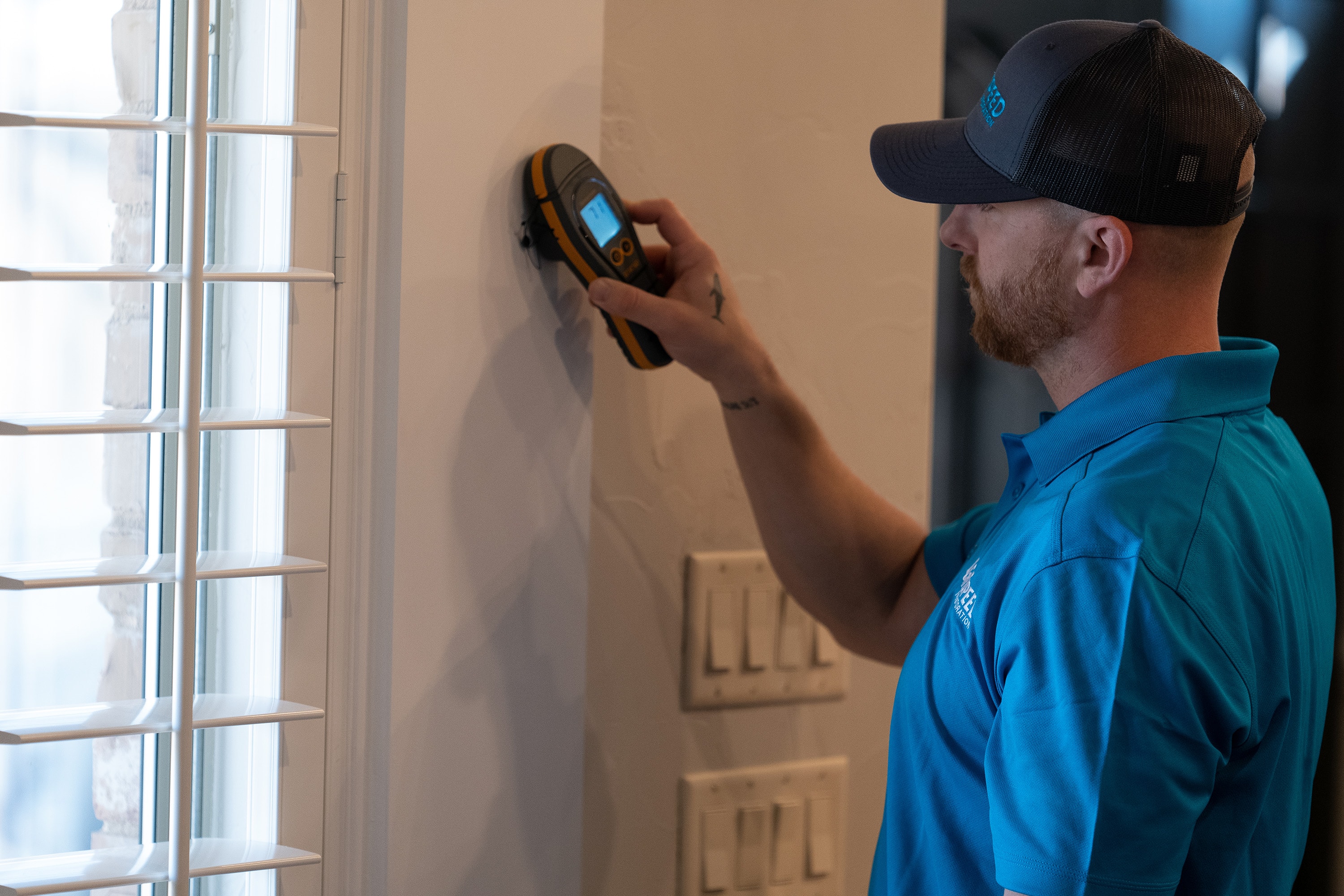
Professional water mitigation in Austin takes a different approach: rapid moisture removal at controlled temperatures, circulation patterns, and targeted humidity reduction. More importantly, professionals use a moisture meter to confirm proper dryness rather than guessing based on touch.
Don’t rely solely on how the wall feels. If you’ve experienced water damage from any noticeable leak or flood, schedule a professional moisture assessment with Lightspeed Restoration of Austin.
Step-by-Step: How Professionals Dry Out Wet Drywall
Understanding the professional drying process helps you see why it dries faster and more reliably than DIY methods. Here’s a typical Lightspeed Restoration of Austin dry-out process from first call to final verification.
Inspection and Safety Check
The priority is safety, not equipment deployment. Technicians perform a visual inspection for sagging ceilings, bulging walls, and noticeable staining. They identify potential electrical hazards—water and electricity are a dangerous combination. If the ceiling drywall is severely saturated, there may be a risk of collapse that requires immediate attention.
During this phase, the team also classifies the water source. Clean water from a supply line is treated differently from contaminated water from a sewage backup.
Moisture Detection
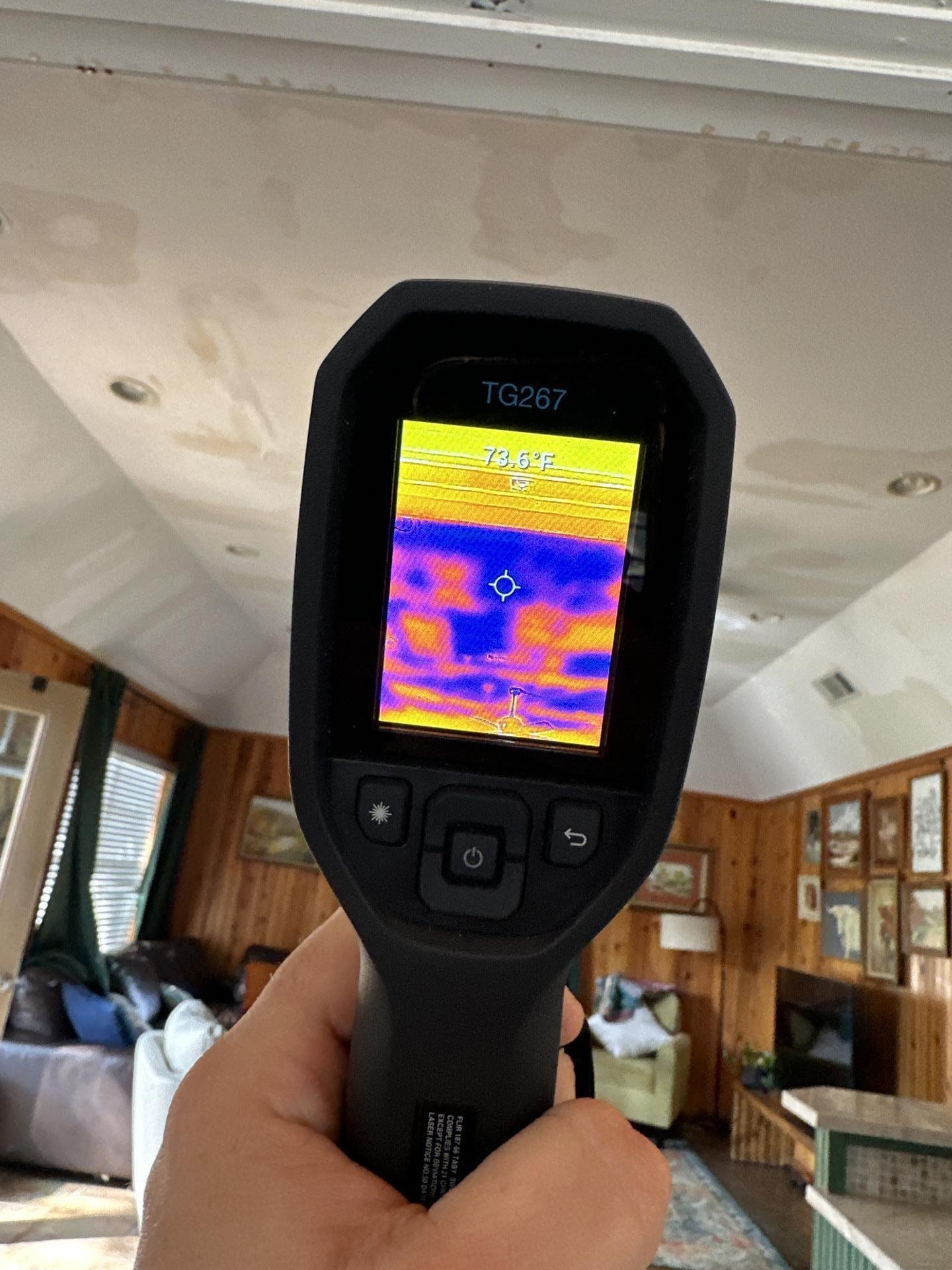
This is where guesswork ends, and data begins. Using pin-and-pinless moisture meters, technicians map which drywall sections are wet and how high the moisture has wick. Thermal imaging with infrared cameras reveals hidden damp areas behind paint, cabinets, and trim that look dry to the eye but read as cold spots on camera.
This moisture mapping drives every subsequent decision.
Containment and Protection
When demolition is required or when contaminated water is involved, technicians isolate affected areas with plastic sheeting. This protects unaffected rooms from moisture migration, dust, and potential mold spores during the drying and removal process.
Selective Demolition
Not all wet drywall can or should be saved. Selective demolition accelerates drying and removes unsalvageable materials.
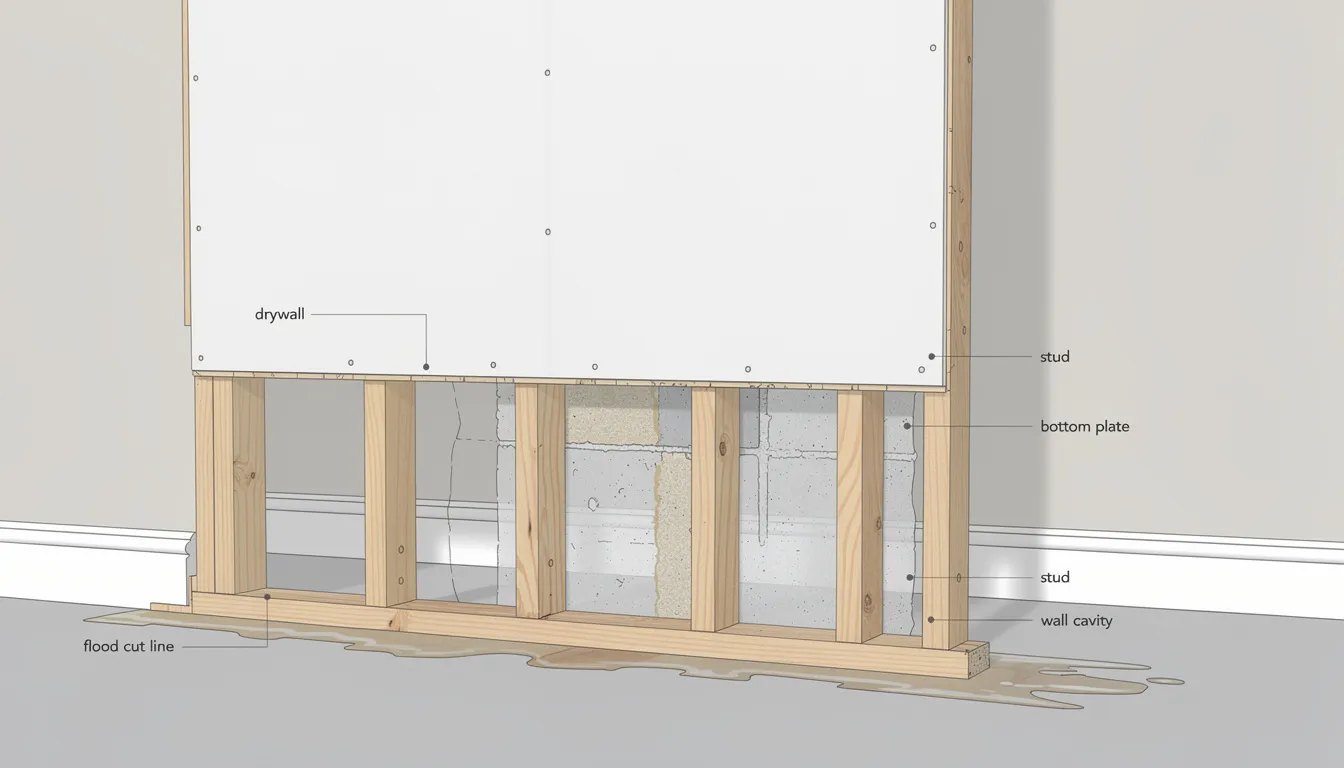
Flood cuts are a common technique for heavily saturated or insulated walls. Technicians cut the drywall 24 inches above the highest visible moisture line, removing the wet section while preserving the upper portions. This exposes the wall cavity for direct drying and removes materials that would take far too long to dry in place.
For non-insulated walls with less severe saturation, small weep holes drilled near the floor allow moisture to vent from the cavity without removing large sections of drywall.
Wet baseboards, trim, and some flooring materials are typically removed to allow full airflow into wall cavities and prevent them from trapping moisture against the drywall.
Active Drying
With access created and damaged materials removed, the real drying begins. Large air movers are positioned to push dry air across wet surfaces and into open cavities. Low-grain refrigerant (LGR) or desiccant dehumidifiers, sized correctly for the room volume and moisture load, continuously pull moisture from the air.
This equipment typically runs 24/7 for several days. Technicians reposition air movers as wet spots dry and adjust dehumidifier settings based on readings.
Monitoring and Adjustments
Professional drying isn’t “set it and forget it.” Daily moisture readings track progress and inform adjustments to equipment placement, temperature targets, and humidity goals. This data-driven approach accelerates the final stages of drying as moisture levels drop and the last pockets of dampness become harder to reach.
All readings are documented before, during, and after drying—essential for insurance claims and your peace of mind.
Final Verification
Drying is complete when drywall, framing, and adjacent materials return to normal moisture ranges. For wood framing, the typical moisture content is 10–12%. For drywall, readings should match unaffected areas of the home.
At this point, technicians determine whether the drywall can be salvaged or if selective replacement is still needed for structural integrity or cosmetic reasons.
When Does Wet Drywall Need to Be Replaced Instead of Dried?
Not all wet drywall can or should be saved. Sometimes replacement is safer, faster, and more cost-effective than attempting to dry materials that are too damaged or contaminated.
Clear Replacement Scenarios
|
Situation |
Recommendation |
|
Contact with Category 3 water (sewage, river flooding, stormwater backup) |
Always requires removal |
|
Category 2 water soaking drywall for more than 24–48 hours |
Usually removed, especially in living areas |
|
Visible mold on the paper facing or behind the wall |
Requires removal and remediation |
|
Drywall sagging, crumbling, or structurally soft after drying attempts |
Replace for safety and structural integrity |
|
Ceilings that have bowed or show imminent collapse risk |
Immediate removal for safety |
|
Exterior walls that have insulation behind the sheetrock |
Always requires at least a 2-foot flood cut to remove the insulation to allow the proper dry out of the structure |
Long-Term or Hidden Leaks
Slow leaks that have been wetting drywall for weeks or months—behind bathroom walls, around windows, under sinks—present special challenges. By the time these leaks are discovered, the drywall has often cycled through wet and partially dry phases multiple times, creating ideal conditions for mold growth deep within the wall cavity.
Cosmetic and Odor Issues
Sometimes dried drywall meets moisture targets but still shows persistent staining, bubbling paint, or a musty smell. In visible living areas, replacement may be the practical choice for aesthetics and indoor air quality, even if the material is technically dry.
Lightspeed Restoration of Austin helps homeowners determine what can be safely dried versus what should be removed and replaced. When replacement is needed, the team can also take care of reconstruction.
Special Cases: Ceilings, Insulated Walls, and Hidden Cavities
Some drywall installations are more complex and consistently take longer to dry or sustain more damage.
Ceilings
Water from roof leaks or upstairs plumbing failures collects in the ceiling drywall, often pooling above the paper facing before saturating the drywall. Ceiling drywall is subject to gravity, which works against it—sagging, cracking, and eventual collapse are real risks when saturation is heavy.
Ceilings often require faster intervention than walls. Bracing may be necessary to prevent collapse during drying, and partial removal is standard to ensure safety and provide access to the soaked insulation above.
Insulated Exterior Walls
Fiberglass and cellulose insulation behind drywall act like sponges, holding significant water and releasing it slowly. Attempting to dry insulated walls without removing wet insulation often fails. The drywall surface dries while saturated insulation keeps the cavity damp for weeks.
Flood cuts that remove both drywall and wet insulation are typically required to dry out insulated walls effectively.
Walls Behind Cabinets, Tile, or Built-Ins
These areas are difficult to access and almost always dry more slowly than exposed walls. Kitchen and bathroom leaks often affect drywall behind cabinetry that can’t be easily reached with air movers.
Techniques for these areas include removing toe-kicks from base cabinets, drilling access holes through cabinet backs, or, in some cases, removing sections of cabinetry to expose the wall for proper drying.
HVAC Closets and Utility Rooms
Water heaters, AC air handlers, and washing machines are common sources of leaks in tight spaces with minimal ventilation. These rooms often have sealed doors, limited airflow, and multiple materials (drywall, flooring, insulation) that are all wet simultaneously.
Without professional help, utility room walls can remain damp for far longer than the rest of the home, creating hidden mold sources.
Austin homeowners facing any of these special situations should promptly call Lightspeed Restoration of Austin at 512-428-8309, rather than hoping the area dries on its own.
How Austin’s Climate Impacts Drywall Drying Time
Austin’s climate creates specific challenges for drying wet drywall. Warm temperatures promote evaporation, but Central Texas also experiences high humidity—especially during spring and summer—that can slow the drying process.
When outdoor humidity is high (above 60–70% relative humidity, which is common after storms), simply opening windows and running fans can actually be counterproductive. You’re introducing humid outdoor air into your home, where it condenses on cooler surfaces and slows evaporation from wet materials. This is why controlled, mechanical dehumidification is essential for efficient drying in Austin.
The Role of Your HVAC System
Air conditioning removes some moisture from indoor air, which can help reduce minor dampness. However, residential AC systems are designed for comfort, not structural drying. After severe water damage, your home’s AC cannot remove moisture fast enough to prevent mold growth or achieve complete drying within a safe timeframe.
Turning off the AC during a water loss—perhaps to save money while fans run—allows indoor humidity to rise rapidly, extending drying time and increasing the risk of mold growth.
Major Weather Events
Austin regularly experiences intense thunderstorms, hailstorms, and occasional tropical weather systems that cause roof leaks, window failures, and flash flooding. These events can overwhelm DIY drying attempts. When large amounts of standing water enter a home quickly, professional extraction and drying become essential to prevent further damage.
Lightspeed Restoration of Austin is familiar with local building styles, insulation practices, and common leak sources specific to Central Texas homes. This local expertise helps tailor faster, more accurate drying plans.
Why Austin Homeowners Call Lightspeed Restoration for Wet Drywall
When Austin homeowners discover wet drywall, the decision to call for professional help often comes down to speed, equipment, and certainty. Lightspeed Restoration of Austin brings all three to every water damage call.
Rapid Response
Water damage doesn’t wait for business hours. Lightspeed offers 24/7 emergency service for water damage and wet drywall situations. Same-day arrival is standard for most Austin neighborhoods and surrounding communities—the faster drying starts, the more materials can be saved and the lower the total repair cost.
Expertise and Equipment
Certified technicians trained in water damage restoration and structural drying methods understand how to dry things efficiently without causing secondary damage. The team deploys professional air movers, LGR dehumidifiers, moisture meters, and thermal imaging equipment—tools that most homeowners don’t own and can’t rent at adequate capacity.
Thoroughness
A professional dry-out means complete moisture mapping of affected rooms, not just drying what looks wet on the surface. Technicians check moisture levels in framing, cavities, and adjacent materials to ensure nothing is left damp. Detailed documentation supports insurance claims and provides homeowners with proof that their home is safe and dry.
Local Focus
Lightspeed Restoration serves Austin, TX, and nearby communities, with familiarity with local insurance carriers and typical policy requirements. This local focus means faster service, relevant expertise, and smoother claims processes.
If you suspect drywall has been wet for more than a few hours, act quickly. Call Lightspeed Restoration of Austin at 512-428-8309 or contact the team online to schedule an immediate moisture inspection.
Frequently Asked Questions About Drywall Drying Time
How can I tell if my drywall is fully dry without a moisture meter?
Without professional tools, you’re limited to indirect signs. Dry drywall should feel the same temperature as the surrounding dry walls (damp areas feel cooler). Color should be uniform without any darker wet spots. However, surface dryness doesn’t confirm that the gypsum core or wall cavity is dry. Touch and visual inspection miss hidden moisture that a moisture meter would detect. If you’ve had significant water exposure, professional verification is the only reliable way to confirm complete dryness.
Is it safe to sleep in a room with recently dried drywall?
If professional drying equipment is still running, expect significant noise from the air movers, which may disrupt sleep. More importantly, air quality during active drying may be elevated due to increased dust and humidity. Professionals typically consider a room habitable again once equipment is removed, and final moisture readings confirm the space is dry. Until then, using another room for sleeping is often more comfortable and safer.
Will running my home dehumidifier and fans reduce professional drying time?
Home dehumidifiers and fans can provide supplemental help, but they don’t substitute for correctly sized commercial units. A typical home dehumidifier pulls 30–50 pints per day; professional LGR units can remove 140+ pints daily. Similarly, box fans move far less air than commercial air movers. Your home equipment might shave hours off the timeline, but it won’t reduce a three-day professional dry-out to one day.
Does homeowner’s insurance usually cover professional drying and drywall repair?
Most homeowner’s insurance policies cover sudden and accidental water damage from sources like burst pipes, appliance failures, and some storm damage. Coverage for flooding typically requires separate flood insurance. Policies vary significantly, so check your specific coverage. Lightspeed Restoration of Austin can help document the water loss with photos, moisture readings, and detailed reports that support your insurance claim.
What should I do immediately while waiting for the professionals to arrive?
Take these safe steps while help is on the way:
-
Stop the water source if you can do so safely (shut off the supply valve or main water shut-off)
-
Move furniture and belongings away from wet areas to prevent additional damage
-
Avoid walking through standing water near electrical outlets or appliances
-
Turn off the power to heavily soaked areas if you can access the breaker safely
-
Open interior doors to improve airflow, but avoid opening windows if outdoor humidity is high
-
Do not attempt to remove ceiling materials yourself if they appear to be sagging—there may be significant water weight overhead.
These steps help minimize damage while keeping you safe until Lightspeed Restoration of Austin arrives.