

Key Takeaways
-
In Texas, any visible mold impact exceeding 25 contiguous square feet per room or area requires a written Mold Remediation Protocol from a licensed Mold Assessment Consultant (MAC) before work can legally begin.
-
All regulated mold remediation work in Austin, TX must follow Texas Department of Licensing and Regulation (TDLR) rules under 16 TAC Chapter 78, using only licensed Mold Remediation Contractors (MRCs).
-
A proper protocol addresses source-of-moisture correction, containment design, engineering controls, material-specific removal and cleaning methods, and specific clearance criteria—it goes far beyond simply “killing mold.”
-
Lightspeed Restoration of Austin is a Texas-licensed Mold Remediation Company serving the Austin metro area. Property owners can reach us at 512-428-8309 to coordinate with their assessor and execute their protocol.
-
The protocol protects building occupants and remediation workers, documents each step thoroughly, and creates a clear paper trail supporting insurance claims, real estate transactions, and the Texas Mold Remediation Certificate (MRC-1) upon completion.
What Is a Mold Remediation Protocol in Texas?
A mold remediation protocol is a formal, written, project-specific document prepared exclusively by a Texas-licensed Mold Assessment Consultant (MAC). This document provides detailed, step-by-step instructions governing how a licensed contractor must safely remediate a mold-impacted building area, including how to carry out mold remediation services in Austin, TX. Unlike generic advice found online, this protocol incorporates site-specific elements, including diagrams, square footage estimates, photo documentation, and engineering specifications.
Under TDLR regulations effective since September 2004 and updated through 2019-2023, a written protocol is legally required when the affected area exceeds 25 contiguous square feet within a single room or area. This threshold applies uniformly to single-family homes, apartments, multi-family units with 10 or more dwellings, and commercial buildings throughout Austin and the rest of Texas.
The remediation plan is separate from the Mold Assessment Report (MAR) and is not a generic checklist. It details specific methods, containment requirements, personal protective equipment standards, engineering controls, and clearance criteria tailored to that particular property. Every protocol must reference industry standards, such as the IICRC S520 Standard and EPA guidance.
The Mold Remediation Contractor (MRC) must follow this protocol precisely during execution. Any deviations—such as discovering hidden mold beyond the originally mapped area—must be documented and often require MAC approval to maintain compliance.
This distinction matters: informal “mold cleanup guidelines” found online typically emphasize surface-level measures like bleach application without addressing containment, negative air pressure, or verification. A Texas mold remediation protocol, by contrast, functions as a legally binding blueprint that ensures regulatory compliance and long-term efficacy.
Texas Regulatory Framework for Mold Remediation Protocols
Texas is one of only five states with comprehensive mold licensing laws. The framework is established through Texas Occupations Code Chapter 1958, with implementing rules codified in 16 Texas Administrative Code (TAC) Chapter 78, enforced by TDLR. This oversight exists specifically to protect consumers from conflicts of interest and substandard practices in a humid climate that fosters rapid mold proliferation.
Regulated projects—those involving 25 or more contiguous square feet of visible mold growth per room or area—require three distinct licensed roles:
|
Role |
License |
Responsibility |
|
Mold Assessment Consultant (MAC) |
Required |
Creates protocol, performs PRV |
|
Mold Assessment Technician (MAT) |
Required |
Field support under MAC supervision |
|
Mold Remediation Contractor (MRC) |
Required |
Executes remediation work |
A critical consumer protection under Texas rules: assessors and remediators must be independent. The company writing the protocol cannot be the same entity performing the remediation. This separation eliminates bias and ensures objective assessment.
TDLR rules reference the IICRC S520 Standard and Reference Guide for Professional Mold Remediation as the accepted standard of care for protocol design and remediation practices. At completion, the MRC issues a Texas Mold Remediation Certificate (MRC-1 form) to the property owner and, when applicable, the insurance company. This certificate documents that the work followed a protocol and provides the specific completion date.
When Is a Mold Remediation Protocol Required in Austin, TX?
For Texas single-family homes, multi-family units, and commercial properties, a protocol is legally required when:
-
More than 25 contiguous square feet of visible mold is present in one room or area
-
Smaller areas across multiple rooms add up to a cumulative project exceeding 25 square feet
-
The property is a multi-family dwelling with 10 or more units (where even smaller areas may require licensed work)
Typical Austin scenarios that trigger a protocol include a spring attic leak that wets 60 square feet of drywall, a winter pipe burst affecting an entire master bathroom wall, or recurring indoor mold growth in multiple units of a 30-year-old central Austin apartment complex.
Even if the property owner has already attempted mold cleanup, if the affected area still meets the threshold, a licensed MAC and written protocol are still required before regulated mold remediation can proceed. Prior DIY cleanups using bleach or household cleaners do not exempt the project from Texas law.
Below 25 square feet, work may be considered unregulated “mold-related activities” exempt from licensing requirements. However, many property owners still choose to follow a written protocol for health concerns, liability protection, and resale value—especially in flood-prone areas near Austin’s creeks.
Austin landlords, property managers, and HOAs frequently require a protocol and clearance report anytime mold appears in occupied living areas, regardless of exact square footage. This practice protects tenants, documents due diligence, and provides evidence of proper remediation for future disputes.
Key Components of a Texas Mold Remediation Protocol
A compliant protocol typically ranges from 10 to 30 pages, depending on project complexity. It must be detailed enough for a third-party contractor to perform the work without guesswork. Here are the core components:
Project Identification and Background:
-
Property address, dates, and client information
-
Assessor license number and contact details
-
Background moisture history (roof leaks, HVAC issues, plumbing failures)
-
Scope and mapping of affected areas with approximate square footage
-
Classification of building materials as porous, semi-porous, or non-porous
Moisture Source Analysis:
-
Identification of suspected moisture source (roof leak from May storm, condensate drain pans clog, supply line failure)
-
Recommended source-of-moisture repairs that direct water away from the structure
-
Interim stabilization steps, such as dehumidification, to prevent further mold growth
Engineering Controls and Containment:
-
Specification of containment level (limited vs. full)
-
Negative pressure relative to adjacent spaces using high-efficiency particulate air filtration devices
-
Type, quantity, and placement of HEPA AFDs
-
Pressure monitoring requirements and target differentials
Removal and Cleaning Methods:
-
Material-specific instructions (remove and discard gypsum drywall and insulation; wire-brush and HEPA vacuum porous materials on structural framing; damp-wipe nonporous surfaces with detergent)
-
Guidance on EPA-registered biocides used only as a supplement post-physical work, avoiding potentially irritating cleaning solutions applied incorrectly
Safety and Verification Requirements:
-
PPE requirements by contamination level
-
Waste packaging instructions to package mold-contaminated materials in sealed 6-mil bags
-
Post-remediation verification criteria, including visual clearance, moisture content targets, and air sampling triggers when appropriate
Texas-Specific Mold Assessment and Documentation Prior to the Protocol
Before a protocol can be written, a Texas-licensed MAC or MAT performs an on-site mold assessment. This includes client interviews about odors, health symptoms, and leak history, plus thorough visual inspection and moisture mapping using professional-grade equipment.
The assessor collects building history specific to Austin conditions:
-
Prior flooding along creeks or low-lying areas
-
2021 winter freeze pipe breaks
-
Repeated air conditioning and HVAC system failures during 100°F+ summers
-
Roof leaks from severe spring thunderstorms
The assessor creates a written Mold Assessment Report (MAR) documenting findings, identifying affected rooms (master bath, north bedroom, HVAC closet), and estimating square footage of visible microbial growth and water-damaged building materials.
The MAR typically includes photo documentation, moisture readings from pin and pinless meters, humidity measurements, and—when performed—lab reports for air or surface samples. Texas rules do not require sampling in every project; visual assessment and moisture mapping often provide sufficient information for protocol development.
The remediation plan is then built on the MAR, using documented findings to specify room-by-room remediation strategies, safety controls, and clearance criteria.
Assessing the Extent of the Mold Problem
The square footage and depth of the mold or moisture problem drive Texas regulatory thresholds, containment strategies, and the complexity of the written protocol. Accurate assessment of extent is the foundation of effective remediation.
Visual assessment serves as the primary evaluation method:
-
Observing staining, discoloration, and visible fungal growth
-
Identifying warped finishes and chronic condensation areas
-
Examining walls, ceiling tiles, and flooring in Austin homes ranging from 1970s construction through new builds
Supporting tools enhance visual assessment:
-
Pin and pinless moisture meters (targeting below 16% for wood framing)
-
Thermal imaging to detect hidden wet cavities behind shower walls or in wall cavity spaces
-
Hygrometers measuring indoor relative humidity above 60%
Occupant interviews about musty odors, recent leaks, prior “bleach cleanups,” or respiratory complaints help pinpoint hidden mold in empty spaces behind walls, attics, and under cabinets. These reports often reveal moisture control problems not immediately visible.
Texas law emphasizes visible mold contamination and water-damaged moldy building materials rather than relying solely on airborne mold sample counts, which can be misleading without proper context and interpretation.
Visual Assessment vs. Sampling in Texas Protocols
In most Austin projects, a thorough visual and moisture assessment is more important than lab sampling when writing a protocol that complies with Texas rules and industry standards. This approach aligns with EPA guidance emphasizing building science over spore counts.
Visual assessment defines the scope, impacted materials, and areas requiring containment. Moisture measurements confirm whether materials remain wet enough to support future indoor mold growth. Together, these methods provide actionable data for protocol development.
Sampling (air, tape lift, or swab) is sometimes used when:
-
No obvious visible mold exists, but strong moldy odors persist
-
Suspected HVAC system contamination requires confirmation
-
Health problems or complaints need supporting data for a physician or insurer
-
Post-remediation air clearance is specified in the protocol
Protocols should never be based solely on one airborne spore trap. They must be grounded in building science, visible damage, and moisture behavior within the building structure. Air sampling results fluctuate significantly based on activity levels, outdoor air infiltration, and time of day.
The MAC interprets sampling results and summarizes findings in the assessment report. The protocol translates those findings into practical remediation steps rather than technical jargon that provides no guidance to the mold remediation contractor.
Planning Mold Remediation Strategies Under Texas Rules
Texas protocols must balance regulatory requirements, health protection, and cost-effective construction repair strategies. The size and complexity of the mold problem dictate the planning approach.
Strategy by Contamination Size:
|
Project Size |
Containment Type |
Protocol Complexity |
|
Under 100 sq ft |
Limited containment |
Simpler, single-phase |
|
100+ sq ft or multi-room |
Full containment |
Multi-phase, detailed |
|
Building-wide |
Full of multiple zones |
Comprehensive, phased |
Remediation strategies must separate actions by material type:
-
Porous materials (carpet, pad, drywall, blown-in insulation): Removed and discarded as mold-damaged materials
-
Semi-porous materials (dimensional lumber, OSB): Cleaned in place with HEPA vacuuming and mechanical agitation
-
Nonporous surfaces (metal ducts, glazed tile): Wiped clean and verified
Protocols should specify how building occupants will be protected during work. This includes temporary relocation for families with infants, elderly residents, people with asthma or immune compromise, and those who work from home during noisy or disruptive demolition phases.
The plan must sequence steps logically: moisture source repair, containment build-out, negative air setup, selective demolition, cleaning and HEPA vacuuming, drying and dehumidification to increase air circulation, and final verification.
Implementing the Mold Remediation Protocol
Once the MAC delivers the protocol, a licensed mold remediation contractor like Lightspeed Restoration of Austin uses it as a blueprint for field operations. This document governs every aspect of the remediation process from setup through clearance.
Pre-job preparation includes:
-
Detailed protocol review by the crew supervisor
-
Pre-job walkthrough to confirm containment locations
-
Equipment access and disposal pathway verification
-
Coordination with the property owner on the timeline and access restrictions
All deviations from the protocol—such as discovering mold growth beyond the originally defined affected area—are documented with photos and communicated to the MAC for amendment of the protocol when necessary. This documentation protects all parties and maintains regulatory compliance.
Daily logs, moisture readings, pressure differential checks, and progress photos are essential elements of documentation. These records support issuance of the Mold Remediation Certificate at project completion and provide evidence for insurance claims.
Property owners in Austin should receive regular updates about the timeline, noise levels, access limits to affected rooms, and any change orders related to additional structural damage discovered behind finishes during demolition.
Engineering Controls: Containment and Negative Pressure
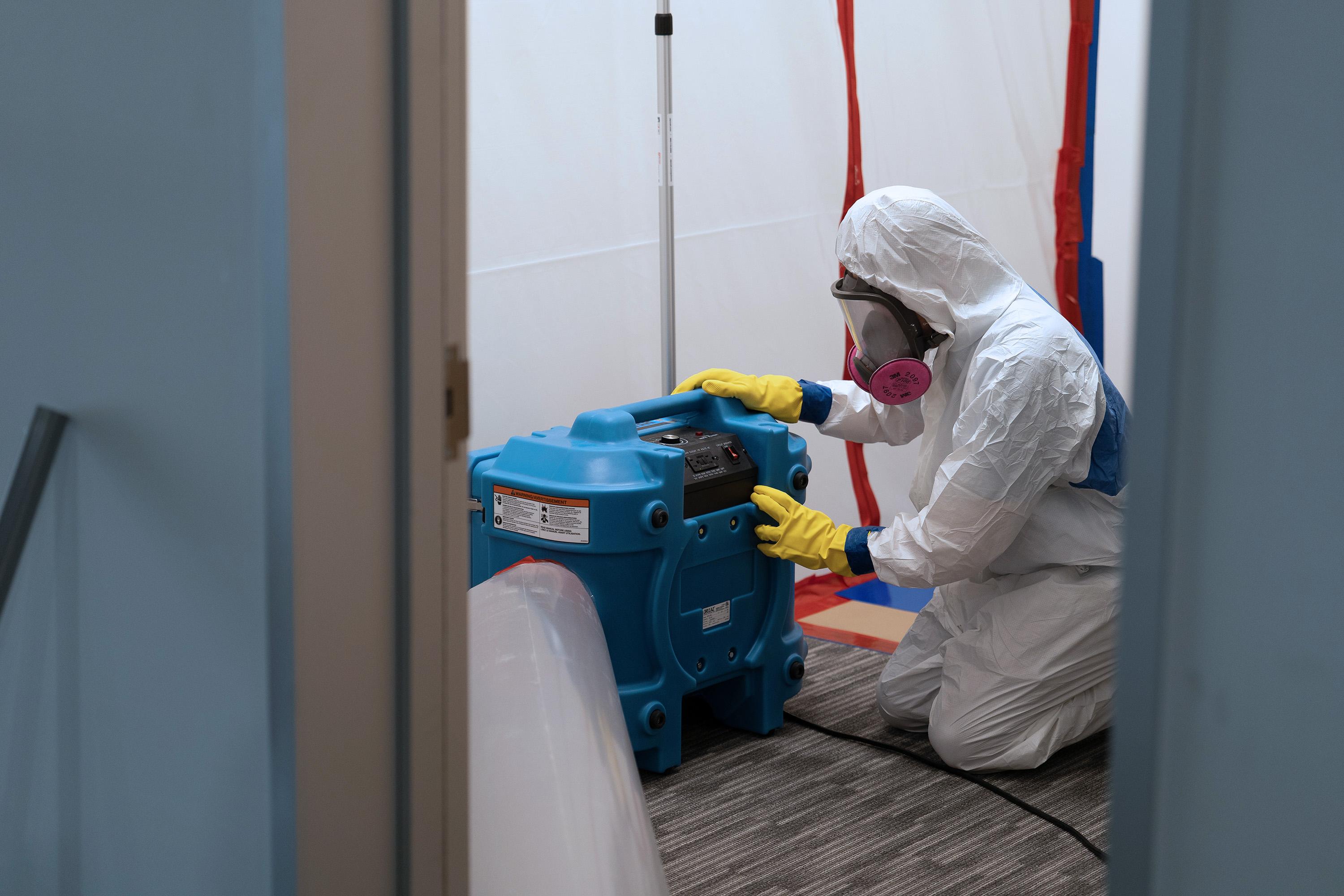
Containment design is a core protocol element that dictates how mold spores will be confined and prevented from spreading through the rest of the building. Proper containment protects clean areas from cross-contamination during aggressive demolition and cleaning.
Limited Containment (approximately 10-100 sq ft):
-
Single-layer 6-mil polyethylene sheeting
-
Zippered or flap entry
-
Sealed HVAC registers and open vent holes
-
One HEPA-filtered air filtration device vented outside or into a filtered return
Full Containment (exceeding 100 sq ft, multi-room, or adjacent to sensitive spaces):
-
Double-layer poly with framed barriers
-
Decontamination chambers for worker entry/exit
-
Multiple HEPA AFDs maintain continuous negative pressure
-
Active pressure monitoring throughout work
The protocol specifies target pressure differentials, typically -0.02 to -0.03 inches of water column. Continuous operation of HEPA AFDs prevents pressure lapses that could allow mold spores to migrate. Unfiltered fans that could blow spores into clean areas are prohibited.
Austin homes present specific containment challenges: shared HVAC zones in open floor plans, difficult attic access in mid-century construction, and crawlspaces requiring creative but code-compliant isolation. Protocols must address these realities while maintaining effectiveness.
Personal Protective Equipment (PPE) and Worker Safety
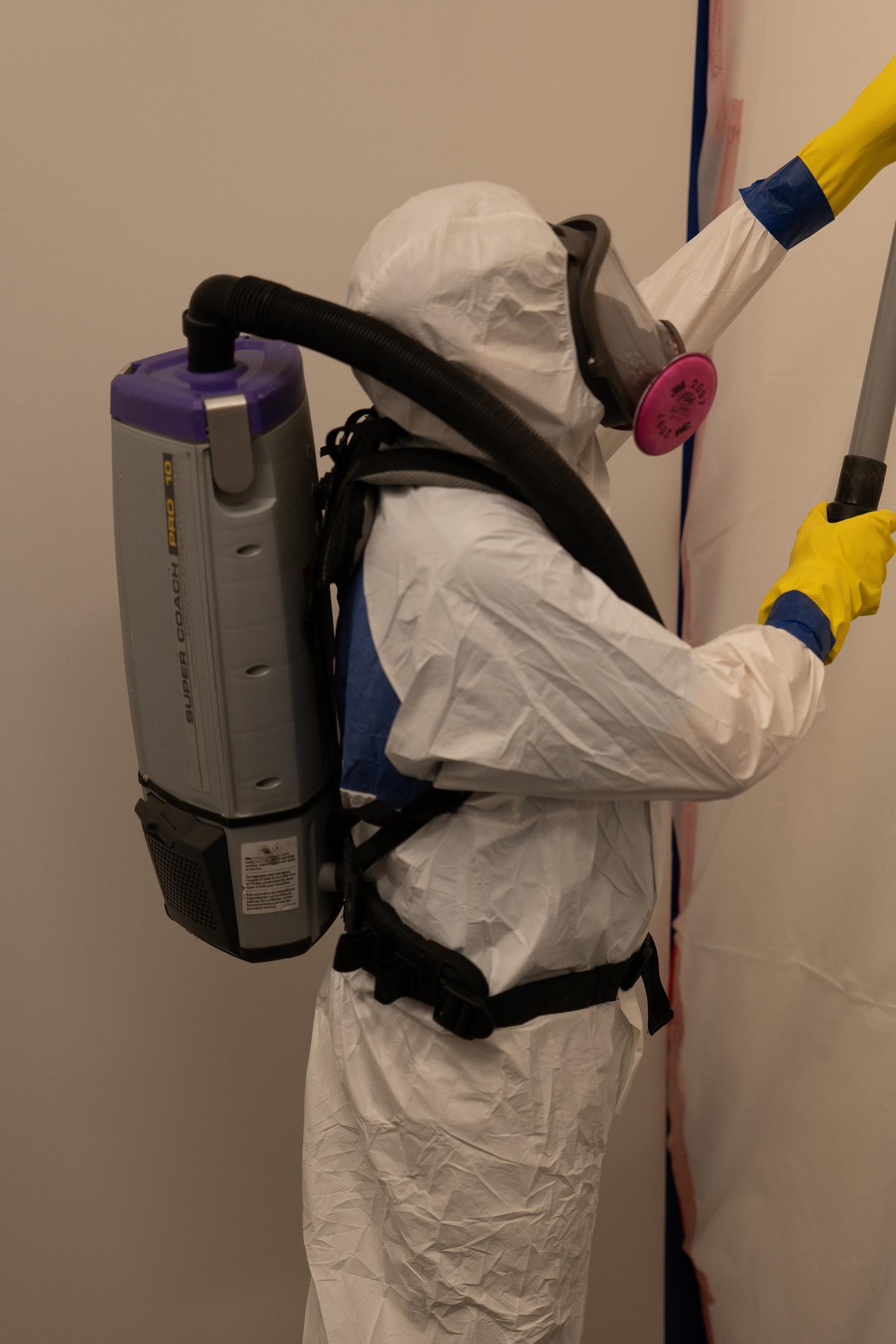
The protocol must define appropriate personal protective equipment consistent with OSHA, EPA, and Texas mold rules to protect remediation workers from exposure to mold through inhalation and skin contact during demolition and cleaning surfaces.
PPE Levels by Project Conditions:
|
Project Type |
Respiratory Protection |
Body Protection |
|
Small, limited (<100 sq ft) |
N-95 respirators |
Gloves, safety glasses |
|
Larger projects (>100 sq ft) |
Half-face P100/HEPA |
Full body suits, boot covers |
|
Heavy mold growth or sewage |
Full-face PAPRs |
Chemical-resistant gloves, full suits |
To eliminate skin contact with mold-contaminated materials and avoid mold contact during handling, workers use ordinary household rubber gloves for light cleaning and upgraded chemical-resistant gloves for heavily contaminated work. Respiratory protection respirators require proper fit testing.
Respirator use requires medical clearance and training per OSHA 29 CFR 1910.134. Texas-licensed firms are expected to maintain compliance with these federal requirements.
Protocols address worker decontamination procedures:
-
Suit and glove removal inside the containment
-
HEPA vacuuming of suits before removal when reusable
-
Bagging disposable PPE inside containment
-
Handwashing and showering after each work shift
Cleanup Methods and Material-Specific Protocol Details
In Texas protocols, the goal is to remove moldy building materials and mold spores through physical removal and cleaning, not simply apply chemicals to “kill mold.” This approach recognizes that dead mold can still cause allergic reactions and remains a potential health hazard.
Porous Materials with Visible Growth: Gypsum drywall, cellulose insulation, carpet, pad, and MDF trim cannot be adequately cleaned. These materials are removed, and the contractor must package mold-contaminated materials in sealed 6-mil bags or wrapped bundles. Workers vacuum porous materials before removal to reduce airborne debris, then transport waste through clean areas as ordinary construction waste once properly contained.
Semi-Porous Structural Members: Studs, joists, and roof decking are typically cleaned in place using a combination of HEPA vacuuming, mechanical agitation (wire brushing or sanding), and detergent damp-wiping. These materials are dried to acceptable moisture content levels before enclosure.
Nonporous Surfaces: Metal ducts, tile, and sealed concrete are cleaned with HEPA vacuum cleaners designed to capture fine particles followed by damp-wiping using detergent solutions. Care is taken to avoid flooding that could drive excessive moisture deeper into assemblies.
EPA-registered antimicrobial solutions may be used judiciously in line with label directions. These products are supplemental tools that do not replace physical removal and thorough drying—the primary means to remediate mold growth.
Post-Remediation Verification and Clearance in Texas
A compliant mold remediation protocol in Texas must specify how success will be judged. Post-remediation verification (PRV) under §78.140 includes visual, procedural, and sometimes analytical checks performed by the independent MAC or MAT.
PRV Inspection Elements:
-
Visual confirmation of no remaining visible mold growth
-
No musty odors are detectable in the indoor environment
-
Clean surfaces free of dust and debris
-
Verification that specified contaminated materials have been removed completely
-
Containment integrity maintained through final inspection
Moisture content of remaining structural materials should meet target levels appropriate for Austin’s climate. Wood framing typically targets 12-16%, depending on baseline readings in unaffected areas. These measurements confirm that mold control through drying has been achieved.
When specified in the protocol, air sampling is performed inside containment after a sufficient rest period and in control areas, including outdoor air. Results are compared to outdoor baseline and industry norms rather than arbitrary “zero mold” expectations. Inhaling airborne mold at normal outdoor levels is unavoidable; clearance confirms indoor levels match or fall below exterior conditions.
Once the MAC determines protocol compliance and acceptable conditions, the MRC issues the Texas Mold Remediation Certificate (MRC-1) documenting completion date, property address, and scope. Containment cannot be removed until clearance is granted.
How Lightspeed Restoration of Austin Executes Your Mold Remediation Protocol
Lightspeed Restoration of Austin is a Texas-licensed Mold Remediation Company (#RCO1769) serving the Austin metro area. We work closely with independent Mold Assessment Consultants to implement protocols accurately, efficiently, and in full compliance with regulatory requirements.
The Process from Your Perspective:
-
Receive your mold assessment and protocol from a licensed MAC
-
Send documents to Lightspeed for detailed review
-
Schedule a pre-job walkthrough of your property
-
Receive a proposal aligned precisely with the written protocol
-
Work begins with full documentation throughout
Our technicians set up containment, establish negative air pressure, and deploy dehumidification according to protocol specifications. We perform selective demolition, cleaning surfaces per material type, and drying with thorough daily documentation including moisture readings and progress photos.
Communication continues throughout the project regarding schedule updates, noise expectations, temporary loss of room access, and any unforeseen conditions requiring protocol updates. We coordinate directly with your MAC for any necessary amendments.
Ready to discuss your project?
Property owners in Austin and surrounding communities can call Lightspeed Restoration of Austin at 512-428-8309 to discuss a current protocol, plan upcoming mold removal, or get guidance on whether your project is likely to require regulated remediation under Texas law.
Frequently Asked Questions About Mold Remediation Protocols in Austin, TX
Do I always need a Texas mold remediation protocol for mold in my home?
You must have a written protocol from a licensed Mold Assessment Consultant when the visible mold-impacted area in a room exceeds 25 contiguous square feet, or when smaller areas across multiple rooms combine into a larger regulated project.
For small, isolated spots under 25 square feet, Texas law does not require a formal protocol. However, following professional guidance and addressing the source of moisture remains strongly recommended to prevent recurrence and protect your health.
Landlords, HOAs, and insurers often require a protocol even for smaller issues as a risk-management practice. This is particularly common in multi-family properties where tenant health concerns and liability exposure drive conservative approaches.
Who is allowed to write a mold remediation protocol in Texas?
Only a Texas-licensed Mold Assessment Consultant (MAC) may legally prepare and sign a Mold Remediation Protocol for regulated projects. A contractor, handyman, or unlicensed individual cannot create this document.
The MAC must be independent from the Mold Remediation Contractor executing the work. Texas law prohibits the same company from both assessing and remediating the same regulated mold job. This separation protects consumers from conflicts of interest.
Before hiring, verify the MAC’s active license status on the TDLR license search website. This simple check confirms you’re working with a properly credentialed professional.
How long does a typical mold remediation project take once the protocol is ready?
For a single room in a typical Austin home, active remediation work may take 3-7 days. Multi-room or whole-floor contamination can extend the project to 1-3 weeks or more, especially when reconstruction follows the remediation phase.
Weather conditions and building construction practices influence drying times significantly. Humid Central Texas summers often require more aggressive dehumidification to reach moisture targets while increasing surface temperature to accelerate evaporation, potentially adding several days to dry-out periods.
The MAC’s post-remediation verification visit and lab turnaround (if air samples are collected) typically add 2-5 additional days before formal clearance and certificate issuance.
Will my insurance pay for the mold remediation protocol and work?
Coverage depends on your specific homeowner’s, landlord’s, or commercial policy terms. Many Texas policies cover mold only when it results from a covered water loss (such as a sudden pipe burst) and is reported promptly to the carrier.
Contact your insurer early—ideally as soon as the MAC is engaged—to ask whether assessment, protocol writing, and remediation labor and materials are covered. Confirm whether an adjuster inspection is required before work begins.
A detailed, Texas-compliant protocol and thorough contractor documentation help substantiate claims but do not guarantee coverage decisions. Insurance companies make independent determinations based on policy language and loss circumstances.
What happens if my contractor does not follow the written protocol?
Failing to follow the protocol jeopardizes Texas regulatory compliance and may result in incomplete mold cleanup. Problems often surface later when mold reappears, creating issues with future buyers, tenants, or insurers who question the original work quality.
The MAC may refuse to issue a satisfactory post-remediation verification report if protocol instructions are ignored. Without clearance, the contractor cannot provide a valid Mold Remediation Certificate, leaving the property owner without documentation of compliant work.
Property owners should insist on licensed contractors, request daily progress updates, and review documentation throughout the project. If concerns arise about non-compliance on a regulated project, contact the MAC directly or file a complaint with TDLR to protect your interests.