

Key Takeaways
-
Lightspeed Restoration of Austin provides 24/7 residential water damage repair services in Austin, TX, with rapid emergency response.
-
Quick action can prevent thousands of dollars in additional damage while protecting your home's foundation and structure.
-
Every minute that passes after water damage worsens your situation and may affect your insurance coverage.
-
Acting within the first 24–48 hours after discovering a water leak, burst pipe, or flooding event can dramatically reduce structural damage and prevent mold growth in your home. If mold has already developed, professional mold remediation services in Austin may be required to safely remove contamination.
-
Call Lightspeed Restoration of Austin at 512-428-8309 any time—day or night—for immediate emergency water damage help.
-
Services include water extraction, structural drying, complete repairs and reconstruction, and coordination with your insurance company throughout the claims process, using advanced techniques for effective water damage repair and restoration.
-
This guide covers the complete water damage restoration process, common causes specific to Austin homes, prevention strategies, and how to choose a reliable local restoration company.
24/7 Residential Water Damage Repair in Austin – Get Help Now
If you’re reading this with water pooling on your floor, a ceiling that’s sagging, or a pipe that just burst in your wall, take a breath. You’re not alone, and help is closer than you think. If water is actively spreading right now, start with our 24-hour emergency water removal services in Austin before repair work begins.
Water damage strikes Austin homeowners throughout the year. Common residential incidents include burst pipes during unexpected winter cold snaps, overflowing washing machines, slow leaks behind walls, slab leaks under foundations, roof leaks after Central Texas heavy rainstorms, and toilet supply line failures that can discharge hundreds of gallons in minutes.
The moment you discover water intrusion in your home, the clock starts ticking. Each minute that passes worsens your situation and may affect your coverage, as delays can lead to greater damage and complications with insurance claims. Every hour that standing water sits on hardwood floors, soaks into drywall, or saturates insulation increases the likelihood of permanent damage and mold development. Acting fast can mean the difference between a manageable repair and a major rebuild.
For fast residential water damage repair anywhere in Austin and the surrounding suburbs, call Lightspeed Restoration of Austin at 512-428-8309, 24 hours a day.
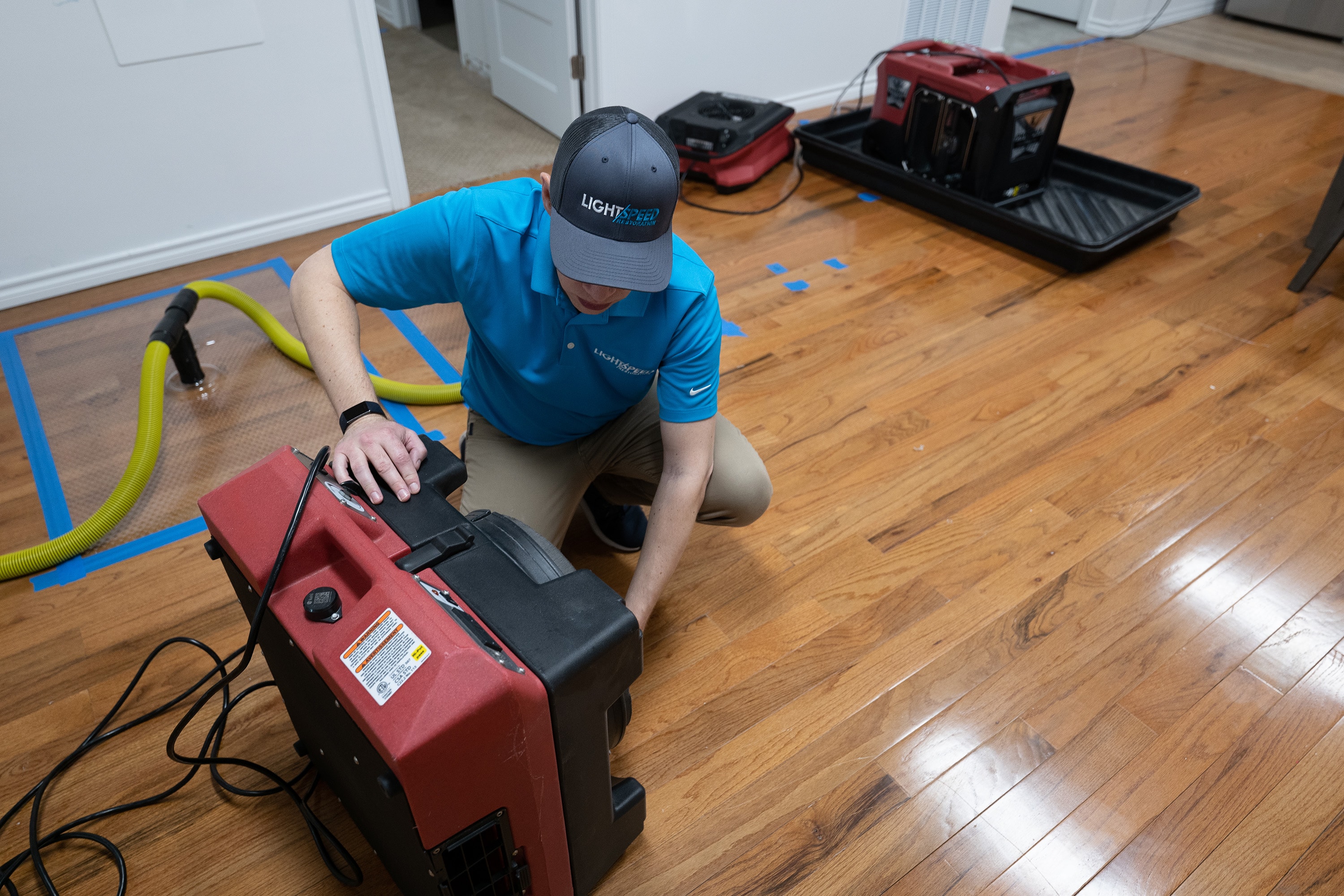
When you call, highly trained water damage restoration technicians arrive equipped with truck-mounted extraction units, professional moisture meters, thermal imaging cameras, and industrial dehumidifiers. Work begins on the first visit to minimize further damage through immediate water mitigation and to start the drying process right away.
What Is Residential Water Mitigation vs. Water Damage Repair?
Understanding the difference between water mitigation and water damage repair helps you know what to expect when restoration professionals arrive at your home or business.
Water mitigation refers to the emergency steps taken to stop the source of water and prevent further damage from spreading through your property. Learn what’s included in emergency water mitigation in Austin, TX, and when it should start.
Water remediation is a critical part of the water damage restoration process, involving the removal, cleaning, and drying of water-affected areas to ensure your property is safe and habitable.
Repair and restoration is the process of returning your home to its pre-loss condition after drying is complete.
Here’s how these phases break down:
|
Phase |
What It Includes |
Typical Timeline |
|
Mitigation |
Stopping the water leak, emergency water removal, setting up drying equipment, protecting unaffected rooms with plastic containment; advanced techniques are used to detect hidden moisture and ensure thorough drying |
First 24–72 hours |
|
Repair/ Restoration |
Replacing damaged drywall, baseboards, insulation, flooring; repainting; texture matching; advanced techniques are applied to restore materials and finishes to their original state |
After drying is complete (varies by scope) |
In Austin’s humid climate, proper water mitigation is critical. Moisture levels above 60% relative humidity create ideal conditions for mold growth, which can begin colonizing wall cavities and subfloor spaces within 24–48 hours of water exposure.
Lightspeed Restoration of Austin provides both mitigation and full damage repair for a seamless, start-to-finish residential water damage restoration solution. You won’t need to coordinate between multiple contractors—one team handles everything from the first phone call to the final coat of paint. Professional restoration companies can also help homeowners understand their insurance policy coverage during the restoration process.
Our Residential Water Damage Repair & Restoration Services
Lightspeed Restoration of Austin handles everything from small bathroom leaks to whole-house flooding events. Whether you’re dealing with a water heater failure that flooded your garage or a second-floor pipe burst that damaged multiple rooms below, the team has the equipment and expertise to restore your property.
Residential services include:
-
Emergency water extraction from carpet, tile, concrete, and hardwood using truck-mounted and portable extraction units
-
Structural drying and dehumidification with commercial-grade air movers and dehumidifiers
-
Damaged material removal, including wet drywall, saturated insulation, and unsalvageable flooring
-
Reconstruction of affected areas, including drywall installation, texture matching, trim replacement, and painting
-
Mold removal with safe and thorough remediation practices to protect your home and health
-
Comprehensive water damage restoration service, including water remediation for fast and effective property recovery
-
Fire and fire damage restoration, including smoke remediation, to restore properties after fire incidents
In addition to residential services, Lightspeed Restoration of Austin also provides commercial repairs for businesses and larger-scale properties.
Specific examples of residential water damage repair work:
-
Repairing ceiling collapses caused by upstairs bathroom leaks or overflowing tubs
-
Restoring water-damaged kitchen cabinets and subflooring after dishwasher failures
-
Addressing saturated attic insulation and decking after roof leaks from spring thunderstorms
-
Remediating crawlspace moisture and structural components after slab leaks
The team uses moisture mapping with professional meters and thermal imaging to identify hidden moisture behind walls, under subfloors, and behind baseboards. This step is essential before closing up any structure—residual moisture left behind leads to mold damage and potential structural problems down the road.
For a full overview of services, timing, and what to expect, visit our Austin water damage restoration hub.
Call 512-428-8309 to schedule an on-site inspection for your Austin home.
Step-by-Step Residential Water Damage Repair Process
Austin homeowners often want to know exactly what will happen once restoration technicians arrive. Here’s the typical water restoration process from start to finish, utilizing advanced techniques throughout to ensure thorough and efficient results:
1. Initial Safety Check and Source Control
Technicians assess safety hazards including electrical risks, structural instability (like sagging ceilings), and contamination levels. If the water source is still active, they’ll help locate and stop the leak.
2. Documentation and Photo Capture
Before any water removal begins, the team photographs all visible damage and documents moisture readings. This documentation is critical for your insurance company and the claims process.
3. Water Extraction
Using submersible pumps, wet/dry vacuums, and carpet extractors, standing water is removed as quickly as possible. Industrial equipment can extract hundreds of gallons per hour—far faster than consumer-grade tools.
4. Removal of Unsalvageable Materials
Saturated carpet padding, water-damaged drywall (typically cut 12–18 inches above the visible water line), and compromised insulation are removed to allow structural elements to dry.
5. Cleaning and Sanitizing
Affected areas are cleaned with EPA-approved antimicrobials. Air scrubbers may be used to address odors and airborne contaminants. If mold remediation is needed, containment procedures prevent spore spread.
6. Structural Drying
Commercial dehumidifiers and air movers run continuously, often for 3–5 days or longer, depending on severity. Certified technicians monitor moisture levels daily and adjust equipment placement as needed.
7. Final Repairs and Reconstruction
Once moisture readings reach normal levels, the repair phase begins: new drywall installation, texture matching to existing walls, repainting, reinstalling trim, and repairing or replacing flooring.
The initial inspection typically happens the same day you call Lightspeed Restoration of Austin, with moisture readings and a preliminary repair plan provided during that first visit.
Common Causes and Types of Residential Water Damage in Austin
Different water sources pose different risks to your home and require different cleanup approaches. Understanding what you’re dealing with helps you respond appropriately.
Typical Causes in Austin Homes
-
Plumbing failures: Aging copper pipes, PEX connection failures, and corroded fittings
-
Water heater ruptures: Tanks typically last 8–12 years; failures often happen without warning
-
AC condensate line clogs: Extremely common during Austin summers when systems run constantly
-
Roof leaks: Spring and fall thunderstorms, along with hail damage, frequently cause attic and ceiling water damage
-
Appliance failures: Washing machines, dishwashers, and refrigerator water lines
-
Overflowing fixtures: Toilet clogs, bathtub overflows, and sink drain backups
Water Categories
|
Category |
Source Examples |
Risk Level |
Cleanup Requirements |
|
Category 1 (Clean Water) |
Burst supply lines, faucet leaks, water heater overflow |
Low |
Standard extraction and drying |
|
Category 2 (Gray Water) |
Dishwasher discharge, washing machine overflow, shower drain backup |
Moderate |
Antimicrobial treatment required |
|
Category 3 (Black Water) |
Sewage backups, outdoor flooding, and toilet overflow with waste |
Severe |
Removal of porous materials, specialized sanitization |
Black water incidents require removal of porous materials, including carpet, padding, lower sections of drywall, and some insulation types. This water contains bacteria, pathogens, and other contaminants that pose serious health risks.
Avoid direct contact with contaminated water. If sewage or outdoor floodwater enters your home, call 512-428-8309 immediately for emergency restoration services.
Preventing Water Damage in Your Austin Home
Routine maintenance and a few affordable upgrades can prevent many residential water losses. Austin residents face specific challenges from extreme weather swings and aging infrastructure in older neighborhoods.
Practical Prevention Tips
-
Upgrade supply lines: Replace rubber washing machine hoses and toilet supply lines with braided stainless steel versions—they’re inexpensive and far more durable
-
Inspect water heaters annually: Look for rust, moisture around the base, or unusual sounds; replace units older than 10–12 years proactively
-
Clear AC condensate lines: Flush your air conditioner’s drain line with diluted vinegar at the start of each cooling season
-
Clean gutters twice yearly: Late spring and late fall cleanings reduce roof leaks and foundation seepage during heavy rain events
-
Know your shutoff: Locate your main water shutoff valve now—not during an emergency
Technology That Helps
Smart water leak detectors placed under sinks, behind toilets, near water heaters, and by washing machines can alert you via smartphone at the first sign of moisture. Industry data suggests these devices can reduce water damage incidents by approximately 25%.
If you travel frequently, consider shutting off your main water supply before extended trips. Many of the worst residential water damage cases in Austin occur when homeowners are away for days or weeks while a slow leak or burst pipe runs unchecked.
Restoration Equipment and Technology Used in Water Damage Repair
Modern water damage restoration relies on a combination of expert knowledge and state-of-the-art equipment to ensure your home is returned to its pre-loss condition as quickly and safely as possible. At Lightspeed Restoration of Austin, our team is equipped with the latest technology to handle every stage of the water damage restoration process, from the initial assessment to the final touches of repair.
Key equipment and technology used in the restoration process include:
-
Moisture Detection Tools: Advanced moisture meters and thermal imaging cameras allow our team to pinpoint hidden water within walls, floors, and ceilings. This ensures that no moisture is left behind, preventing future mold growth and structural issues.
-
High-Powered Water Extraction Equipment: Truck-mounted and portable extraction units rapidly remove standing water from all types of surfaces, minimizing further damage and speeding up the restoration process.
-
Industrial-Grade Drying Equipment: Commercial air movers and dehumidifiers are strategically placed to create optimal airflow and humidity control, accelerating the drying of structural components and building materials.
-
Air Scrubbers and HEPA Filtration: These devices help remove airborne contaminants and odors, ensuring a clean and healthy environment during and after the water damage restoration process.
-
Antimicrobial Application Systems: Specialized sprayers and foggers distribute EPA-approved cleaning agents to sanitize affected areas, reducing the risk of mold and bacteria growth.
Our highly trained team uses these advanced tools to monitor progress throughout the restoration, making real-time adjustments to equipment placement and settings for the most effective results. This technology-driven approach not only speeds up the restoration process but also ensures your property is thoroughly dried, cleaned, and restored to its pre-loss condition.
By investing in the best equipment and ongoing training, Lightspeed Restoration of Austin delivers reliable, high-quality water damage restoration services that Austin homeowners can trust. When water damage strikes, you can count on our team to use every available resource to restore your home and peace of mind.
Why Choose Lightspeed Restoration of Austin for Residential Water Damage Repair?
Lightspeed Restoration of Austin is a specialized residential-focused team with rapid response capability throughout the Austin metro area. When water damage repair can’t wait, local expertise matters. The team’s experience and quick response are on par with other well-known services in Austin, TX, such as the Steam Team, ensuring homeowners receive top-tier residential water damage repair services in Austin, TX.
What sets the team apart:
-
24/7 availability: Phone calls to 512-428-8309 are answered around the clock, not sent to voicemail or a distant call center
-
Fast on-site arrival: Technicians typically reach Austin-area homes within hours of your call
-
IICRC-trained technicians: The team follows industry-standard protocols for water damage restoration, ensuring work is done correctly
-
Local knowledge: Familiarity with Austin’s building styles and neighborhoods—from older Central Austin bungalows to newer construction in Round Rock, Pflugerville, and Cedar Park
-
Advanced equipment: Professional-grade extraction units, commercial dehumidifiers, air movers, and moisture detection tools
-
Insurance coordination: The team offers insurance coordination services, helping streamline the claims process for Austin homeowners and making recovery easier
Transparent Communication
Throughout the water restoration services process, you’ll receive:
-
Clear written estimates before work begins
-
Daily status updates during structural drying
-
Detailed documentation formatted for insurance claims
-
Direct access to your project team—not a rotating cast of strangers
Call 512-428-8309 any time, day or night, to speak directly with a local team member about your residential water damage situation.
Working With Homeowners Insurance on Water Damage Claims
Many residential water damage incidents may be covered under standard homeowners' insurance policies. Sudden pipe bursts, appliance failures, and accidental overflows typically qualify—though long-term slow leaks or floodwater from outside sources often have different coverage rules.
How Lightspeed Restoration of Austin Helps
The restoration company documents every loss thoroughly, providing:
-
Comprehensive photo documentation of all damage
-
Moisture readings before, during, and after drying
-
Itemized repair estimates formatted for insurance adjusters
-
Direct communication with your insurance company or adjuster when authorized
This documentation is critical. Industry data suggests that 70–90% of water damage claims receive coverage when properly documented, while delays in mitigation or poor documentation can lead to partial or full claim denials.
Important Insurance Tips
-
Contact your insurance company as soon as possible to report the loss
-
Don’t wait for an adjuster before starting mitigation—call 512-428-8309 immediately so damage doesn’t worsen while you wait
-
Save damaged materials when practical for adjuster inspection
-
Review your policy for deductibles, coverage limits, and specific exclusions
Every policy is different. Discuss specific coverage questions with your insurance agent or adjuster, but don’t let uncertainty delay emergency water removal and drying.
Frequently Asked Questions About Residential Water Damage Repair
How quickly can Lightspeed Restoration of Austin arrive at my home after I call?
The team offers 24/7 emergency response, with typical arrival in well under a few hours for most Austin-area neighborhoods. Arrival times can vary based on weather conditions and traffic, but calls to 512-428-8309 are answered around the clock by local team members ready to dispatch.
How long does it usually take to dry out a water-damaged home?
Many residential water damage projects require 3–5 days of continuous drying equipment operation. Heavily saturated structures, multi-room losses, or crawlspace involvement may take a week or longer. Certified technicians monitor moisture levels daily and won’t close up walls or replace flooring until readings reach normal levels.
Can I stay in my home during water damage repairs?
In many clean-water events affecting limited areas, homeowners can remain in the home during the water damage restoration process. However, larger losses, sewage incidents, or extensive demolition may make temporary relocation more comfortable or necessary for safety. The decision depends on the scope of damage and your personal preference.
Will all my flooring and drywall need to be replaced?
Salvageability depends on the type of water involved, how long materials remained wet, and the construction type. Tile over concrete may dry in place successfully. Saturated carpet padding almost always requires replacement. Hardwood floors exposed to water for more than 24 hours often warp beyond repair. Swollen or delaminated drywall typically needs removal. Your technician will assess each material and provide honest recommendations.
What should I do first when I discover water damage?
Prioritize safety first—avoid standing water near electrical outlets or appliances. If you suspect a plumbing leak, shut off the main water supply. Move valuable items away from affected areas if it’s safe to do so. Take photos of visible damage for insurance purposes. Then call 512-428-8309 for emergency water mitigation assistance. The faster professionals begin water extraction and drying, the less secondary damage—including mold—you’ll face.
Water damage in your Austin home demands a rapid response. Every hour that moisture sits in your walls, floors, and structural components increases repair costs and mold risk. Lightspeed Restoration of Austin has served Austin homeowners for over a decade with professional property restoration services designed to get your life back to normal as quickly as possible.
Don’t wait for a small problem to become a major restoration project. Call Lightspeed Restoration of Austin today at 512-428-8309 for a free inspection and immediate emergency help.