

Key Takeaways
-
Standing water can damage drywall, flooring, and electrical wiring within 1–2 hours, and mold growth can begin in as little as 24–48 hours in Austin’s humid climate.
-
Call Lightspeed Restoration of Austin at 512-428-8309 immediately for 24/7 emergency house flooding clean up anywhere in the Austin metro area.
-
Our team handles the complete restoration process: rapid water extraction, structural drying, sanitation, contents cleanup, and full rebuilds when needed.
-
We are local to Austin, IICRC-certified, and experienced with Central Texas storms, flash floods, slab leaks, and appliance failures.
-
We work directly with most insurance carriers, help with documentation for your insurance claim, and aim to restore homes to pre loss condition as quickly as possible.
Rapid House Flooding Clean Up in Austin, TX
Picture this: It’s a late October evening in South Austin, and a sudden thunderstorm has overwhelmed your gutters. Within minutes, water is seeping under your back door and spreading across your hardwood floors. Or maybe you’ve returned from a weekend trip to find your 1990s home’s supply line to the washing machine has burst, flooding your laundry room and soaking into the wall cavities.
These scenarios occur every week across the Austin metro area. Floodwater doesn’t stay put—it quickly seeps under baseboards, into wall cavities, and beneath tile and hardwood, making DIY flood cleanup risky and often incomplete. What looks like a simple mop-up job frequently hides extensive damage that only becomes visible weeks later as warped floors, musty odors, and visible mold.
If floodwater entered from outside (street/creek runoff), see our full guide to flood damage restoration in Austin. Lightspeed Restoration of Austin provides 24/7 emergency response for house flooding clean up, with crews dispatched day or night throughout Austin, Round Rock, Pflugerville, Cedar Park, Georgetown, Kyle, and Buda. Our team arrives with advanced equipment and the training to handle everything from minor appliance leaks to major storm flooding.
Call 512-428-8309 as soon as you notice flooding—even if it seems minor—to minimize damage and reduce long-term costs.
Why Austin homeowners trust our fast response:
-
Crews typically arrive within 60–90 minutes across Greater Austin
-
Industrial-grade extraction and drying equipment on every truck
-
IICRC-certified technicians trained in water damage restoration
-
24/7 availability, including nights, weekends, and holidays
-
Direct coordination with insurance carriers for seamless claims
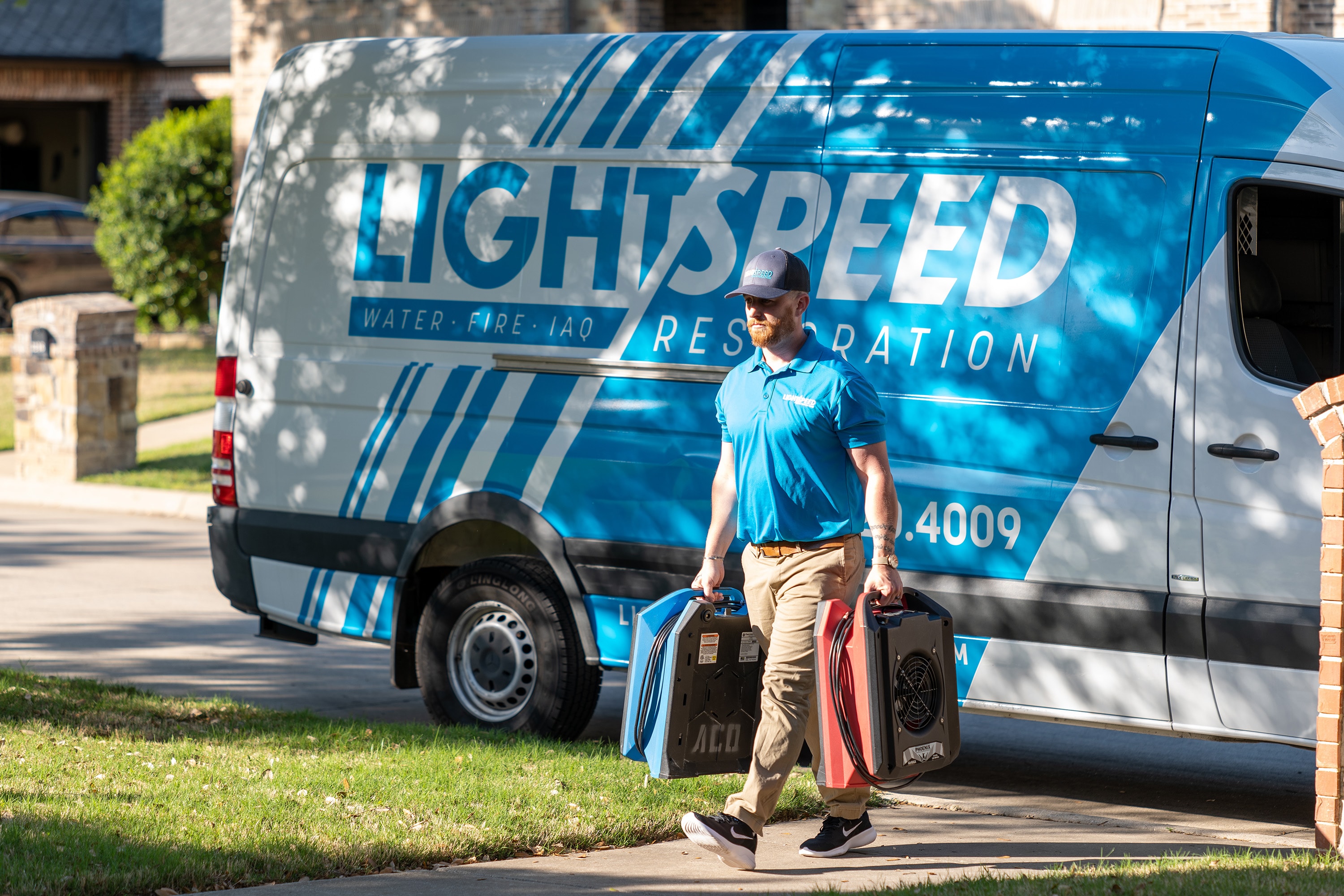
Emergency Response: What to Do When Your House Floods
The first 30–60 minutes after discovering flooding inside your home are critical. While it’s natural to feel overwhelmed, taking a few smart steps before our team arrives can protect your family and limit further damage to your property.
Your immediate action checklist:
-
Shut off the main water supply if you suspect a burst pipe, water heater failure, or appliance leak—the shutoff valve is typically near your water meter or where the main line enters your house
-
Turn off electricity at the breaker panel if water is near outlets, appliances, or wiring—never wade through standing water if power may still be on, as electrocution risk is significant
-
Avoid entering rooms with deep water until you’ve confirmed power is off and there are no structural hazards like sagging ceilings
-
Move small valuables, documents, and electronics to a dry area upstairs or on higher shelves if it’s safe to do so without risking injury
-
Open windows and doors to begin ventilation if weather permits and it’s safe to access the affected areas
What to avoid doing yourself:
Using shop vacs, household fans, or attempting to open walls on your own can spread contamination and mold spores to unaffected areas. Without proper moisture detection equipment, you may miss hidden water that will cause problems later. Professional water damage restoration services ensure thorough extraction and drying that household tools simply cannot achieve.
The safest next step is to call Lightspeed Restoration of Austin at 512-428-8309 for immediate dispatch. Our team can provide over-the-phone guidance while you wait, helping you stay safe and prepare the home for efficient cleanup.
Professional House Flooding Clean Up Process
Our standard flood cleanup workflow for Austin homes follows IICRC S500 standards—the industry benchmark for professional water damage restoration. From first inspection to final walkthrough, we keep you informed at every stage with written estimates, clear timelines, and regular progress updates.
The main stages of our restoration process:
|
Stage |
What Happens |
Typical Duration |
|
Inspection |
Moisture mapping, safety evaluation, damage documentation |
1–2 hours |
|
Extraction |
Removal of standing water using truck-mounted and portable equipment |
2–6 hours |
|
Demo & Cleaning |
Removal of non-salvageable materials (wet drywall, carpet, insulation) |
1–2 days |
|
Drying |
Commercial dehumidifiers and air movers run continuously |
3–5 days |
|
Repairs |
Drywall, flooring, paint, trim replacement as needed |
Varies by scope |
Our crews document moisture readings, humidity levels, and temperature throughout the process—data that supports your insurance claim and confirms when materials have reached acceptable dryness levels.
Inspection, Damage Assessment & Safety
When our technicians arrive in marked vehicles, they’ll introduce themselves and immediately evaluate safety hazards. This includes checking for sagging ceilings, slippery floors, electrical risks, and potential gas leaks in homes with natural gas service.
We use professional moisture meters, hygrometers, and thermal imaging cameras to find hidden water that isn’t visible to the eye. Floodwater often travels behind walls, under engineered wood flooring, and into insulation—areas where damage can worsen silently if not detected and addressed.
Our assessment also determines the category of water involved:
-
Category 1 (Clean): Freshwater from broken supply lines or faucets
-
Category 2 (Gray): Water from washing machines, dishwashers, or AC condensate lines
-
Category 3 (Black): Highly contaminated water from sewage backup, creek overflow, or storm flooding
This classification determines appropriate cleaning protocols and the personal protective equipment our team uses. We record photos, videos, and detailed notes during this stage to support your insurance claim and create a clear restoration plan.
Water Extraction & Removal of Standing Water
Aggressive, early water removal is the single most important step in limiting flood damage. We deploy truck-mounted extraction units capable of removing hundreds of gallons per minute, along with portable submersible pumps for basements, crawlspaces, and areas the truck can’t reach directly.
Equipment and techniques we use to extract water:
-
Truck-mounted extractors with high-powered suction for carpets and hard surfaces
-
Submersible pumps for deep standing water in basements and garages
-
Weighted extraction tools designed to pull water from carpet and pad without damage
-
Portable extractors for upstairs rooms and confined spaces
We can extract water from carpet, pad, tile, vinyl, and some hardwood floors. However, carpet and pad saturated with contaminated water—especially from sewage backup or external flooding—are typically removed and disposed of for health and safety reasons.
For homes with multi-level flooding, we work systematically from the top floor down. This prevents water from redistributing into spaces that have already been dried, keeping the recovery process efficient.
For a step-by-step breakdown of extraction + drying, read our flood water removal in Austin guide.
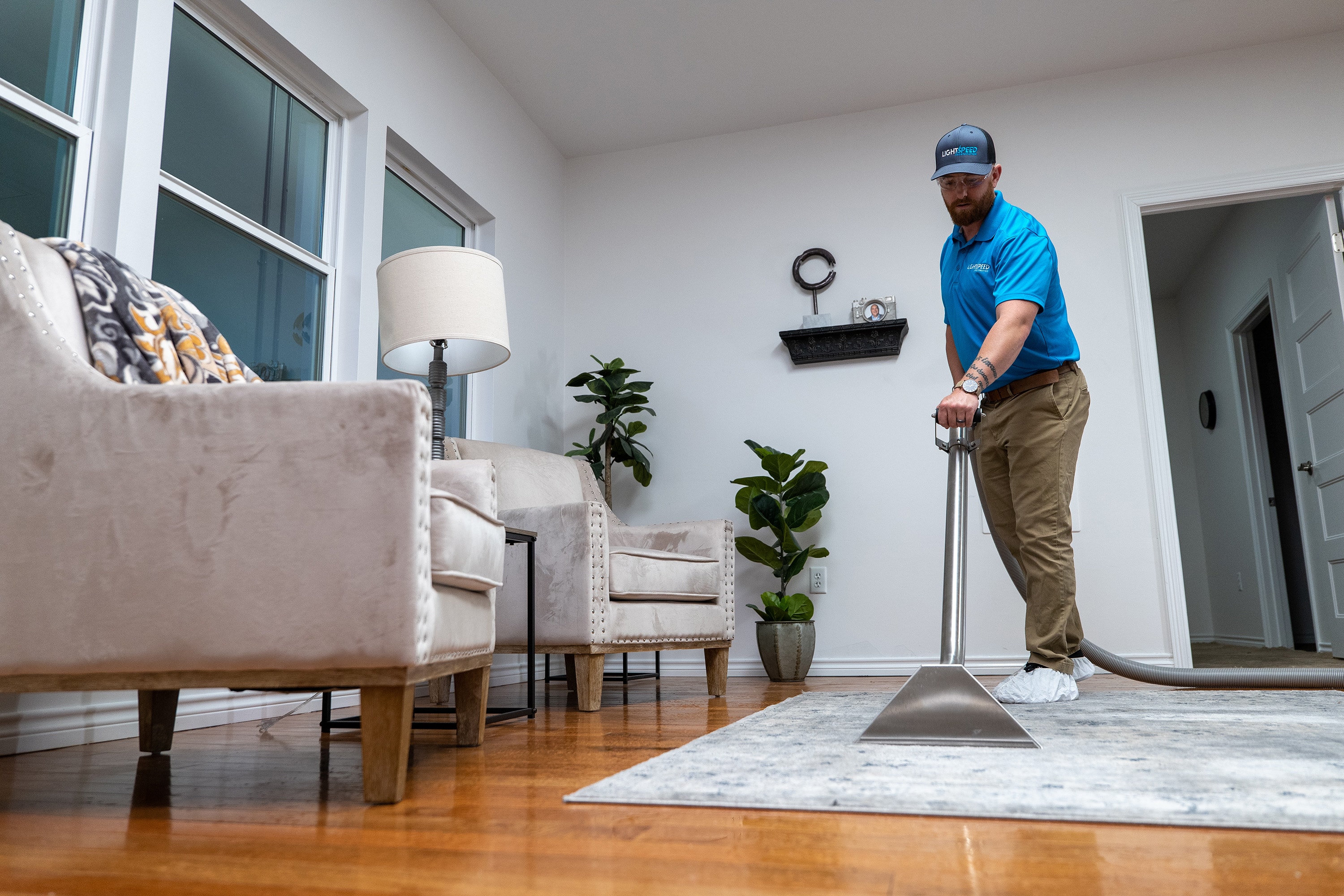
Cleaning, Disinfection & Odor Removal
Floodwater—especially from storms, creek overflow, or sewage backup—carries bacteria, viruses, and contaminants that pose real health risks. Proper cleaning and disinfection protect your family and ensure the home is safe to occupy after restoration.
Our cleaning and odor removal process includes:
-
Surface cleaning: EPA-registered antimicrobial solutions applied to remaining building materials and non-porous surfaces
-
Contents cleaning: Affected furniture, area rugs, and salvageable personal items cleaned and sanitized; specialty items referred to restoration partners when needed
-
Odor control: Musty and sour smells addressed through thorough drying, HEPA air filtration, and targeted deodorization methods like fogging or ozone treatment in unoccupied spaces
Proper odor removal requires addressing the source—residual moisture and organic material—rather than masking smells with fragrances. Our approach ensures a healthy environment for your family once restoration is complete.
Structural Drying & Dehumidification
After visible water is removed and the area is cleaned, significant moisture remains trapped in drywall, wall studs, subflooring, and cabinetry. This hidden moisture is what causes long-term problems—warping, swelling, and mold growth—if not properly addressed.
We set up commercial-grade dehumidifiers and high-velocity air movers strategically throughout the affected areas. These units create controlled airflow that pulls moisture out of building materials far more efficiently than household fans.
In many Austin homes built between 1980 and 2010, we may need to remove baseboards and drill small access holes to direct airflow into wall cavities. This technique reaches moisture that would otherwise remain trapped for weeks, feeding mold growth behind your walls.
What to expect during the drying phase:
-
Daily monitoring of moisture readings in walls, floors, and ceilings
-
Adjustment of equipment placement and quantity based on readings
-
Target moisture levels of 15% or below for wood materials before any reconstruction
-
Typical drying time of 3–5 days for moderate losses, longer for severe saturation
Our team documents readings daily, giving you and your insurance adjuster clear evidence that the home has reached acceptable dryness levels before repairs begin.
Repairs, Reconstruction & Final Walkthrough
Once the structure is dry and sanitized, the focus shifts to restoring your home. Lightspeed Restoration of Austin can coordinate or perform repairs, including:
-
Replacing water-damaged drywall and repainting walls
-
Reinstalling baseboards, trim, and crown molding
-
Replacing damaged flooring—whether carpet, hardwood, tile, or vinyl
-
Rebuilding sections of subfloor, insulation, and framing for severe losses
We conduct a final walkthrough with you to review completed work, go over documentation, and answer questions about maintenance or future flood prevention. Our goal is complete restoration to your home’s pre-flood condition—both functionally and cosmetically—with minimal disruption to your daily life.
Ready to discuss repair options after emergency mitigation? Call 512-428-8309 to schedule your walkthrough and get your home back to normal.
Common Causes of House Flooding in Austin We Handle
Austin’s unique combination of intense weather patterns, aging plumbing infrastructure, and rapid development creates frequent house flooding incidents across the metro. Understanding common causes helps homeowners recognize risks and respond appropriately when water damage occurs.
Weather and external flooding sources:
-
Heavy spring and fall thunderstorms that overwhelm drainage systems
-
Flash flooding near creeks, low-water crossings, and flood-prone areas like Onion Creek
-
Clogged or undersized gutters that direct water toward the foundation
-
Roof leaks during hailstorms and high-wind events
-
Stormwater intrusion through foundation cracks and garage thresholds
Indoor plumbing and appliance failures:
-
Burst supply lines to refrigerators, washing machines, and icemakers
-
Water heater failures in garages (especially common in units over 8–10 years old)
-
AC condensate line clogs that overflow in attics
-
Leaking shower pans and failed caulking in older bathrooms
-
Toilet supply line failures and sewage backup from municipal system overloads
Lightspeed Restoration of Austin handles all categories of water—from clean pipe leaks to contaminated sewage backup—and tailors cleanup protocols accordingly. Our technicians can also point out maintenance or drainage improvements to help prevent recurrence after flood cleanup is complete.
Storm, Flash Flood & Roof-Related Water Intrusion
Central Texas storms can overwhelm drainage systems within minutes, causing water to enter homes through doors, windows, and garage thresholds. Homes built on sloped lots or near drainage channels face particular risk during the heavy rainfall events that regularly hit the Austin area.
Roof-related water intrusion is equally common. Wind-driven rain can lift shingles, damaged flashing around chimneys and vents allows slow leaks, and hail impacts create weak points that become visible only after a major storm. The 2023 Memorial Day weekend storms, for example, caused water to run down interior walls and pool on hardwood floors throughout neighborhoods from South Austin to Round Rock.
We can coordinate with roofing professionals and other trades to temporarily tarp damaged roofs and board up compromised windows or doors, preventing further damage while you arrange permanent repairs.
Plumbing Failures, Appliance Leaks & Sewage Backups
A burst supply line under a sink, behind a toilet, or connected to an icemaker can release dozens of gallons of water in minutes. These disasters often strike while homeowners are at work or out of town, allowing water to spread through multiple rooms before anyone notices.
Appliance-related floods are especially devastating when they occur on upper floors. A failed washing machine supply line on a second story can damage the laundry room, the ceiling and walls below, and everything in between. Similarly, water heaters—particularly those over 8 years old—can fail catastrophically as sediment buildup leads to tank corrosion.
Sewage backup presents the most serious health risks. Whether caused by overwhelmed municipal systems during heavy rain or clogged private sewer lines, sewage-contaminated water contains dangerous pathogens including E. coli and other bacteria. Research shows black water can contain 100,000 to 1 million fecal coliforms per 100ml—exposure requires professional cleanup and disinfection.
If you smell sewage or see dark water, follow our sewage removal in Austin emergency guide.
If you suspect sewage, gray water, or detect foul odors, avoid contact and call 512-428-8309 immediately for specialized flood cleanup.
Residential House Flooding Clean Up Across Greater Austin
Lightspeed Restoration of Austin focuses on residential properties throughout the metro area, servicing single-family homes, duplexes, townhomes, condos, and rental properties. Our familiarity with the community means we understand local construction, neighborhood layouts, and the specific flood risks different areas face.
Our service areas include:
|
Area |
Common Flood Issues |
|
Central/South Austin |
Older homes with pier-and-beam foundations, creek flooding |
|
North Austin |
Newer construction with slab foundations, appliance failures |
|
Cedar Park |
Storm-related flooding, roof damage from hail |
|
Kyle/Buda |
Flash flooding near low-water crossings |
We work directly with homeowners, landlords, property managers, and HOAs, adapting our communication and documentation to each type of client. For rental properties, we coordinate access with tenants, realtors, and property managers to minimize disruption and keep occupied units safe during the restoration process.
Even if surfaces appear dry after flooding, hidden moisture can remain in wall cavities and under flooring. We encourage scheduling a professional moisture assessment to avoid hidden mold and structural issues that become expensive problems later.
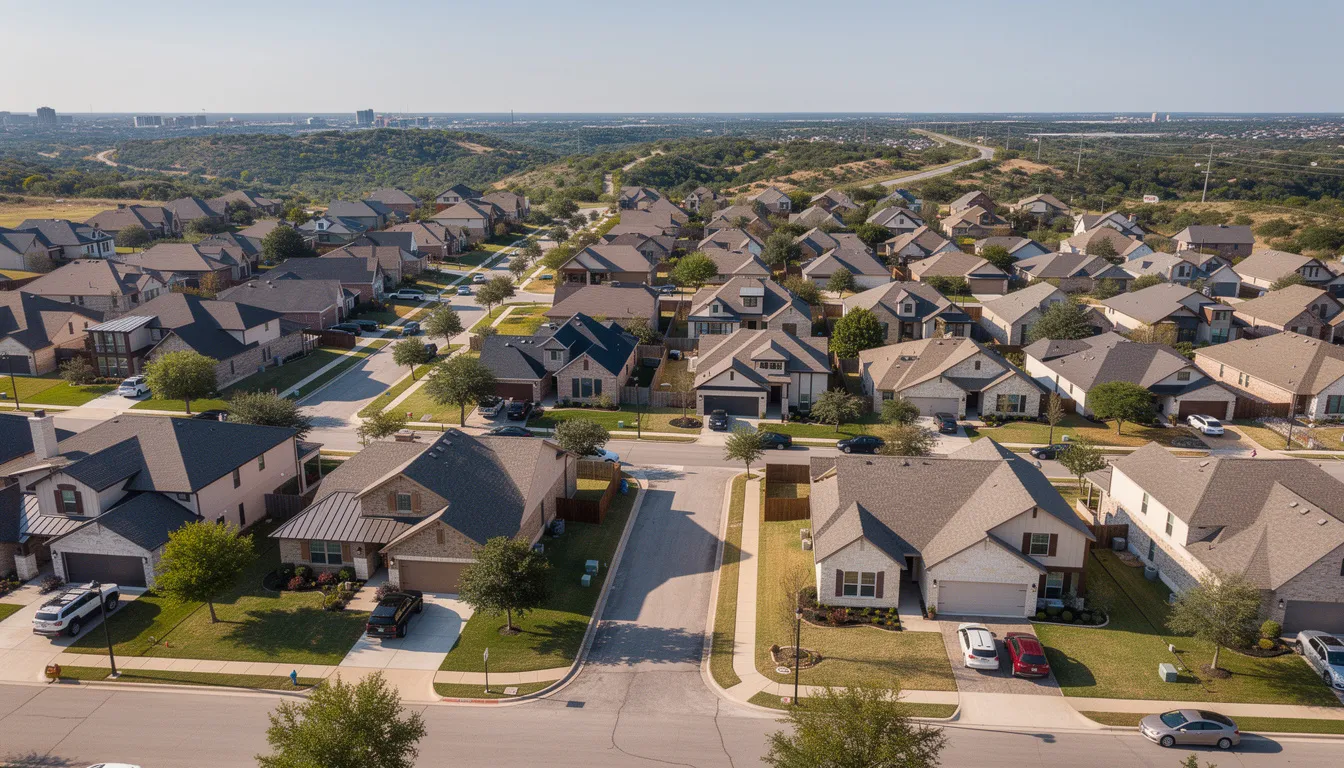
Types of Homes & Building Materials We Restore
Our technicians are familiar with common Austin construction styles, from slab-on-grade homes in newer subdivisions to pier-and-beam houses in established neighborhoods like Hyde Park and Bouldin Creek. We also service two-story suburban homes from the 1990s–2010s throughout Round Rock and Pflugerville, as well as downtown condos and loft conversions.
Different materials respond differently to water and require tailored drying strategies:
-
Hardwood can often be dried in place if moisture levels drop quickly
-
Laminate flooring typically swells irreversibly and requires replacement
-
Tile over concrete may trap moisture in the subfloor beneath
-
Carpet and pad can sometimes be saved from clean water losses but not from contaminated flooding
-
Plaster walls in older homes require different drying approaches than modern drywall
We evaluate cabinets, built-ins, and custom finishes individually to determine whether drying, repair, or replacement makes the most sense for your belongings and budget. This local building knowledge helps us design efficient, cost-effective restoration plans that respect the character of each Austin home.
Why Fast Action Matters: Limiting Long-Term Flood Damage
Time directly impacts both the severity and cost of house flooding damage—especially in Central Texas, where humidity levels can remain high even indoors. The longer water sits, the more extensively it penetrates building materials and the more expensive your recovery becomes.
A rough timeline of flood damage progression:
|
Time After Flooding |
What’s Happening |
|
0–2 hours |
Wood swells, drywall softens, water wicks up walls |
|
2–24 hours |
Metal begins rusting, dyes from carpet bleed, and furniture starts staining |
|
24–48 hours |
Mold spores germinate on damp surfaces, and musty odors develop |
|
48–72 hours |
Mold colonies become visible, and structural integrity weakens |
|
1 week+ |
Extensive mold colonization, warped framing, and potential electrical hazards |
Secondary damage compounds the initial disaster. Hardwood floors cup and buckle. Engineered wood delaminates. Vinyl seams separate. HVAC equipment rusts internally. Electrical components behind wet walls become fire hazards. What started as a manageable water removal job became extensive damage requiring major reconstruction.
Health risks accompany prolonged dampness. Mold spores, dust mites, and bacteria thrive in moist environments, triggering allergies and respiratory issues. Studies show mold-related health effects can affect up to 21% of asthma cases.
Calling 512-428-8309 at the first sign of flooding often reduces the need for extensive demolition and reconstruction—saving you time, money, and stress.
Preventing Mold Growth After House Flooding
Mold can begin developing within 24–48 hours on wet drywall, paper-faced insulation, and other porous materials—especially in closed-up rooms where air circulation is limited. Austin’s typical humidity levels (often 60–70% outdoors) create ideal conditions for rapid mold proliferation if wet materials aren’t dried quickly.
Our approach to prevent mold after flooding:
-
Rapid extraction removes the bulk of water before it penetrates deeply into materials
-
Controlled drying with commercial dehumidifiers maintains air at 30–50% relative humidity
-
Targeted antimicrobials inhibit mold and mildew growth on remaining building materials
-
Continuous monitoring confirms materials reach safe moisture levels before we finish
If mold growth is already present when we arrive, we can arrange for mold inspection and remediation services. This includes proper containment, HEPA air filtration, and careful removal of affected materials to prevent spores from spreading to unaffected areas.
After restoration, maintain indoor humidity between 40–50% and use exhaust fans in bathrooms and kitchens to protect your home from future mold issues.
Why Choose Lightspeed Restoration of Austin for House Flooding Clean Up
When your Austin home floods, you need a restoration company that responds quickly, works efficiently, and communicates clearly throughout the process. Lightspeed Restoration of Austin combines local ownership, professional certification, and modern equipment to deliver water damage cleanup that protects your property and your peace of mind.
What sets us apart:
-
Local ownership means we understand Austin neighborhoods, construction styles, and weather patterns
-
Fast dispatch with crews throughout Greater Austin, typically on-site within 60–90 minutes
-
IICRC-certified technicians trained in current industry standards for water damage restoration
-
Clear communication with written estimates, daily updates, and documented readings
-
Meticulous documentation to support your insurance claim process
-
Full range of services from emergency water extraction through complete restoration and reconstruction
We’ve handled both small single-room leaks and large multi-room flood events from storms and broken supply lines. Our team treats every home as if it were our own—protecting your belongings with plastic sheeting, floor protection, and careful handling of furniture and personal items throughout the job.
If you’re dealing with active or recent flooding, call 512-428-8309 now for immediate assistance and a professional assessment.
Insurance Assistance & Documentation Support
Navigating an insurance claim after an unfortunate event like house flooding adds stress to an already difficult situation. We regularly work with major homeowners' insurance carriers serving Austin and Central Texas, and we understand the documentation requirements that help claims proceed smoothly.
How we support your insurance claim:
-
Before-and-after photos documenting the extent of damage and restoration progress
-
Moisture logs showing readings throughout the drying process
-
Equipment usage records detailing the resources deployed
-
Itemized invoices breaking down services provided
-
Direct communication with adjusters to answer technical questions
While we cannot guarantee coverage decisions—those are between you and your insurer—we ensure the loss is thoroughly documented and professionally presented. According to industry data, properly documented claims with professional mitigation have significantly higher approval rates.
Contact Lightspeed Restoration of Austin at 512-428-8309 soon after notifying your insurance company so mitigation can begin immediately—most policies require prompt action to preserve coverage.
Certified, Local & Available 24/7
Our technicians are trained and certified in water damage restoration and damage cleanup, following current industry guidelines and safety protocols. We invest in ongoing education to stay current with evolving best practices and new restoration technologies.
Our 24/7 availability is critical during storm seasons and sudden plumbing failures. Flooding doesn’t wait for business hours, and neither do we. Whether your disaster strikes at 2 AM on a Sunday or during a holiday weekend, our team is ready to respond.
We know Austin. From older homes in Travis Heights to newer developments in Mueller, Circle C, and Steiner Ranch, our familiarity with local neighborhoods allows us to navigate quickly and understand typical construction challenges. This local expertise translates to faster service and more effective restoration for your business or residence.
If your Austin home is flooding right now, do not wait—call Lightspeed Restoration of Austin at 512-428-8309 for immediate help.
FAQ – House Flooding Clean Up in Austin, TX
How quickly can Lightspeed Restoration of Austin arrive after I call?
For most Austin metro neighborhoods, our crews typically arrive within 1-2 hours of your call. During severe weather events or widespread flooding affecting the community, response times may be longer due to road conditions and high call volume. We prioritize based on severity and keep callers updated on estimated arrival times. Calling early—even if damage seems minor—helps ensure faster service.
Can I stay in my home during flood clean up?
This depends on several factors: the extent of damage, whether sewage or contaminants are present, availability of safe sleeping areas away from affected zones, noise from drying equipment running continuously, and any structural or electrical hazards. For minor, localized flooding from clean water, many homeowners stay in unaffected portions of the home. For extensive damage or contaminated water, we often recommend temporarily relocating until the home is safe and dry.
Will my homeowner’s insurance cover house flooding clean up?
Many sudden and accidental water losses—such as burst pipes, water heater failures, or appliance leaks—are covered under standard homeowner’s policies. However, flooding from outside sources like rising creeks or storm surge typically requires separate flood insurance through NFIP or private carriers. Contact your insurer promptly after discovering damage, and let them know that professional mitigation is underway. We provide detailed documentation that helps support your claim.
How long does the clean up and drying process usually take?
Emergency water extraction and initial cleanup are often completed within the first day or two. Structural drying typically takes 3–5 days for moderate losses, though severe flooding, multi-level water damage, or particularly humid conditions can extend this timeline. We monitor moisture readings daily and keep equipment running until materials reach acceptable levels—rushing this process leads to mold and long-term problems.
What should I do with wet furniture, rugs, and personal items?
If you can safely move items without heavy lifting or injury risk, relocate them to a dry area away from the affected zones. Avoid stacking wet items on top of each other, as this traps moisture and promotes mold. Let our technicians evaluate what can be dried and salvaged versus what should be documented and discarded for health and safety reasons. Some items like upholstered furniture and area rugs can be professionally cleaned, while others—particularly those soaked in contaminated water—may need to be replaced.